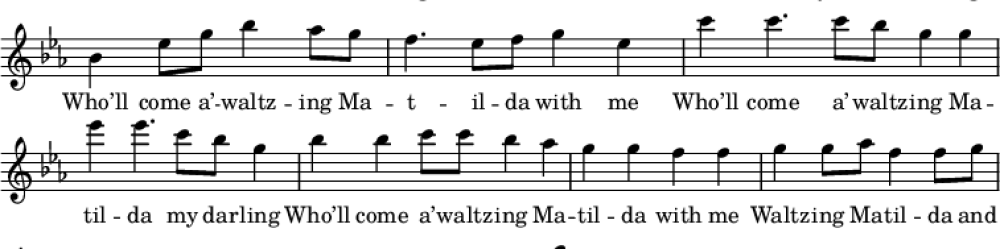
There is no set way to Waltz with a Matilda. The main object is to redress the Matilda Effect and bring the achievements of diverse women out of the shadows. Christina Macpherson’s story is just one example of the Matilda Effect as it applies in a more general sense. Her contribution to the iconic Australian ballad, Waltzing Matilda, was relegated to the shadows. It was Banjo Patterson who got to be immortalised and bask in the associated glory.
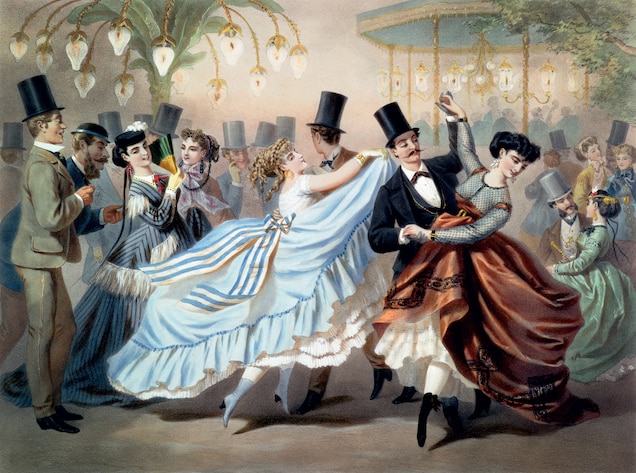
When you think of the waltz, you might start humming Tchaikovsky’s Waltz of the Flowers or The Blue Danube by Johann Strauss II. Waltz music has certainly gone through much development since its origins in the 1700s.
As one of the most iconic ballroom dances, the waltz has long enchanted dancers and spectators with its grace and fluidity. However, the waltz isn’t just a single style of dance. The waltz was born from the landler (a peasant dance in ¾ time) which involved robust movements, such as lifts into the air and twirls, and required lots of space. It has evolved over time into several unique types, each with their own distinct characteristics.
There is the Viennese, the American style Waltz, the International Style Waltz, the Country and Western Waltz and the Cajun, just to name the most obvious.
Likewise there are many ways to Waltz with a Matilda and, like the Matilda’s Football team, change the meaning of the Matilda Effect. This phenomenon was first described by suffragist and abolitionist Matilda Joslyn Gage in her essay, “Woman as Inventor”.
How will you Waltz with a Matilda?
Renowned anthropologist, Barbara Myerhoff, observed that everyone has a story and that these stories “told to oneself and others can transform the world.” A personal story can provide an opening to understand not only one person’s life, but larger truths about the human experience.
Despite the reference to the iconic, unofficial Australian anthem, you do not have to be Australian or profile an Australian woman to engage with this project. There is no requirement to use a Tarot deck if its not your thing. You are simply provided with an opportunity to redress the Matilda Effect by bringing the women’s stories out of the shadows in any way you deem appropriate
If you decide to engage I will link to your work and or feature your profiles on this site.
How will you fight the Matilda Effect and cast a spotlight on extraordinary women? Will you take the opportunity to devise your own dance and be featured here?
Waltzing
- Christine de Pizan (c.1364-1430), France’s first professional woman of letters, confronted the misogynist view that view that female nature is wholly given up to vice.head-on in her seminal work, the City of Ladies.
- The Dinner Party by Judy Chicago is an important icon of 1970s feminist art and a milestone in twentieth-century art. This installation comprises a massive ceremonial banquet, arranged on a triangular table with a total of thirty-nine place settings, each commemorating an important woman from history.
- Waltzing with a Tarot Deck – Heather Blakey, a devotee of the Tarot, waltzes with Tarot decks and matches cards with a life experience or situation faced by an Australian woman. She is also the creator of this site!
- t is often said that behind every great man is a great woman. In the case of Australia’s colonial outlaws it is just not conceivable to tell the stories of the men without drawing attention to the vital role played by women. The Kelly and Clarke women were just as notorious as the men, often getting into trouble with the law on their own accounts.
- Pacific Matildas: Finding the women in the history of Pacific archaeology, responds to the Matilda Effect. The project aims to investigate the scientific lives of the first women who conducted archaeological work in Oceania from the late 19th to the mid-20th century, and document their hidden contributions to the development of Pacific archaeology, to ensure their stories and legacies become part of broader narratives in the history of science.
- Follow in the Conversations footsteps. Perhaps, like an archeologist, you will undertake a dig and unearth previously hidden stories about women. You might be inspired to write up a profile and have it published here.
- Like the Ian Westmoreland film, Colette, Australian author, Anna Funder’s book Wifedom is a recent example of work that is exposing how men have taken the credit for women’s work. Funder’s waltz with Mrs George Orwell, Eileen O’Shaughnessy (1905–45), is riveting reading.
- An opera diva, a queen of surveillance and Selfridges’ ‘secret service’ head were among the women who rivalled male private eyes and whose stories are told in a new book.
- Honour Maternal Ancestors: We all have heroines in our own family. They are our mothers, grandmothers, aunts and cousins. They are the women who survived all life’s challenges against all odds to provide for the family or the role models who showed us that family and hard work go hand in hand. Add to the honour role here. Share either a Tarot Profile or do feel free to your own thing.
- Daughters of Melbourne – is an example of how one can break the Matilda Effect.
- Sheila: A Foundation for Women in Visual Art. Known simply as ‘Sheila’, this foundation, honouring the contribution of Lady Sheila Cruthers, was launched in May 2019 and aims “to overturn decades of gender bias by writing Australian women artists back into our art history and ensuring equality for today’s women artists.”
- While there are many records of the roles men played during the war women’s stories had often gone unheard. Stories about the contribution of women like Dorothy Drain are just as valuable, just as interesting and just as fascinating as any service that soldiers undertook. An ABC article acknowledges the Courageous Queensland Women Who Served in World War 1
- Every so often Bandy Rachelle bring you an amazing creator, like Lennox Rees whose work she believes to be Divinely inspired along with links so that you can find them.

