The Hierophant is the card of traditional values and institutions. The Hierophant can represent a counsellor or mentor who will provide you with wisdom and guidance or a spiritual or religious advisor such as a priest, vicar, preacher, imam, rabbi or a monk. However many decks present a very different interpretation of this card that daunts those who have issues with religious dogma and choose to present others as deserving the title.
It seems limiting to present the Hierophant as a robed religious Popish figure and to imply that such an individual is a receptacle for all wisdom and teaching.
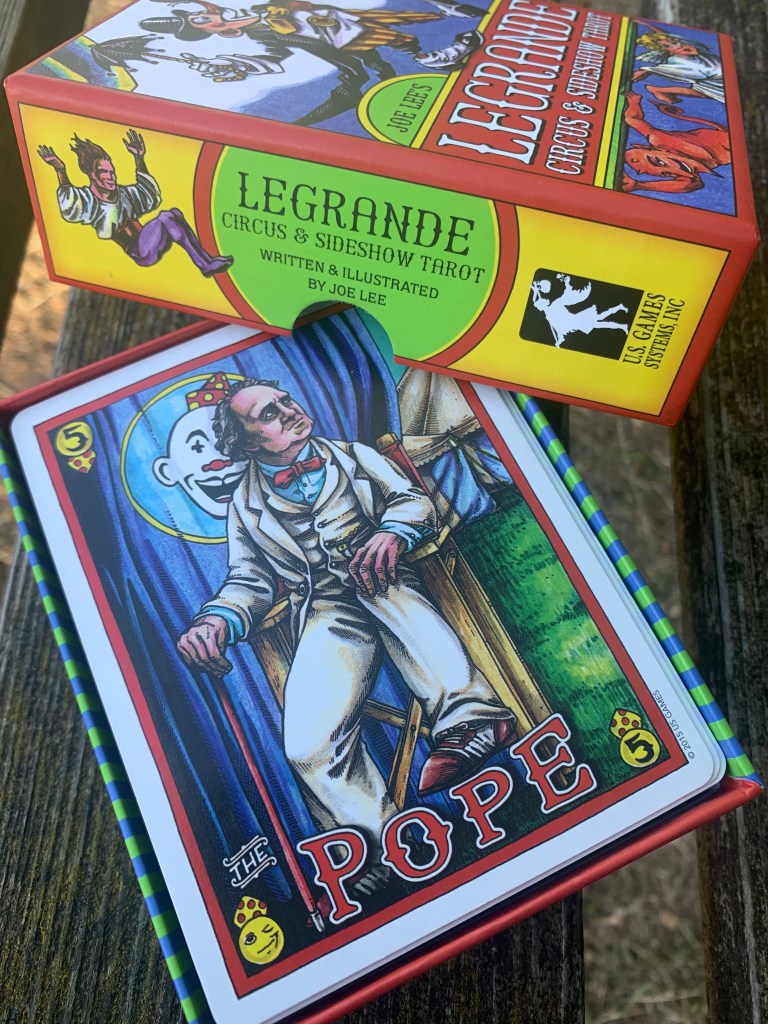
The LeGrande Circus Tarot presents the Pope or Hierophant as the entrepreneurial owner of the outfit. Circus owners were such a varied lot that it is doubtful if this title suits them all. Some were born into circus families. Some, like Al G. Barnes, ran away with the circus as youngsters and worked their way up through the ranks of ticket takers and candy butchers. Others were entrepreneurs and businessmen. And still more saw themselves as creative artists, sometimes even serving as headline performers.
A hierophant (Ancient Greek: ἱεροφάντης, romanized: hierophantēs) is a person who brings religious congregants into the presence of that which is deemed holy. As such, a hierophant is an interpreter of sacred mysteries and arcane principles.
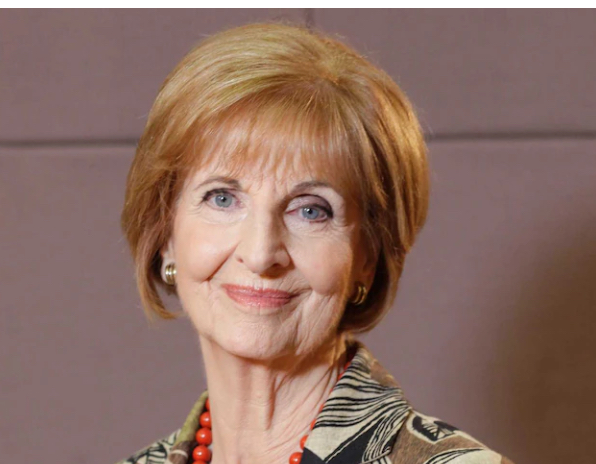
When I think of a Hierophant I prefer to think of a wise trail blazer, a generous mentor who nurtures, gently guides and encourages others. Read the obituaries for Carolyn Jones, the first Australian female reporter on This Day Tonight and you will be left in no doubt about her stature among female journalists, women who she championed, who acknowledge her amazing contribution to their careers.
This wonderful, gracious, fierce, trail blazing, truth telling woman has left us. She was beyond kind to me and to so many other women in my profession.
In my mind Carolyn, universally loved by all, deserves the title of Hierophant and gets to wear the robs signifying her status.
The Hierophant is often described as the guardian of tradition, institutions and established wisdom. He can represent a counsellor, mentor or teacher—someone who offers guidance shaped by experience. In many Tarot decks he appears as a richly robed religious authority, suggesting that wisdom resides within formal structures such as churches, schools or ancient traditions.
Yet that interpretation can feel limiting. Wisdom does not belong exclusively to those who wear ceremonial robes or occupy positions of authority. Some of life’s greatest teachers sit quietly among their communities, passing on knowledge through compassion, storytelling, service and example.
The Hierophant in the Tarot of the Sweet Twilight offers a refreshing alternative. Rather than an imposing religious figure, we encounter a gentle elder seated upon a rock beneath the water, while fish shoal peacefully overhead. Beside him sits a young woman and her curious cat, evoking something of the dreamlike world of Alice in Wonderland. His great beard drifts freely in the current and his clothing is simple, devoid of religious regalia or symbols of rank. He feels less like a pontiff and more like an ancient storyteller—a keeper of cultural memory and one of many guardians of human wisdom.
It is also worth asking why the Hierophant is so rarely imagined as a woman. Throughout history, countless women have quietly shaped communities through education, pastoral care and service, yet their contribution has often been overlooked. They may not have held positions of institutional power, but they have been profound teachers nevertheless.
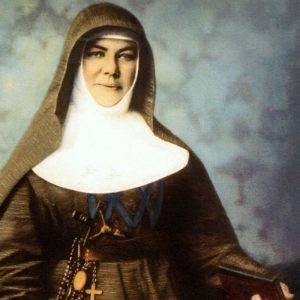
One such woman is Saint Mary MacKillop, whose life beautifully embodies the deeper spirit of the Hierophant. Born in Melbourne in 1842 to impoverished Scottish immigrants, Mary understood hardship from an early age. Her father valued learning deeply and educated his children whenever circumstances allowed, planting in Mary a lifelong belief that education could transform lives.
As a young woman she worked to support her family before moving to Penola in South Australia, where she began teaching not only her relatives but also the poor children of the district. Encouraged by Father Julian Tenison Woods, Mary recognised that educating children who had been overlooked by society was both a practical and deeply spiritual calling.
Together they founded the Sisters of St Joseph of the Sacred Heart in 1866, Australia’s first religious order established by an Australian. Their first school operated from a converted stable, offering free education to children who would otherwise have received none. From these humble beginnings the sisters established schools, orphanages and refuges across the country, bringing learning, dignity and hope to thousands of people.
Mary’s journey was far from easy. She experienced conflict with church authorities, periods of misunderstanding and even excommunication before eventually being vindicated. Through it all she remained steadfast in her belief that faith must be expressed through compassionate action rather than status or privilege.
Canonised in 2010, Saint Mary MacKillop is remembered not because she sought authority, but because she lived her values with courage and humility. She reminds us that the Hierophant is not simply a guardian of institutions. At its best, this archetype represents the transmission of wisdom through service, education and quiet dedication to the wellbeing of others.
Perhaps that is the real lesson of the Hierophant. True teachers are recognised not by the robes they wear, but by the lives they help to shape.
Working with the Hierophant
Seek out the Hierophant in each of the decks you own and compare and contrast the messages that the artists provide in their companion texts.
Prepare some questions! Engage in active imagination and dialogue with your favourite Hierophant. Ask those hard questions!
Many communities had “memorisers” whose role was to memorise history, witness and memorise current events (including what happened, who attended, even what key figures wore), and identify and train up young people to become memoriser. In your journal carefully memorise the events of recent years making sure to include as much detail as possible.
Certain stories, such as Fairy Stories, are much more than mere entertainment – they are used as lessons and provide a moral, through the form of a traditional belief, that will help guide people through their lives. Create a story which you believe needs to be passed on.