A rich inventory of monstrous figures exists throughout Aboriginal Australia. The specific form that their wickedness takes depends to a considerable extent on their location.
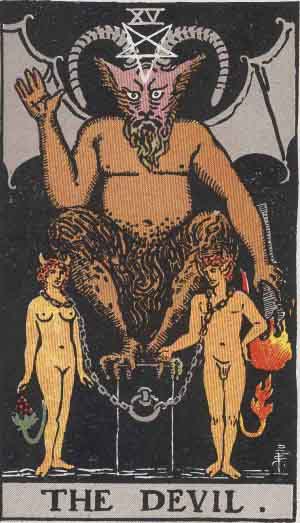
The Devil, with its foreboding images of demons and chains and some dark, scary hellscape points to the devil we all carry within us.
As a student Catherine Bishop says she naively thought she had uncovered a feminist heroine when she discovered material about Australian missionary, Annie Lock. However, once she researched more carefully she found a woman of deep contradictions and was quickly disabused of any notion of the woman being a heroine: for all of Lock’s intrepid and gutsy behaviour, she held intensely socially conservative views in line with her religious conviction. The legacy of work done by her and other missionaries reverberates to this day and for first nations people may well be perceived to be the work of the devil.
In the Australian Central and Western Deserts there are roaming Ogres, Bogeymen and Bogey women, Cannibal Babies, Giant Baby-Guzzlers, Sorcerers, and spinifex and feather-slippered Spirit Beings able to dispatch victims with a single fatal garrote.

The places where Annie Lock was the ‘big boss to the natives’ were created and designed to ‘protect’ First Australians in a very patronising, paternalistic sense. Mainstream Australian thinking at the time was that Australia’s First Peoples were a ‘dying race’. Protectionist policies were developed reflecting this view. The interesting thing about Lock is that she didn’t adhere to all these view and her view that white Australians had taken Aboriginal land and owed them compensation was ahead of her time.
Born in 1876 into a Methodist sharefarming family of 14 children in South Australia’s Gilbert Valley, Lock was a practical woman with a very basic education. A dressmaker by trade, in 1903 she joined what would become the United Aborigines Mission.
It operated on faith lines: missionaries were unpaid and could not actively solicit donations, relying on prayer to answer all needs. Lock, like her colleagues, developed a nice line in inviting supporters to “join her in prayer” for very specific needs, such as “a nice staunch horse for £12”, hoping for a “practical” show of sympathy.
Follow the links and judge for yourself. Lock was a very contradictory, controversial figure. However, “while one may not admire all of Annie Lock’s actions or opinions, one cannot help but have respect for her courage, perseverance and the fact that she offered a friendly hand, albeit with strings attached. She was a significant figure in Australian history, one of an army of female missionaries who had profound effects, both positive and negative, on generations of Indigenous people. Lest we forget”.


