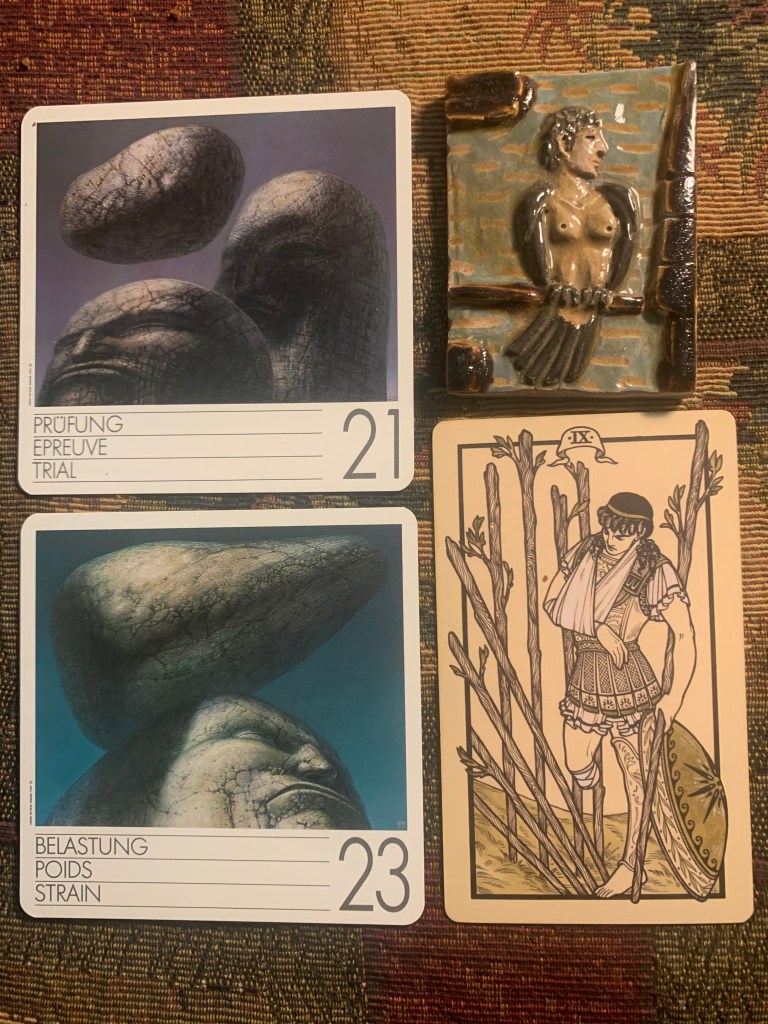
generosity, charity, community, material help, support, sharing, giving and receiving, gratitude
It is no news to those who love Tarot that the cards can help us talk about the good, the bad and the ugly things that we all face on this planet. These images can help us to find the words to describe how we are feeling. Cards like the Six of Pentacles also have the capacity to draw out long buried stories that speak of two way currency, benevolent give and take, that have the power to inspire us. Give and take can be more complex than we first realise. While we may give and take with no strings attached sometimes there are other agendas at play.
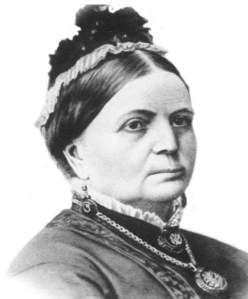
Elizabeth Austin is acknowledged by the Victorian Government as “the country’s first female benefactor and the most prominent woman philanthropist of her generation”. A statement also points out that “her influence, at a time before social security and welfare provisions were provided by government, continues to benefit women and the Victorian community today”.
History has a way of focusing on one primary achievement. There is no question that Austin was open to a two way flow of money and that her support of what became known as the Austin Hospital for the Incurables left a large footprint on the Victorian Health system. It was Elizabeth Austin who persuaded the Victorian government to donate land on which to build the hospital and she contributed £6,000 for building works. The Austin is now a major health institution, world renowned for its research and specialist work.
Elizabeth also had a passion to improve the lives of older and poorer women at a time when there were no welfare provisions being provided by the government. However, while she helped many less fortunate people, as an article by the Geelong Cemeteries trust points out, using her voice, she had a rich life and many of her other actions continue to have a ripple effect. For example, while she is know for her philanthropy and community work, her eight surviving children made good marriages and their ancestors, not only proudly carry the name, but have made significant contributions to society.
The Seven of Cups kind of gal is imaginative, and often caught up in a world of possibilities. They tend to see life through a lens of wonder and may escape into a world of their own creation. The Seven of Cups person is known for their ability to envision.
When we think of Seven of Cups we may think of an ideas kind of person, a person who has a vibrant imagination and is not afraid to explore various paths in life. Liz Ham is one of Australia’s most in-demand photographers and if her World Pride Portraits at the Power House Museum are any indication she is definitely able to explore many life paths.
Her zine Punk Girls, started out as a small project and quickly escalated over a 6 year period as she encountered an increasingly inspirational community of Australian female-identifying people who channelled the punk spirit through their actions, ideologies and personal style.
As we neared the 40th anniversary of punk she realised how subversive and important these women’s stories and experiences were – how much more punk they were to be fighting and pushing against not only societal norms, but gender bias at the same time.
Having witnessed how many women in punk scenes had been marginalised, misrepresented and had their anecdotes and histories erased she wanted to explore and pay respect to a movement that is consistently shifting, evolving, and to a community of fierce, devoted, strong and diverse women.
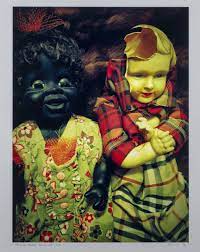
Deacon’s ‘commitment to socio-political dissidence is exemplified in the triptych Blak lik mi (1991–2003)’, a work with very deliberate spelling. Tired of hearing the c-word yelled at Black people, Deacon explained, ‘I just wanted to take the “c” out of “Black”.’
Destiny Deacon once described herself as ‘just an old-fashioned political artist’. The sardonic title of Deacon’s Daisy and Heather discuss racecertainly winks at the idea of race ever being the subject of polite conversation, especially between people of different racial backgrounds.
Australia’s Art World is currently mourning the death of this amazing Indigenous Australian artist who, true to her name, blazed an unforgettable trail of witty and incisive explorations of Indigenous identity, political activism, and cultural resilience.
Born in Queensland in 1957 with Kuku (Cape York) and Erub/Mer (Torres Strait) ancestry, Vale Destiny Deacon began her career as a radio host and screenwriter before pursuing art seriously from the 1990s.
‘Destiny’s work, Blak Bay, at the Biennale of Sydney, stands as her final masterpiece—a testament to her resilience and immense contributions, created with tireless dedication even while she was ill,’
In her photographs, Deacon made use of a trove of toys and souvenirs she’d already collected, including boomerangs, teaspoons, ceramics, prints, and black dolls.
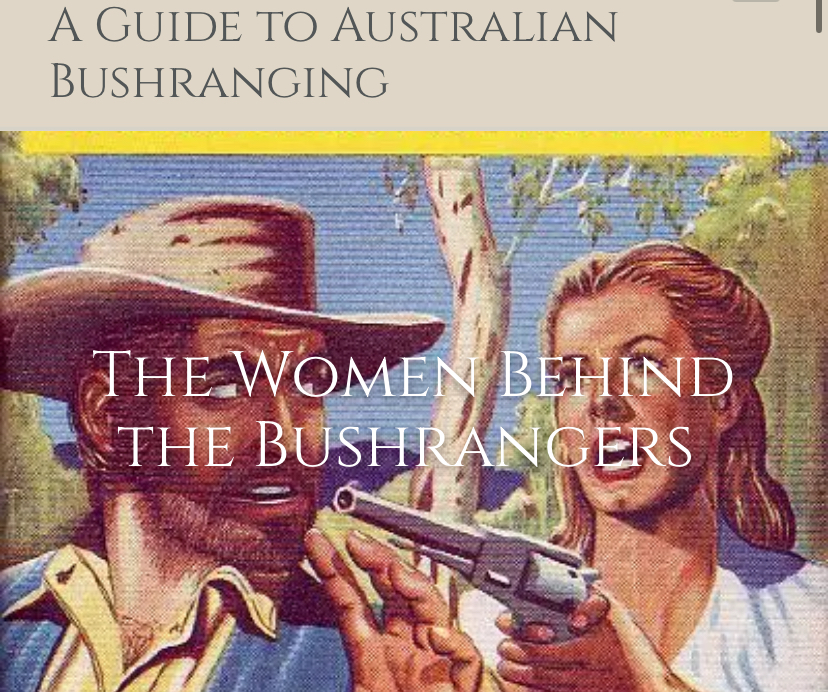
“It is often said that behind every great man is a great woman. In the case of Australia’s colonial outlaws it is just not conceivable to tell the stories of the men without drawing attention to the vital role played by women. The Kelly and Clarke women were just as notorious as the men, often getting into trouble with the law on their own accounts. Jimmy Governor, Captain Thunderbolt and Michael Howe all relied on women to aid them while on the run. Ben Hall and Johnny Gilbert had many doxies and partners during their time on the run from the law to give them a warm bed when the opportunity presented itself. Then there’s the reputation of Matthew Brady who set a standard for other outlaws by making a point of treating women well, which resulted in hordes of female admirers filling his death cell with love letters and gifts. Here we will look at a few notable examples of the women behind some of Australia’s most notorious men”. Source: The Women Behind the Bushrangers
Intrigued?
She had five aliases. She ran a gang. Rumor was she killed her own husband. And the police couldn’t touch her. So when Jessie Hickman first rode into the Australian town of Kandos in the early 1900s, the locals steered well clear. They also gave her a name: “The Lady Bushranger“
As the old saying goes, ‘behind every great man is a great woman’; however, in the case of bushranger Fredrick Ward and his First Nations wife Mary Ann Bugg, it could be argued the latter was always a few steps ahead.
Julia Rajagopalan is a certified nutritionist, yoga teacher, writer, and witch. She has been reading tarot for over 20 years.
Why Tarot for Health
On the surface, tarot and witchcraft don’t seem to have much to do with health and wellness. I don’t need tarot cards to predict a Friday night pizza binge, and I can’t brew a magic potion to lose 40 pounds.
So, why use Tarot and spell work in the wellness world?
A few years ago, I worked at a wellness company that coached people on their nutrition and eating habits. The vast majority of clients were there to lose weight. To help them reach their goals, coaches educated clients on nutrition and healthy behaviors. What I found, however, was that clients already knew what they should do to get healthy. The clients knew they should eat less sugar and more lean protein. They knew they should move more and sit less.
But they weren’t doing it.
The disconnect came when applying that knowledge to everyday habits. As I researched the science of motivation and habit formation, I started hearing words like mindfulness, intuition, awareness, and intention. As a practicing witch, these were terms very familiar. I’ve been reading tarot for twenty years and dabbled in witchcraft for almost as long.
The first thing a witch does when they start a spell is set an intention. Deciding what you want the spell to do is just as important as doing the spell itself. This is similar to finding your WHY for health changes. Finding your WHY allows you to get clear about your goals and motivation. If you’re clear about your WHY, you’re more likely to act.
In 2014, I left my job in the education industry and moved with my husband to New Delhi, India. My husband, who grew up in India, was transferred there for work. While in India, I studied Vinyasa and Yin Yoga, as well as Ayurveda. Before India, my yoga practice had been purely for exercise, but after studying the Vedic philosophies, I realized there’s so much more to it.
Tarot is also more complex than people realize. Many think the tarot is just a tool for predicting the future. However, Tarot is most impactful when used to understand the self. Tarot allows us to access our subconscious mind, to understand our true desires. It helps us process the massive amount of information in our brains to extract insights that impact our lives. Tarot tells us things we already know but don’t understand.
This can be invaluable when identifying health habits that don’t serve us. Why do I plop on the couch every night instead of going for a walk? Why do I skip Friday yoga, even though I love doing it? Why do I automatically reach for that glass of wine after a phone call with my mother? Tarot cards are archetypal thought prompts to help us identify things hidden in our subconscious.
Soon after we returned to the United States, the pandemic hit. During the pandemic, something became abundantly clear. I had an unhealthy relationship with alcohol. I’ve been sober for over two and a half years now, and I attribute my sobriety to wonderful organizations like Secular AA, Recovery Dharma, and Y12SR. I also believe tools like tarot and witchcraft helped me in my recovery.
For me, dealing with cravings means delaying and distracting. When feeling a craving, I often read tarot, do yoga, or create a spell. Tarot and witchcraft are excellent distractions that encourage mindfulness and intuition. I believe these practices can help others make healthier choices, too.
Why do I know using tarot and witchcraft for health works? I was 225 pounds at my heaviest, and I was able to use tarot and witchcraft, along with yoga and mindful eating, to get healthy and lose nearly 40 pounds. I’m still a work in progress, but by using these practices, I’ve found lasting success.
Yoga, tarot, and witchcraft offer alternative approaches that empower people to take control of their health journeys in a way that feels authentic and meaningful. Most of us will never become powerlifters, and not everyone wants to throw giant tires around as exercise. People don’t want to eat only grilled chicken breast for the rest of their lives. That’s not a welcoming world, and it’s not even effective in making sustainable health changes. The wellness world should be welcoming to everyone, and I want all people to feel safe and heard in their journeys to health and well-being.
I recently created a Udemy course that uses tarot and witchcraft to get healthy and achieve lasting wellness. I am also completing a grimoire workbook to help people on their health journeys. Check out the course on Udemy.
Tarot4Health on Instagram
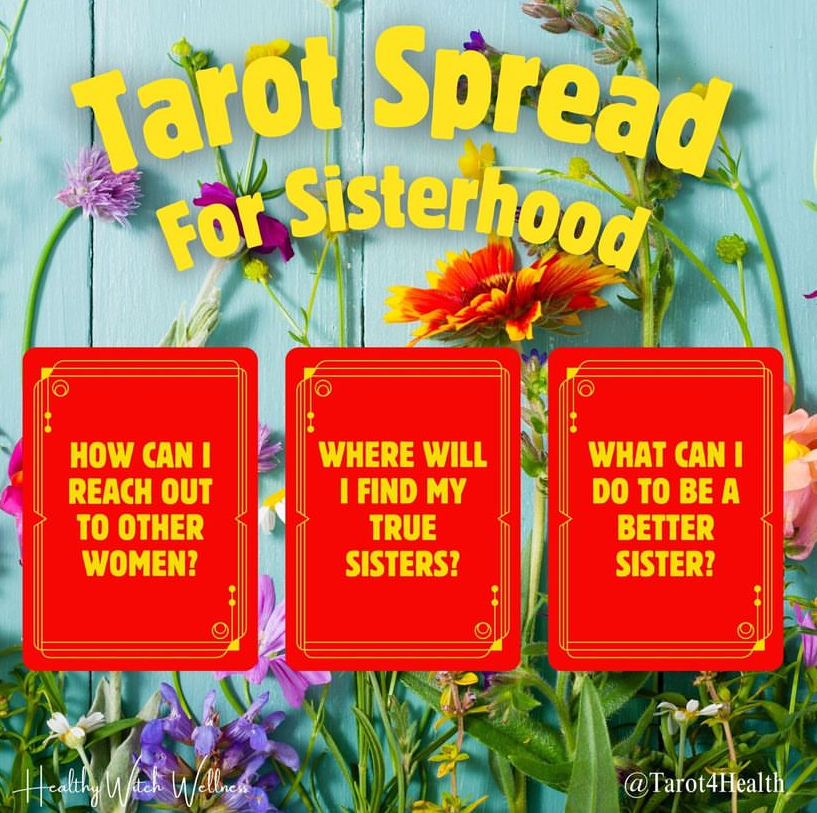
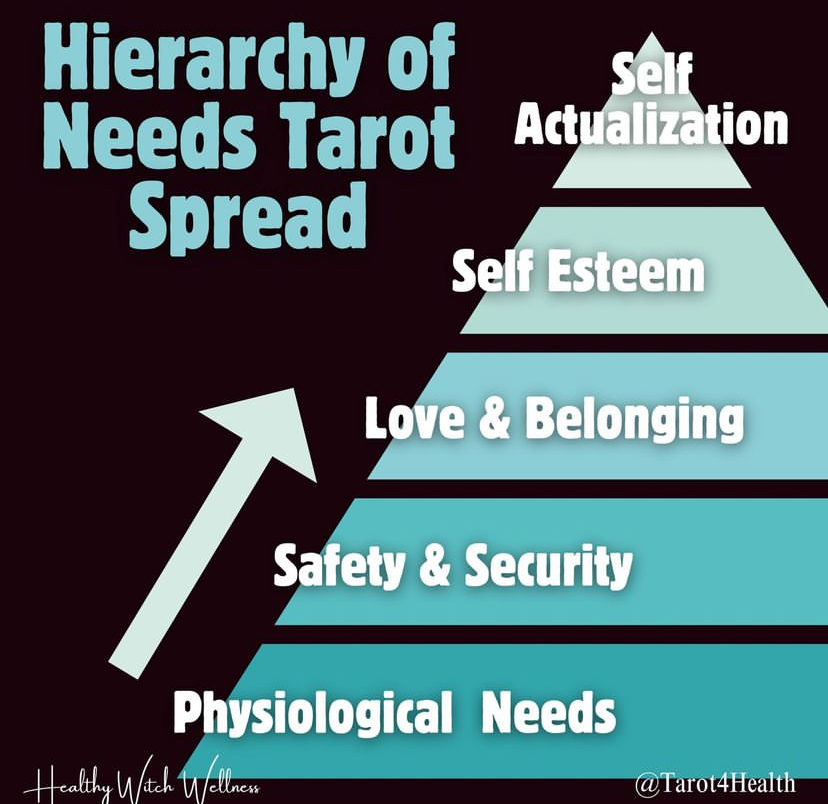
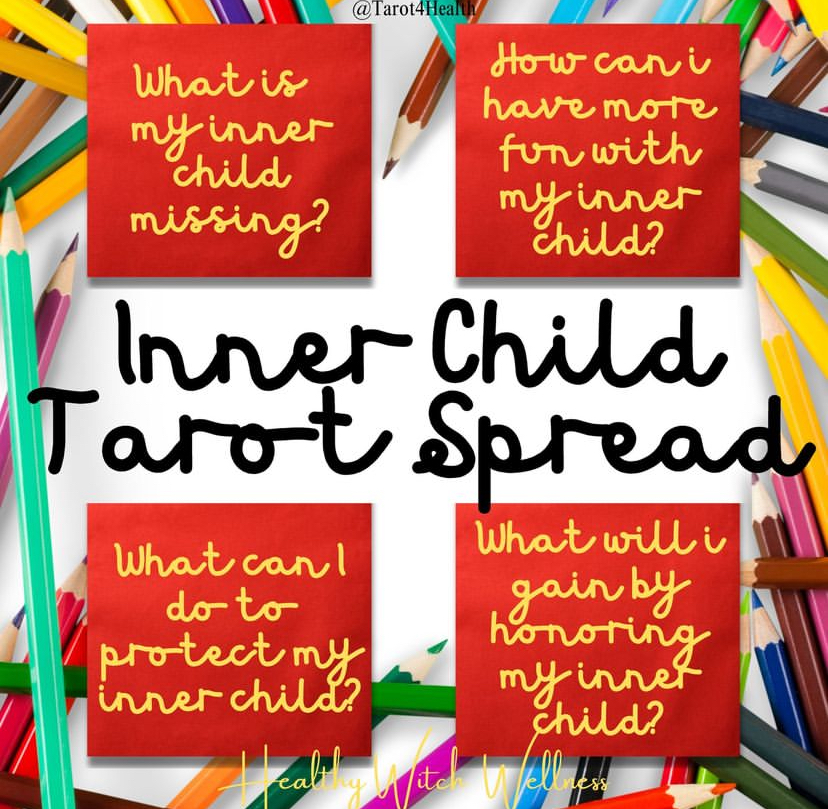
Follow Julia on Instagram @tarot4health to benefit from spreads like these.
Been waltzing with Lennox Rees, the creator of very beautiful Coastal Curiosities Oracle and Peculiar Pathways Tarot, who tells me that she adopts a typical Hermit style when she works on new projects. She says that she goes inside herself to form something to show on the outside.
You can find Lennox’s deck creations at helloivyly.com. To follow her creative process and artwork make sure to follow her on Instagram over at @helloivyly.
The Nine of Wands shows an injured man, clutching a wand. He looks over his shoulder towards the eight wands that loom over him. He seems weary and worn, as though he has already been through a battle and now must face additional challenges with the presence of these eight wands. As a Nine, though, this is his final challenge before reaching his goal; he must endure this last test of his strength and character before reaching the finish line. Biddy Tarot
Louisa Lawson (1848-1920), mother of Australian writer and poet, Henry Lawson, was born on 17 February 1848 on Edwin Rouse’s station, Guntawang, near Mudgee, New South Wales. She was the second of twelve children of Henry Albury, station-hand, and his wife Harriet, née Winn, needlewoman. She was educated at Mudgee National School but had to stay home, under the eye of a tyrannical mother, and look after her siblings, instead of learning to teach.
To escape her mother, in 1866, she married a Norwegian-born handyman and gold digger. Between 1867 and 1877, Lawson gave birth to five children, but her husband, Peter, was often away at the goldfields or contract building. A long-suffering bush-woman, Lawson’s life was extraordinarily tough and manage with so little money and a husband who was frequently away. After her husband Peter finally left, she worked tirelessly to secure income for the family.
Mortality rates were high at this time. Louisa’s grief over the loss of one of her twin daughters is expressed in this poem.
A Mother’s Answer
You ask me, dear child, why thus sadly I weep For baby the angels have taken to keep; Altho’ she is safe, and for ever at rest, A yearning to see her will rise in my breast. I pray and endeavour to quell it in vain, But stronger it comes and yet stronger again, Till all the bright thoughts of her happier lot Are lost in this one — my baby is not. And while I thus yearn so intensely to see This child that the angels are keeping for me, I doubt for the time where her spirit has flown — If the love e’en of angels can fully atone For the loss of a mother’s, mysterious and deep. I own that thought sinful, yet owning it — weep.
Louisa Lawson (1848 – 1920)
Lawson eventually moved to Sydney with her children in 1883 and Peter sent money irregularly. In 1888 she started Dawn and in doing so was the first female to establish a radical newspaper for women. She announced that it would publicise women’s wrongs, fight their battles and sue for their suffrage. It offered household advice, fashion, poetry, a short story and extensive reporting of women’s activities both locally and overseas. Perhaps most importantly it employed an all female workforce.
Of course none of this fully reveals just how tough journey was that led Louisa to her Opus Magnus, what is widely recognised as a significant publication and which to influenced women’s magazines such as the long running Australian Women’s Weekly.
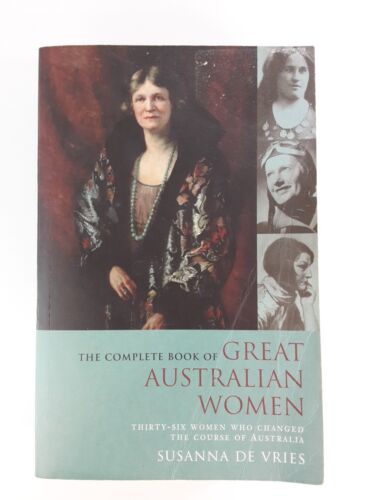
In her book ‘A Collection of Great Australian Women’, Susanna De Vries leaves in no doubt about just what Louisa endured in her lifetime. Sadly, in her final years, after a debilitating fall from a tram she began to lose her memory and was admitted into a hospital for the insane. She died on August 12, 1920.
When the nine of wands appears upright, it indicates that you have a very strong determination and even during times of adversity, you don’t back down and face the challenge upfront. Even if you are tired and exhausted from the battles of life, your determination and persistence do not fail you and you use them to get what you want. The nine of wands stand as a witness to your struggles and appear when you feel battered and bruised. You are struggling to make progress, but just as you feel you are making it, you come across an obstacle
There is so much magic in manifestation. So much alchemy. The Three of Wands is a reminder of that power. It’s a card for sorcery, witchcraft, spellwork. For calling on higher powers, stating intentions, and most importantly, working with the power of your own will. from Little Red Tarot
Screenshot
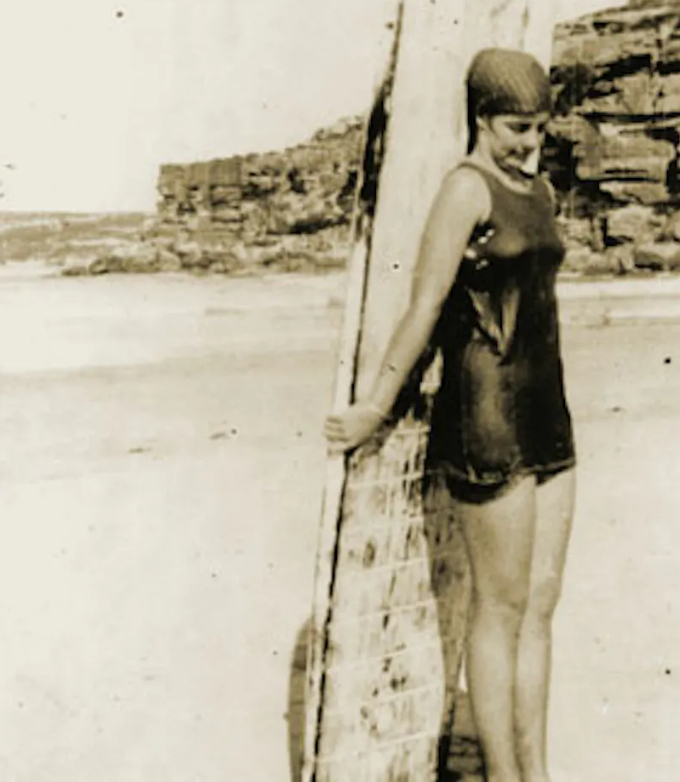
Some might be aware that surfing is said to have been introduced to Australia by the Hawaiian swimming champion, Duke Kahanamoku. What is less known is that he was accompanied in some of his momentous surfing demonstrations by a teenaged girl from Sydney’s northern beaches who, by tandem board-riding with Kahanamoku at Freshwater Beach in January 1915, earned the contested distinction of being the first Australian to surf.
That Isabel Letham’s name is little known outside the surfing world no doubt says something about the way the sport’s iconography of chiselled jaws and bare, bronzed pectorals has left little room for images of feisty femininity.
Emboldened by this Australian celebrity, Letham decided to try her luck on the silver screen. The US film industry was taking the world by storm, and Hollywood was the place to be. Leaving school at 16, Letham found employment as a sports mistress at elite girls’ school Kambala, and also worked as a private swimming instructor.
The Three of Wands is the threshold we stand on before we throw ourselves into the unknown, it is our opportunity to really assess what the best way forward is so that we can push on with confidence and self-assuredness. Often this position also comes with hesitation and a fear of doing something completely new, but we have to feel the fear and do it anyway.
By August 1918, she’d saved enough for a fare to California. The war was still raging but that was not enough to deter her. Still only in her teens, Letham set sail on the SS Niagara, the “Queen of the Pacific”. She travelled alone and with only the vaguest outline of a plan.
The Three of Wands urges you to step out of your comfort zone and embrace change. It encourages you to think long-term and be open to new experiences. By doing so, you can expand your horizons and achieve even greater success.
New beginnings, innocence, naiveté, childlike trust, carefree enthusiasm, longing to find one’s heart desire, spontaneity, endless potential, inexperience, excitement, leap of faith, risk, reckless, the unknown
She came to Australia with her younger brother Victor on an early assisted passage scheme. Victor landed an adventurous job travelling the far reaches of SA with a hawker and “getting to see the true Australia”. He inspired Minnie to give up her job and come with him.
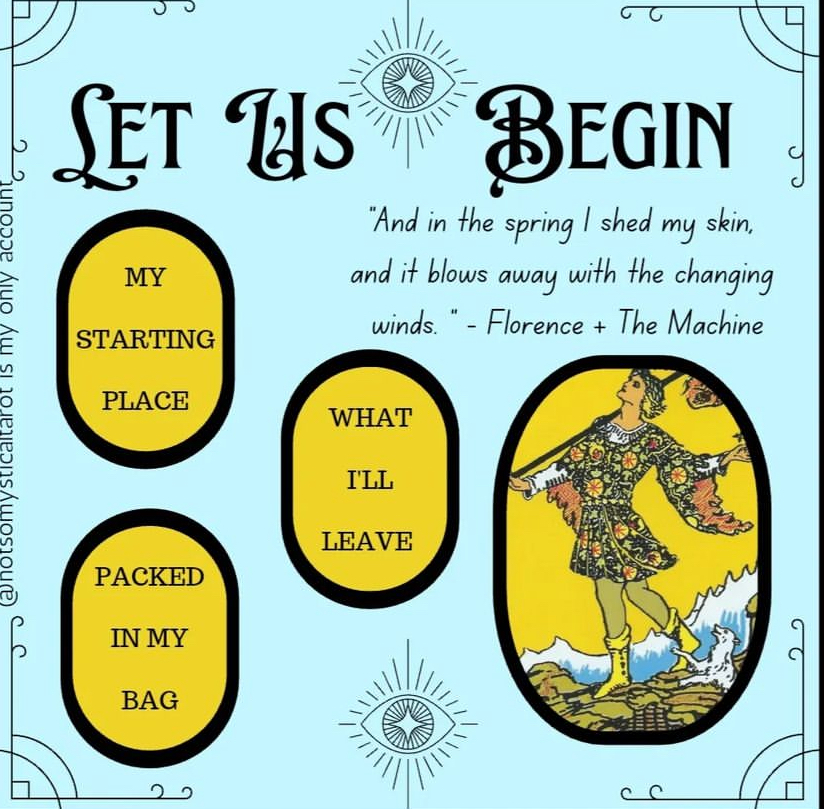
This is just the beginning! The Fool is Card Zero of the Major Arcana, representing the point where everything begins and ends and begins again. The Fool tarot card is a sign of unlimited and endless potential. It’s a cosmic invitation from the universe to start your next adventure. The world is your oyster, babe! Release your expectations or any preconceived notions because anything can happen right now, you just need to take a leap of faith and dive into the unknown
In 1925, London typist Minnie Berrington left her commonplace life for one of adventure and travelled to Australia with her brother Victor on an early assisted passage scheme. She went on to becoming the first female opal miner and postmistress in the harsh and unforgiving deserts of South Australia. From 1926, for over 20 years, Minnie was an opal mining pioneer in both Coober Pedy and Andamooka.
People always asked Minnie if she was ever afraid, living out in the desert alone with all those rough and scruffy men. But Minnie Berrington was not the faint-hearted type, and never had been. Being tough came naturally to her, growing up with three brothers and a family that went from riches to ruins. Only a slip of a girl, Minnie could match any man in stamina, perseverance and strength.
“A golden light suffused everything,” she wrote. “The air was so clear it seemed to sparkle and the hills were as sharp-cut as the ones that looked so impossible on the stage… The enchantment of that golden serenity was so complete that I knew I would never willingly live in a city again.”
She arrived in Coober Pedy when camels still brought in essential supplies, and water was so scarce that no-one washed. Together with the other miners, she braved the heat, the flies and the dust. Every day she waited for that special sound the pick made when it cracked opal.
Minnie was not the first woman to be arrive at the Stuart Range Opal Field. Mary Halliday, the wife of an opal miner, preceded her as the first woman
Taking the Plunge
The Fool is a symbol of potential. He is often shown carrying a small bag which emphasizes his status as a wanderer. He embarks on his journey with nothing but pure faith in a higher power (and usually, a dog).
The Fool encourages you to take a leap of faith. If you have the right mindset, a fresh start awaits you. Take risks. Trust everything will work out in your favor at the end of the day.
There is beauty in innocence and spontaneity. You don’t always have to know what will happen next. It is okay to move on fearlessly even if you still don’t have the perfect plan.
The Five of Swords is about a battle in which there are no winners – by the time someone had triumphed, it is over anyway. There may ‘officially’ be winner and a loser… but from over here it kinda looks like everyone lost.
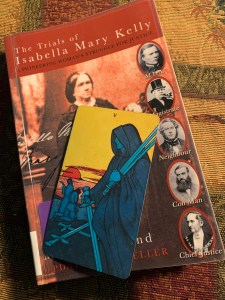
The stories that have circulated about Irishwoman Isabella Mary Kelly are amazingly lurid. As recently as the 1970s and 1980s tabloid articles about her feature headlines such as ‘Female settler was tyrant to assigned lags’, ‘Wild ways of grazier Bella’, ‘Sex-hungry tyrant lived by law of the lash’ and ‘Isabella Kelly — a bitter, sadistic hellcat of a woman’. This forensically researched books dispels these outrageous claims and honours her memory.
Isabella Mary Kelly (no relation to Victorian bushranger Ned Kelly) was born in Dublin, and arrived in Australia in 1835, a wealthy single woman in a man’s world. Kelly was surely the only woman who alone in those wild days took up virgin forest for settlement as a pioneer in Australia. She was the first, or one of the very first, ‘free’ selectorson the land north of the Manning.
Isabella ran her property herself, using assigned convict labour. Isabella was disliked by her male counterparts who lived nearby and was eventually accused and convicted of a crime she did not commit She struggled to prove her innocence and obtain justice.
When this card appears in a reading it calls upon you to think about the areas of conflict in your life. Is the fight still worth it? Was it ever worth it at all? The truth is that old grudges eat up our energy, take up brain space and cause you pain and harm. Sometimes it is better to just walk away – even if that means admitting defeat?
In this case however, Isabella, accused amongst other things of being a gun-toting wildcat. does need to have her name cleared. Stories concerning Miss Kelly’s heart-less doings in those wild days have been many, and particularly outrageous tales have easily been attached to this ‘Pioneer in Skirts,’ for she seems to have had very few friends to advocate her cause.
Read the printed material of the tme and you would be led to believe that she was a masculine, evil-minded, ill-tempered, unnatural sort of individual. For instance, it is alleged that she shot down convicts with the two big old horse pistols, that she carried at her belt; that she murdered her maid servant in her tantrums; and even drove chained convicts 50 miles on foot, to Port Macquarie to be flogged after they had saved her own life in a swollen river.
Such stories are outrageously libellous to her memory, one even accusing her of flogging men to within an inch of their lives for refusing her favours. Most of these accounts end with Kelly receiving her just desserts by dying as an impoverished beggar living in a cellar in Sydney’s dockland in the 1890s.
The truth is less spectacular. Kelly successfully managed her property herself, becoming a noted breeder of horses. Current thinking about Kelly is that she was greatly resented for the free lifestyle she led as an unmarried woman. Posthumously, The Trials of Isabella Mary Kelly, by Maurice Garland offers a different picture of this spirited individual and provides some justice for Isabella. It reveals the lengths her adversaries went to and shows just what a stoic female pioneer she was.
Isabella died in Sydney in 1872, not wealthy but certainly not a beggar. She is now recognised in the Manning River area as a pioneer woman of great determination and ability.
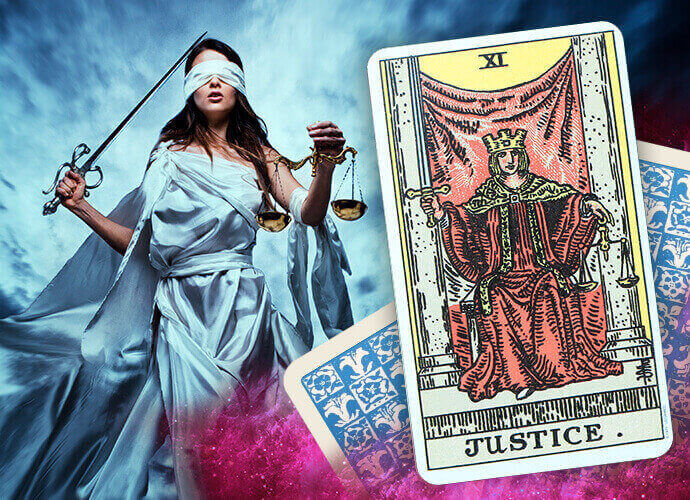
The Justice card represents justice, fairness, truth and the law.
Justice represents the balancing of scales. The payment of dues. The ‘right’ outcome. The serving of justice as we enjoy it in films and literature. Social change, progress. Justice is, in principle and by definition, about fairness, balance, equity.
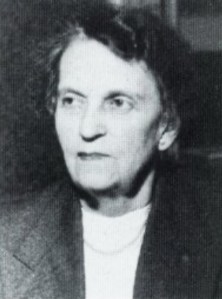
One notable female private investigator of the past included Matilda Mitchell, who left the pantomime stage to become head of Selfridge’s “secret service” on Oxford Street in 1912, and Liverpool’s own “Mrs Sherlock Holmes.
This set me, like others, on the trail to find an equivalent Australian. Turns out that Lillian Armfield was Australia’s first female detective. When she and Maude Rhodes began their work as the first constables in the newly formed Womens Police, part of the NSW Police Force, in 1915, World War I was raging in Europe and the Middle East, and Australian troops experienced warfare on a mass scale for the first time as they went ashore at Gallipoli on 25 April.
Lady detectives seem to have come late to Australia. The concept of them was known throughmost of the Victorian era, as they were subject of some popular novels, including Revelations of a Lady Detective (1864) which was advertised, widely, for many, many, many years in regional Australian newspapers. Tracing them was also complicated because the distinction between police detective and private detectives isn’t always obvious from the context. Still, they don’t appear until near the end of the century and the earliest mentions are from overseas.
To say things were stacked against Lillian is an understatement.
For one, Armfield had to sign a waiver agreeing that the New South Wales police department she served was not responsible for her safety and welfare, and that no compensation would be provided for injuries sustained during her duties.
Then there was the fact that she wasn’t given a uniform and had to pay for civilian clothes worn on duty. She couldn’t marry either. To top it all, she had to go about her business unarmed and, er, was not allowed to arrest criminals.
Ah, yes… the spinster policewoman with no uniform, no weapon, with no powers of arrest… All they were short of doing was painting a target on her back, saying ‘Assault me’
By the time Christine Nixon, who headed Victoria police, was in power things had certainly changed, but she makes no secret of the fact that she still struggled with the very masculine world of the force.
Female Private Investigation Today
The history of private investigators in Australia is a lesser-known topic since there are no accurate records about the exact year when the first PI agency commenced its operations in the country. However, newspaper articles and court reports suggest that private investigators in Australia have been working since at least the 1880s.
Sydney based Amy Elliot talks about the breadth of work, and the skills she offers. Many might find what she does daunting but Elliot loves her work. She believes that investigators like herself can effect change more quickly than the court system.
On any day her role can embrace.
• Criminal background checks on candidates for a job vacancy for businesses • Bad debt recovery and collection • Investigating suspicious business employees • Insurance or workers compensation claims • Conducting interviews for investigating workplace theft or harassment complaints • Investigation and evidence collection through internet forensics • Process serving for legal cases • Background checks on to-be spouse before wedding • Infidelity investigation • Data recovery from damaged phone or laptop • Strengthening your case in child custody matters • Investigating financial fraud
The Fool is the first card in the tarot deck and represents new beginnings, innocence, and being open to whatever life has in store.The Fool depicts a youth walking joyfully into the world. He is taking his first steps, and he is exuberant, joyful, excited
The Fool balances on the edge of the cloud preparing to take the leap into the unknown. Divine Feminine Tarot.
The Fool is often linked with the Court Jester, the one who reminds us not to take ourselves too seriously. Few Australians embodied that joyful spirit more completely than Jeannie Little.
Born Jeanne Mitchell in 1938, Jeannie transformed herself into one of Australia’s most beloved entertainers. With her flamboyant handmade costumes, infectious laugh and delightfully unpredictable personality, she burst onto television screens as though she had wandered in from another world. Audiences adored her because she gave them permission to laugh, to play and to embrace the gloriously unexpected.
Working on The Mike Walsh Show throughout the 1970s and early 1980s, Jeannie seemed willing to try almost anything. Whether throwing knives, paragliding, singing, dancing or even riding an elephant, she approached each new adventure with infectious enthusiasm. Like the Fool stepping towards the edge of the cliff, she met life with curiosity rather than caution.
Long before television made her a household name, Jeannie was already living creatively. She designed and made her own extraordinary costumes and ran a dressmaking business from an upstairs alcove in Paddington, Sydney, creating gowns for wealthy clients and retired showgirls alike. Her creativity knew few boundaries. She wasn’t simply performing a character; she had crafted an entire world in which imagination always took centre stage.
Jeannie also came to represent something distinctly Australian. She has often been described as one of our rare female larrikins—a mischievous spirit who cheerfully ignored convention without losing her warmth or generosity. Like the Fool, she challenged the idea that dignity requires seriousness. Her gift was to remind us that wisdom often arrives wearing feathers, sequins and a mischievous smile.
The Fool invites us to travel lightly, to trust the journey and to remain open to surprise. Jeannie Little showed that courage isn’t always solemn. Sometimes it laughs out loud, wears outrageous clothes and steps into the unknown with a twinkle in its eye.
The Fool carries enormous potential in her back pack and is always excited about beginning new adventures.
Play Like Jeannie
Raid a Charity Store. Begin wearing eccentric, hilarious and madcap clothes.
Jeannie was paid peanuts and had to be resourceful. She made jackets out of tin foil and dresses covered with balloons, or pale pink prawn crackers and milk bottle caps. As well as the disposable dresses, Jeanne designed edible hats made of food including pizza, french fries, crumpets, bangers and mash, ice cream cones and frankfurters. Come up with your own crazy design.
Jeannie had an inexhaustible array of ideas and adventures. Dream up an adventure and set out.
The Six of Cups raises themes of family and ancestry and where we each come from, specifically in relation to how it these things inform your own life now. It asks us to explore what it feels like to be ‘rooted’ – that may be physically in a space, or it may be in a culture, tradition or lineage that we are part of.
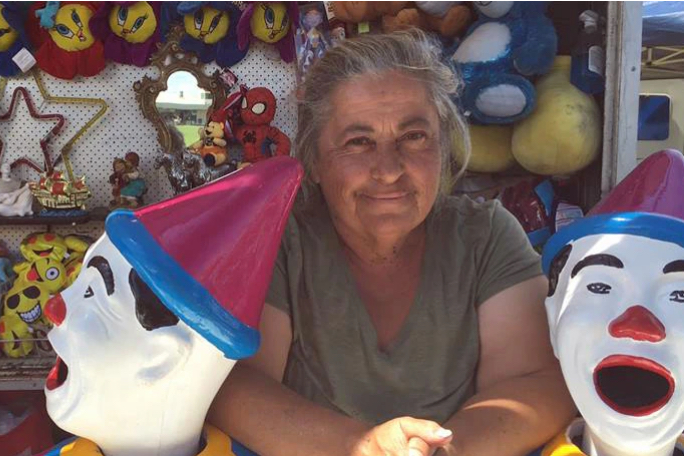
Annette Calder is a third generation ‘showie’ who has been travelling with her laughing clowns for the past 57 years.
Her family is part of a tight travelling community of stallholders that belong to the Victorian Showmen’s Guild, supplying sideshow alley entertainment to agricultural shows across the state.
The Six of Cups represents innocence, nostalgia, and positive thinking. The card has an overall feel of childhood and nostalgia. It embodies feeling free and pure and allowing your past experiences to guide you down new paths.
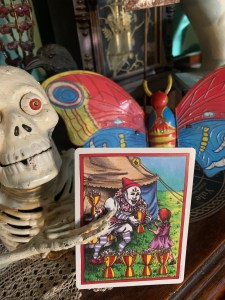
The Six of Cups from the Legrande Circus and Sideshow Tarot helps add another dimension to the story of this woman who has spent so many years travelling to Agricultural Shows in regional areas of Victoria, Australia. Annette was, as so many Showies are, born into this business. Her parents and grandparents all worked the shows. Sideshow stall holding is often a long-held, multi-generational family affair with many stallholders being related.
It’s no surprise then that the Six of Cups can often be attributed to our inner child and how we tackle our role as both the parent and the child. Often when the Six of Cups appears in a Tarot reading, we are directed to that inner child and what it’s trying to tell us. Of course, even if you are not into reversals it is prudent to remember that sometimes the things that happened to us as children can manifest in our adult lives in unpleasant ways. It could be trauma from neglect or abuse, a specific event that happened that changed our beliefs about ourselves or changed the way we see the world.
Understanding Wisdom of the Past
Nostalgia, memories, childhood, familiarity, rose-colored glasses, stuck in the past
Go through your decks and find some Six of Cups and all the Pages. Study the various versions! Consider what, from the past, you want to examine. What other selves are to be found there? Take the opportunity to work with your younger self.
It may help to do this spread by Hermits Mirror and then journal. The creator explains that when he made it, it was was geared toward understanding wisdom from any of the past versions of ourselves that live within us.
Late, late last night, when the whole world slept, Along to the garden of dreams I crept. And I pulled the bell of an old, old house Where the moon dipped down like a little white mouse. I tapped the door and I tossed my head: “Are you in, little girl? Are you in?” I said. And while I waited and shook with cold Through the door tripped me—-just eight years old. I looked so sweet with my pigtails down, Tied up with a ribbon of dusky brown, With a dimpled chin full of childish charme, And my old black dolly asleep in my arms. I sat me down when I saw myself, And I told little tales of a moonland elf. I laughed and sang as I used to do When the world was ruled by Little Boy Blue. Then I danced with a toss and a twirl And said: “Now have you been a good, good girl? Have you had much spanking since you were Me? And does it feel fine to be twenty-three?” I kissed me then, and I said farewell, For I’ve earned more spanks than I dared to tell, And Eight must never see Twenty-three As she peeps through the door of Memory.
The Five of Coins, or the Five of Pentacles is not a card that is welcome in a spread. The Rider Waite is particularly bleak. It is one of the toughest cards in the deck. Two people walk through the icy wind and snow; both are destitute and living in poverty. One man is injured and on crutches, while the other is barefoot. When upright means to lose all faith, lose resources, lose a loveror lose both financial and emotional security.
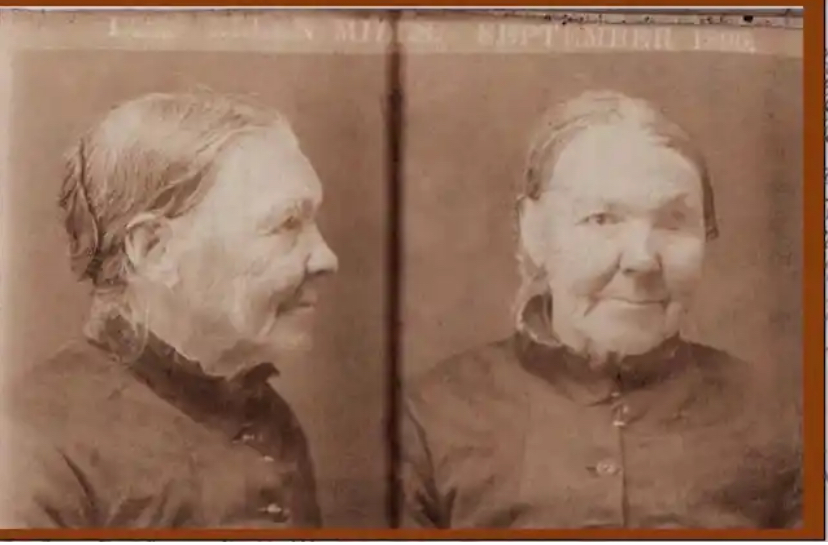
By and large the stories of the female convicts who were transported to Australia have remained hidden and have not featured in the history books. Many prevailed and went on to reinvent themselves and become successful but others, like Ellen Miles lived in continual poverty.
In an article featured in The Conversation she is described as a child convict, goldfields pickpocket and vagrant. She lived until 90 and was constantly in and out of gaol and benevolent asylums, until she was too frail to escape the Ballarat institution where she died in 1916.
Ellen’s first appearance in the press had been in 1839: aged 11, she was charged at the Guildhall with passing a counterfeit half-crown to a shopkeeper in Russell Street, Bloomsbury, London. Mr Field, an inspector at the Mint, said that this child was “one of three sisters, all notorious utterers”.
Her story is filled with characters that could appear in a Charles Dickens novel.
When people are asked to name their favourite tarot card, the Queen of Swords often comes up. Why? Much of her appeal has to do with the fact that this is a strong, powerful person who has been through a lot. So many people relate to this queen’s story. Here we have a person of tenacity and courage.
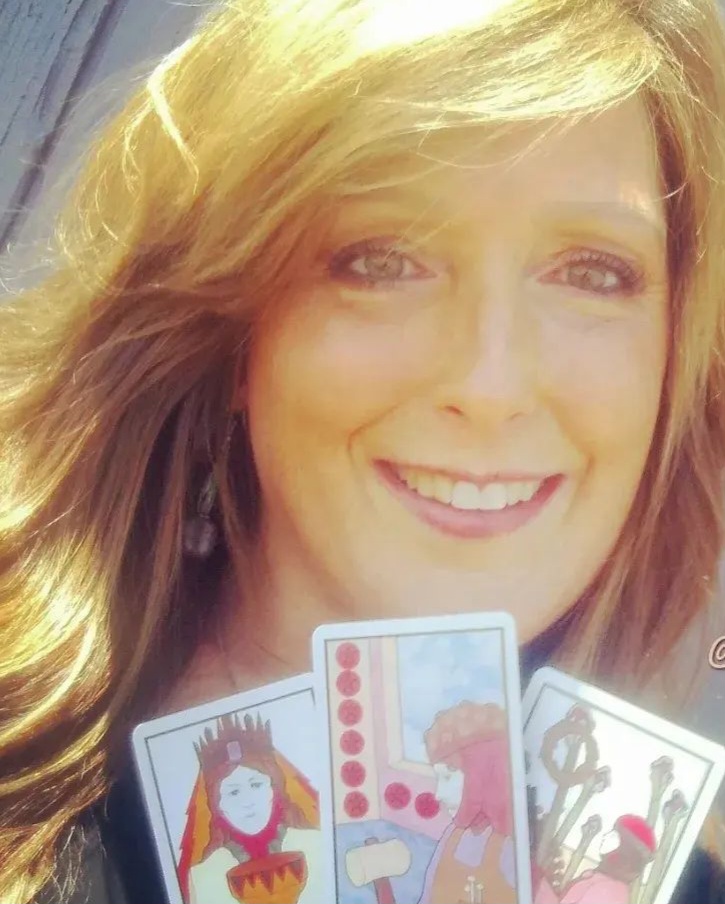
When asked to identify a card that really speaks to who she is as a creative, Jenn (JenniferAnn) Congilaro, who so many know as the creator of the Not So Mystical Tarot deck, chose the indefatigable Queen of Swords.
Take the time to check out this tilda’s profile here at Waltzing with a Matilda and learn more about her connection to the Queen of Swords.
When you get the Strength card in an upright manner during your tarot reading, it shows that you have inner strength and fortitude during moments of danger and distress. It shows that you have the ability to remain calm and strong even when your life is going through immense struggle. It also shows that you are a compassionate person and you always have time for other people even if it’s at your own expense.
Phyllis Kaberry, unlike Margaret Mead, is not listed as one of the top female anthropologists. No doubt because of gender bias her ethnography did not receive the attention that it deserved when it was first published but her work is every bit as fascinating as Meads.
Kaberry was born in the United States in 1910 and moved with her family to Sydney at the age of ten. Educated in Australia she was the first Australian woman to be recognised as a fully trained and qualified anthropologist. She achieved several other ‘firsts’ along the way: she was the first female Australian anthropologist to complete doctoral work, which she did at the London School of Economics in 1938, and the first who took a particularly woman-focused approach to her field work and theories.
Kaberry was a social anthropologist who dedicated her work to the study of women in various societies. Particularly with her work in both Australia and Africa, she paved the way for a feminist approach in anthropological studies.
She was an outstanding and disciplined fieldworker, to judge from my experience, well and critically apprised of the existing documents, and with a brilliant sympathy for the perplexities and moral dilemmas of chiefs, local political leaders, catechists, conservative lineage-heads, tax-collectors, traders, what you will. Her evident integrity attracted a rich deposit of information on social change in this area which may be of capital importance for the future. Her field-notes have been left to the British Library of Economics and Political Science.
Kaberry was encouraged by A. P. Elkinan early figure in Australian anthropology and history to work in the Kimberley. Elkin had noted that there was very little understood by outsiders about Aboriginal women and that only half the Aboriginal story was being told. Her main findings were published in 1939 in Aboriginal Woman Sacred and Profane. During her time in the field, she received an Aboriginal name, Nadjeri, and the memory of her stay “has been recorded into a number of indigenous historical narratives” (Toussaint 2002 ; Williams 1988). She was the first researcher to focus on the lives of Aboriginal women (Williams 1988) and her work garnered considerable public as well as academic attention.
Kaberry spent almost two years in the Kimberley travelling from the west to east. She spent most of her time around Moola Bulla near Halls Creek, Fitzroy Crossing, Forrest River, Turkey Creek, and some of the Dampier Land communities. She travelled extensively with Aboriginal people, walking or riding a mule, was allocated the sub-section or skin group of ‘Nadjeri’, and took her social incorporation and obligations very seriously. Kaberry was interested in languages and seemed to quickly learn the different languages encountered on her travels. When talking with Aboriginal people who knew Kaberry, Dr Toussaint found that she is remembered with respect and affection. She has recorded a number of stories about Kaberry’s travels with Aboriginal people.
The Strength card is a symbol of inner fortitude, which helps us prevail in the face of life’s challenges. Strength is something that needs to be reinforced every day. Just as muscles need to be continuously used to maintain their power, so too does inner-strength need to be habitually exercised.
Newspapers of the time published a number of articles about Kaberry and her research.
Newspaper Articles
Note that the kind of tabloid writing at the time would be deemed offensive now. This is not a reflection on Kaberry’s work but does reveal her courage and determination and capacity to patiently complete her work.
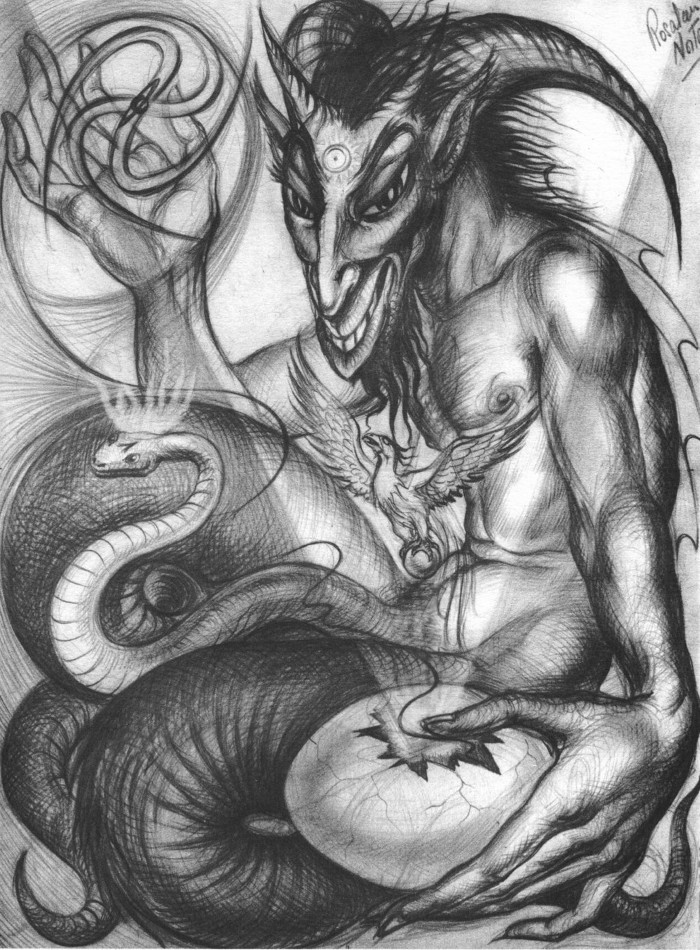
Rosaleen Norton rose to infamy in the 1950s in Australia, after a series of lurid public scandals in which she was accused of participating in orgies and satanic rituals. She was prosecuted on charges of obscenity and blamed for the downfall of a world-famous conductor. Demonized by the press, her life became fodder for tabloids.
As all good readers of Tarot cards know, you cannot typecast a person with just one card. Everyone is complex and each card reveals something about each person. A documentary called “The Witch of Kings Cross” — named for Rosaleen Norton’s bohemian neighborhood in Sydney — explores the life of the artist and self-professed witch and shows that scandal isn’t really the heart of Norton’s story.
The High Priestess is an ancient archetypal energy that embodies wisdom, inner knowledge and guidance. She is associated with Mystery, Sensuality, Desirability, Fertility, Creativity, Subconscious, Thirst for knowledge, High power, Intuition, Inner voice and the Divine feminine
Rosaleen Norton (1917–1979) was an Australian artist, writer, journalist, and occult practitioner whose life and work challenged the conservative social and religious norms of mid-twentieth-century Australia. Best known today as the “Witch of Kings Cross,” Norton became one of the country’s most controversial cultural figures, attracting intense media scrutiny for her spiritual beliefs, artistic imagery, and unconventional lifestyle.
During the 1940s and 1950s, Norton produced visionary artworks inspired by mythology, nature, paganism, and the occult. At a time when Australia maintained strict censorship laws and Christian values dominated public life, her depictions of nude figures, mystical beings, and alternative spiritual practices were considered shocking by many. Several of her publications were censored, and she faced prosecutions for obscenity, becoming a frequent target of sensationalist newspaper coverage.
Yet the scandals that surrounded her reveal only part of the story. Norton was also a gifted illustrator, journalist, and horror writer who contributed to Smith’s Weekly and other publications. Her work explored themes of personal freedom, spiritual exploration, sexuality, and humanity’s relationship with the natural world. While critics condemned her, others were fascinated by her intelligence, creativity, and refusal to conform.
The documentary The Witch of Kings Cross invites viewers to look beyond the lurid headlines and discover a complex woman whose life became a battleground between artistic expression and social conformity. Viewed through a contemporary lens, Rosaleen Norton emerges not simply as a scandalous figure, but as a pioneering artist and spiritual seeker whose courage to live authentically came at a considerable personal cost.
Follow the links and watch the Youtube video provided here examine her art and learn more about this fascinating, complex woman. Then you can decide for yourself which cards best speak of her energetic.
Traditionally the Three of Cups is a card of celebration. It embraces the energy of good friends, who love each other unconditionally and who are sharing a moment of sheer joy. Times are good when we have each other. The essence of this card is one of genuine friendship, and a feeling that together with our friends, we have all that we need.
Lightseers Tarot
The image on the Lightseers Tarot Three of Cups says it all. Arm in arm three women are dancing, under a star filled night, across a verdent field.
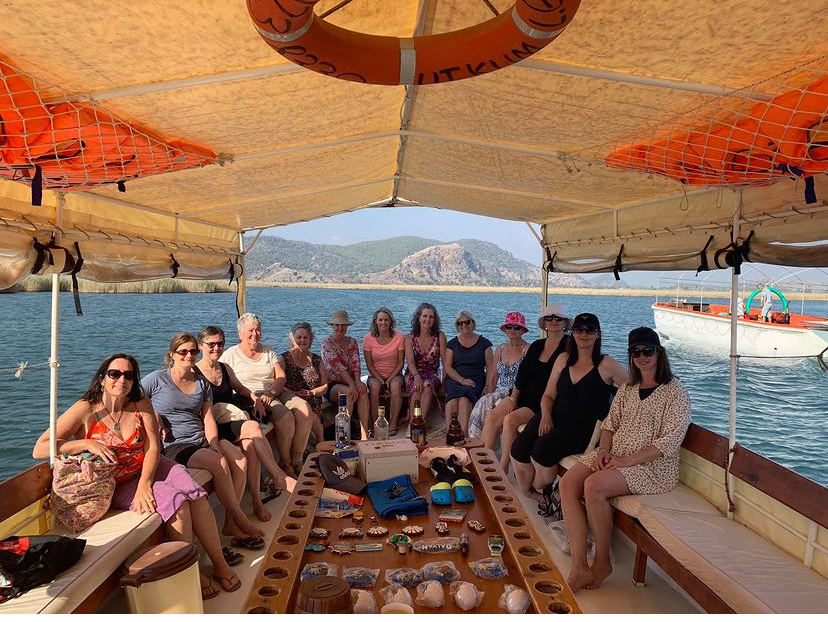
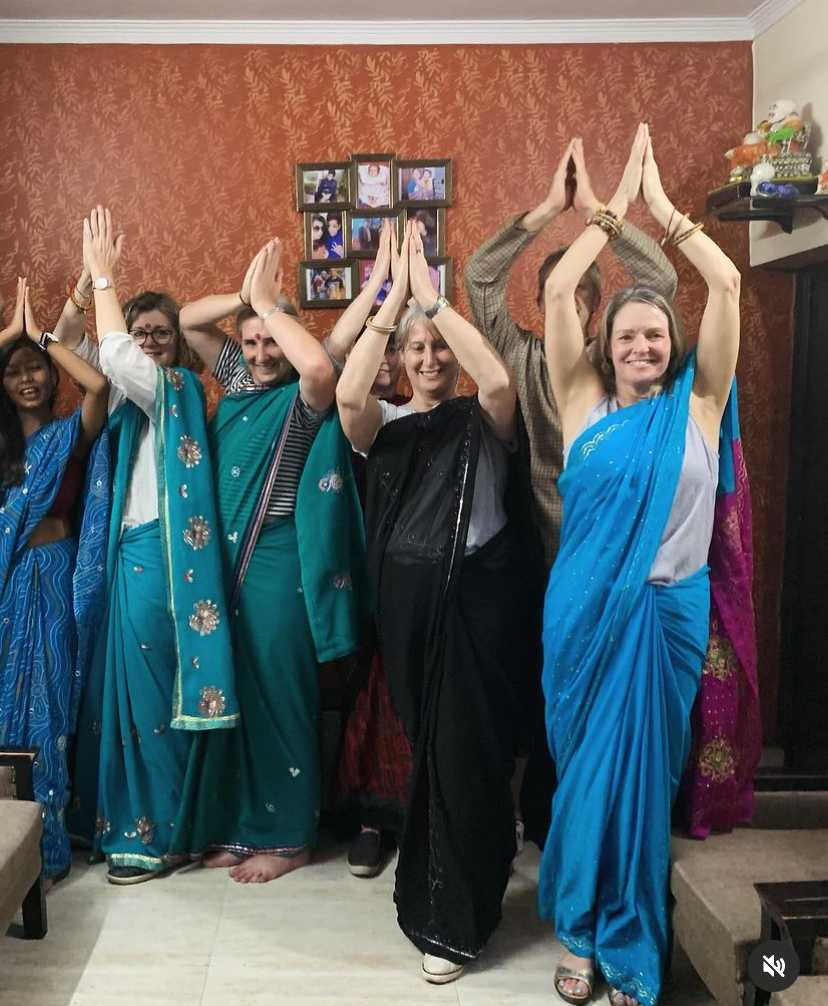
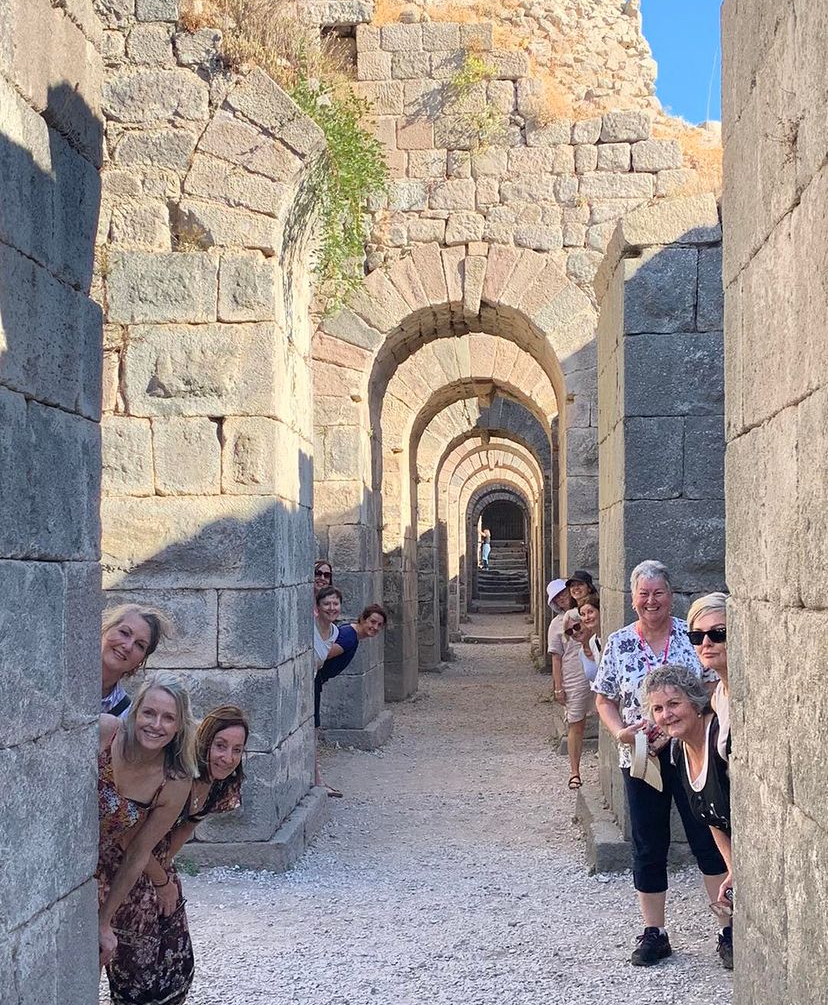
Take a peek at Wendy’s instagram @wendy_hansford_yoga and you find her celebrating her ‘epic women’s tours’ and Yoga Classes at her Awakening Yoga Studio. Examine the photographic evidence before you and you are left in no doubt that that Wendy and the team who join her on one of her overseas excursions to Turkey are having an exhilarating time together.
They say that a picture is worth a thousand words and there are thousands of words associated with these happy pics.
Check Wendy’s full profile on the Tilda (Not Licorice) Allsorts page to learn more about the life changing Tower moment that set Wendy on the course to become a Yoga Teacher and Tour guide.
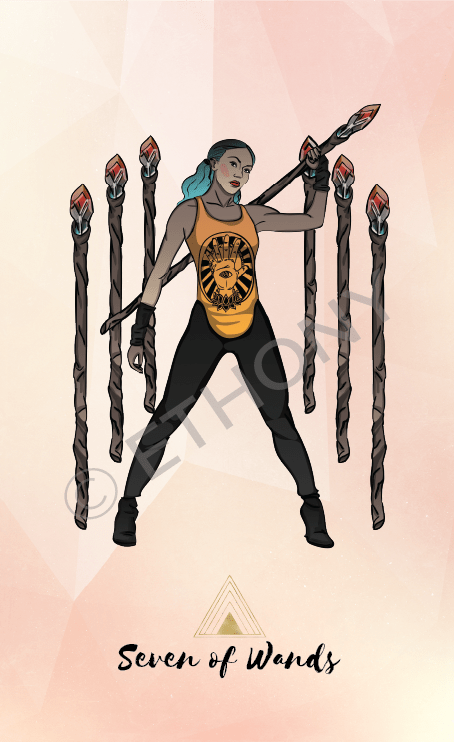
The Seven of Wands represents standing up for what you believe in and not wavering in those beliefs. When others put you in a position to argue your point, you rise to the occasion. You’re passionate about your morals and desires, and you’re not afraid to defend them.
Sarla Devi Chaudhurani was a prominent freedom fighter working towards the betterment of women’s rights and education, especially in the subcontinent. Her central focus was on woman-power. She was a political activist for the women’s cause.
Chaudhurani was from Bengal as well as Punjab. She was born in Kolkata in a Bengali family in 1872. Sarla was raised with modern feminist values. The spirit of patriotism was infused in her by her mother Swarn Kumari who worked for the Swadeshi cause.
Growing up under a canopy of privilege, with attendants at her beck and call, Sarala Devi had no reason to learn any housework. She was allowed the special privilege of studying physics at a time when the discipline was not open to women students in Calcutta (now Kolkata). Her brothers sat next to her in class, the sole woman in a sea of male students.
Sarla worked as the editor of the Bengali Journal Bharti. She was a niece of Rabindranath Tagore and had connections with national leaders such as Satyendra Nath Tagore and Chaupekar brothers
Even though she had no need for a job, Sarala Devi took off to Mysore (now Mysuru) in 1892 to work for a while. She opened Laksmi Bhandar to make popular Swadeshi goods. She got married to a popular Arya Samajist Pandit Ram Bhuj Dutt Choudhary of Lahore, in 1905, as a result, her political activities shifted to Lahore. She became an active member of Bharat Stree Mahamandal of Lahore, which was meant to organize women of all colors and creeds for the common cause, and moral and material development of the women of the nation. She toured the whole of Punjab and opened branches of Arya Samaj for women.
Chaudhurani originated the idea of donating one-tenth of ornaments by women to the ‘revenge fund’, made committees for the collection of funds, and united the women folk for the cause of freedom. Her speeches, writings, articles, and poems motivated many men and women to join the freedom struggle. The government kept her activities under surveillance and warned her about her writings.
In 1919, she came under the influence of Mahatma Gandhi and started to follow non-violence methods. She raised her voice against the massacre at Jallianwala Bagh, Amritsar. She became the pivot of the Swadeshi movement in Punjab. She was the first woman in the province who started to wear Khadi Sari. She remained a devoted worker of Congress till her death in 1945.
Gandhi Connection
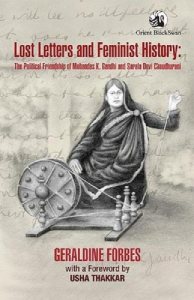
Not surprisingly, given his stature, there have been many insinuations about the relationship Gandhi had with various people. Sarla Devi Chaudhurani was just one of these. It has been claimed that she was his spiritual wife. Google and you will find salacious snippets pointing to the Mahatma’s lust for her. Check out this article that appeared in Mint Lounge or read the Lost Letters and Feminist History by Geraldine Forbes and draw your own conclusions.
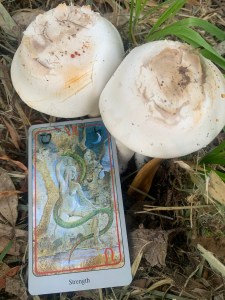
A mushroom’s power and strength is not obvious. But it is actually calling lots of the shots.
For a long time, mushrooms have been considered strange and mysterious creatures. They come in all shapes and sizes and can grow in the darkest and dampest corners of the world. In a sense, mushrooms thrive in environments where they may otherwise be destroyed.
Women, like mushrooms, are remarkably varied in their attributes and historically have often been required to suppress their identities and survive in hostile environments. Akin to mushrooms they often must grow below the ground’s surface: hide their talent under a bushel so to speak.
Mushrooms have the power to transform things. They can grow by decomposing organic matter, breaking it down, and creating new life. They can teach us about community, connection and renewal. Likewise there is much to learn from the long hidden women from history. These women can guide us and help transform society by reminding us to challenge and breaking down harmful norms and stereotypes.
Before her marriage to Anicius Secundus, Olympias’s mother had been married to the Armenian emperor Arsak and became widowed. When Saint Olympias was still very young, her parents betrothed her to a nobleman. The marriage was supposed to take place when Saint Olympias reached the age of maturity. The bridegroom soon died, however, and Saint Olympias did not wish to enter into another marriage, preferring a life of virginity.
After the death of her parents she became the heir to great wealth. A fifth century CE text presents Olympias as a determined young woman who was not afraid to advocate for herself and fight to live her chosen way of life. She chose to live a celibate life and began to distribute her wealth to all the needy: the poor, the orphaned and the widowed. She also gave generously to the churches, monasteries, hospices and shelters for the downtrodden and the homeless.
Olympias was fueled by an inner strength, personal power, strong will and determination. Given that she did not try to control others; but quietly influenced and persuaded, highlights her strength. Her power was not to be underestimated when it may have appeared so ‘invisible’. She proved able to can control a situation without excessive, outward force. No on possibly cottoned on to how she was actually calling the shots.
Journal Ideas
Get out in nature and find some mushrooms. Photograph these gentle creatures and spend time interviewing them about the meaning of life.
What lesson do you take from Mushrooms, the Strength card and Olympias?