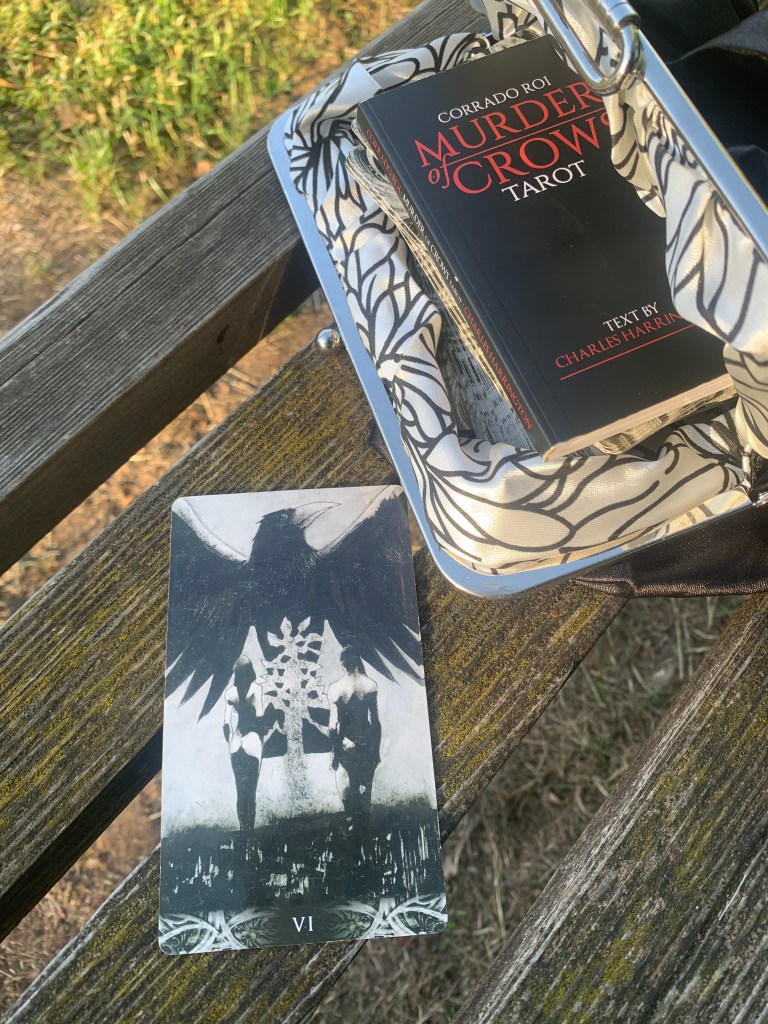
The Lovers card is all about love and being in sync with someone special. It’s like when you and your partner really understand each other and everything feels just right. This card is about making good choices in your relationships. It’s like finding your perfect match, your soulmate.
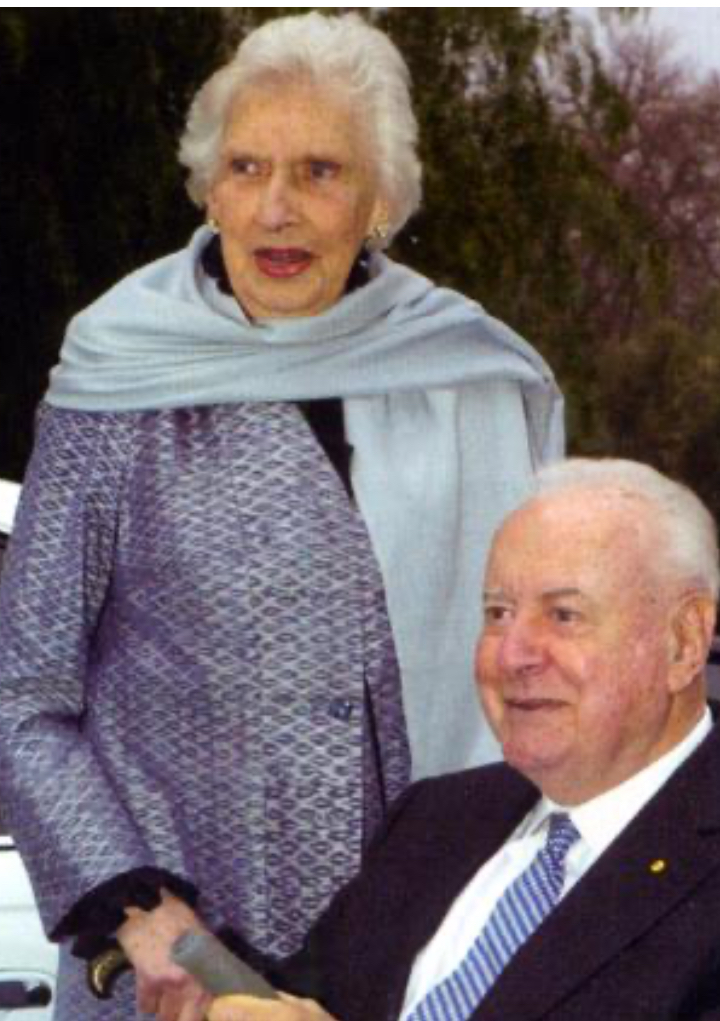
Margaret Elaine Dovey met Gough Whitlam at Sydney party in the summer of 1939. World War II had just started. He was 23 and studying law, she was 20 and a social work student. “Quite the most delicious thing I’d ever seen,” she recalled for a biographer years later
Height may have helped, too: with her standing 188cm, Whitlam’s 194cm frame was just what the doctor ordered for the tall young woman who had swum for Australia in the 1938 British Empire Games.
They married in April 1942, six weeks before he was called up by the RAA.
The foundation of every good relationship (lovers, friends, and even business partners) is open and honest communication. In order to keep everything balanced and harmonious, you must be able to express yourself to the other person, be heard and understood, and then take the time to listen to the other party.
If you are travelling through Australia, pack two companions. One is a collection of poems by Kath Walker (Oodgeroo Noonuccal). The other is Loving Country, co-authored by Aboriginal Elder Bruce Pascoe and artist Vicky Shukuroglou.
At first glance, Loving Country appears to be a guide to some of Australia’s most beautiful landscapes. Spend time with it, however, and it becomes something far richer. It is a collection of honest, compelling yarns that reveal the true stories of Country as told by those who know and love her best: Aboriginal people whose ancestral connections reach back through countless generations.
Kath Walker – Aunty Oodgeroo Noonuccal (1920 – 1993) was an Aboriginal rights activist, poet, veteran, environmentalist and educator. ‘Oodgeroo’, meaning ‘paperbark tree’ (whose bark is used for drawing), referred to her role as writer and artist. ‘Noonuccal’ is the name of her people, the traditional owners of Minjerribah and adjoining land for more than 20,000 years.
The Lovers card is often reduced to romance, but it speaks of something much deeper. It is the card of relationship, certainly, but also of choice. Every day we choose what we love, what we honour, what we align ourselves with, and what we are willing to sacrifice in order to remain true to those choices.
Can you truly love yourself? Can you open your heart and be honest about who you are and what you feel? Can you look at your life, exactly as it is, with acceptance rather than judgement? Who are you in this moment? What do you believe? Where is your energy flowing? What are you choosing to serve?
These are Lovers questions.
Through her poetry, storytelling and activism, Oodgeroo Noonuccal answered them with extraordinary clarity. She expressed an unwavering love for Country and for the Aboriginal culture to which she belonged. She spoke honestly of the devastation wrought by colonialism while never relinquishing her profound love for the land itself. Love, for Oodgeroo, was never sentimental. It was courageous enough to speak the truth.
Her story makes that courage all the more remarkable. Oodgeroo’s mother, Lucy, was a member of the Stolen Generations. Removed from her family at the age of ten, she was placed in an institution in Brisbane and, at fourteen, sent into domestic service in rural Queensland without having been taught to read or write.
Oodgeroo herself grew up on North Stradbroke Island before leaving home to work as a domestic in Brisbane, receiving board and lodging but less pay than her white counterparts. Yet with her gift for language and her determination to write, she became one of Australia’s leading poets, authors, political activists, artists and educators
She often said that Aboriginal people were the inspiration for her work. She understood poetry to be both deeply personal and a natural continuation of the ancient oral traditions of storytelling and song that had carried knowledge across generations
In the end, perhaps that is the deepest invitation of the Lovers card. Love is not simply an emotion. It is a practice of relationship. It asks us to choose what we will stand beside, what we will protect, and what truths we are willing to carry with open hearts.
For her lifetime of service to Aboriginal people and her extraordinary contribution to Australian literature, Oodgeroo Noonuccal was awarded three honorary doctorates by Australian universities. Yet perhaps her greatest legacy is not the honours she received, but the enduring invitation she offers us: to enter into a more truthful, more loving relationship with Country, with one another, and with ourselves.
Existential Choices
The Lovers card may be understood alongside key ideas from the philosopher and theologian Søren Kierkegaard (May 5, 1813–November 11, 1855). We face an existential choice between two life paths, either one willfully hedonistic or one grounded in our sense of ethical duty.
As Rachael Pollack points out, the 6th Tarot Card was once entitled Choice, suggesting that an individual may have to choose between desires. Equally the choice can refer to a person’s whole life, the decision about where to direct one’s passion.
Imagine Oodgeroo Noonuccal is still alive. You are a journalist who will be given the opportunity to interview this leading activist, poet, environmentalist and educator. You are only allowed to ask her three questions about life choices she made. What will you ask her?
Now change roles. Imagine you are Oodgeroo, and, using the knowledge about her life and personality gleaned from any research you have been inspired to do, write the answers you believe she might have give to the questions you posed.
Finding and Following Your Bliss
The hero’s journey is one of self-discovery, of finding and following your bliss. No one else knows what makes your eyes light up and your heart leap. Take control of your own life. Reach for the stars.
Joseph Campbell was one of the pioneers in the discussion of bliss, suggesting that people “find their bliss.” He said, “The way to find out what makes you the happiest is to focus on being mindful of your happiest moments—not simply excited, not just thrilled, but deeply happy.”
To seek your own personal bliss, you might wish to sit quietly and meditate about a time in your life when you were the happiest. Remain with that moment, as well as the feelings stirring inside you. When you think you’ve figured out at least one thing that makes you feel blissful, then stay with it. Write about that state in your journal. Recording your feelings can help you dig deeper into self-discovery and determine the ways in which you can follow your bliss—always keeping in mind that bliss is a calling that’s calling you.