The Justice card represents justice, fairness, truth and the law.
Justice represents the balancing of scales. The payment of dues. The ‘right’ outcome. The serving of justice as we enjoy it in films and literature. Social change, progress. Justice is, in principle and by definition, about fairness, balance, equity.

he Alchemical Tarot by Robert Place includes a 22nd card entitled Truth. A friend sent me a link to an article titled Mrs Sherlock Holmes’ and the other real female sleuths who were written out of history. This addresses the women who rivalled male private eyes in a masculine world, who sought truth and justice.
One notable female private investigator of the past included Matilda Mitchell, who left the pantomime stage to become head of Selfridge’s “secret service” on Oxford Street in 1912, and Liverpool’s own “Mrs Sherlock Holmes.
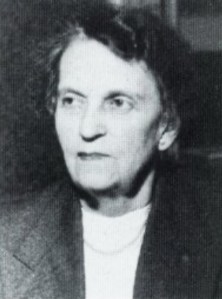
This set me, like others, on the trail to find an equivalent Australian. Turns out that Lillian Armfield was Australia’s first female detective. When she and Maude Rhodes began their work as the first constables in the newly formed Womens Police, part of the NSW Police Force, in 1915, World War I was raging in Europe and the Middle East, and Australian troops experienced warfare on a mass scale for the first time as they went ashore at Gallipoli on 25 April.
Lady detectives seem to have come late to Australia. The concept of them was known throughmost of the Victorian era, as they were subject of some popular novels, including Revelations of a Lady Detective (1864) which was advertised, widely, for many, many, many years in regional Australian newspapers. Tracing them was also complicated because the distinction between police detective and private detectives isn’t always obvious from the context. Still, they don’t appear until near the end of the century and the earliest mentions are from overseas.
Mistress of the Rough Seas
To say things were stacked against Lillian is an understatement.
For one, Armfield had to sign a waiver agreeing that the New South Wales police department she served was not responsible for her safety and welfare, and that no compensation would be provided for injuries sustained during her duties.
Then there was the fact that she wasn’t given a uniform and had to pay for civilian clothes worn on duty. She couldn’t marry either. To top it all, she had to go about her business unarmed and, er, was not allowed to arrest criminals.
Ah, yes… the spinster policewoman with no uniform, no weapon, with no powers of arrest… All they were short of doing was painting a target on her back, saying ‘Assault me’
By the time Christine Nixon, who headed Victoria police, was in power things had certainly changed, but she makes no secret of the fact that she still struggled with the very masculine world of the force.
Female Private Investigation Today
The history of private investigators in Australia is a lesser-known topic since there are no accurate records about the exact year when the first PI agency commenced its operations in the country. However, newspaper articles and court reports suggest that private investigators in Australia have been working since at least the 1880s.

Sydney based Amy Elliot talks about the breadth of work, and the skills she offers. Many might find what she does daunting but Elliot loves her work. She believes that investigators like herself can effect change more quickly than the court system.
On any day her role can embrace.
• Criminal background checks on candidates for a job vacancy for businesses
• Bad debt recovery and collection
• Investigating suspicious business employees
• Insurance or workers compensation claims
• Conducting interviews for investigating workplace theft or harassment complaints
• Investigation and evidence collection through internet forensics
• Process serving for legal cases
• Background checks on to-be spouse before wedding
• Infidelity investigation
• Data recovery from damaged phone or laptop
• Strengthening your case in child custody matters
• Investigating financial fraud


