The Hanged Man tarot card symbolizes sacrifice, surrender, and letting go. It often appears in readings to indicate a time of pause, reflection, and reevaluation of one’s beliefs and priorities.
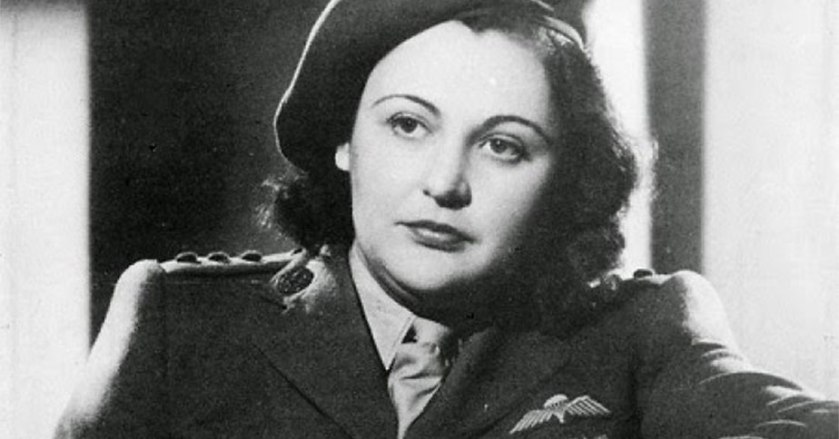
Nancy Grace Ausgusta Wake was born on 30 August 1912 in Wellington New Zealand. She was the youngest of six children and was raised in Australia. Shortly after moving them to Australia her journalist father deserted the family leaving them to face poverty and hardship. This event is believed to have sparked her rebellious nature and fearsome temper.
At 16 Wake used a £200 inheritance from an aunt to travel to London, where she studied journalism before moving to Paris. While travelling through France writing articles to support herself, Nancy met the man whom she later married. Henri Fiocca was a wealthy French industrialist living in Marseilles where the two settled prior to the war.
As a naive, young journalist, Nancy Wake had witnessed a horrific scene of Nazi violence in a Viennese street. In 1933 on one of her first assignments Wake was to interview Adolf Hitler in Vienna. It was at this point that Nancy Wake first came face-to-face with impending rise of the Nazi regime. From this point, she was committed to bringing down Hitler and his regime and she was true to her word. Among other things she helped build a highly successful escape network for Allied soldiers, perfectly camouflaged by her high-society life with Fiocca n Marseille.
The Hanged Man card is sometimes referred to as the traitor card. As history makes blatantly clear, persons whose individual conscience is in opposition or divergent from the collective viewpoint, can appear as traitors to the Establishment. Often upside down in relation to family, friends and the government, nonconformists can be even branded as criminals.
Though she was never caught, word spread throughout the German Gestapo of a mysterious dark-haired woman operating the southern escape. She became one of the Gestapo’s most wanted and with a five million franc bounty on her head she became known as ‘The White Mouse’ for her continued ability to evade capture. Her husband was not so fortunate and was tortured and executed when he would not reveal the whereabouts of his wife.
After the war she was decorated by Britain, France and the United States. She received the George Medal, 1939-45 Star, France and Germany Star, Defence Medal, British War Medal 1939-45, French Officer of the Legion of Honour, French Croix de Guerre with Star and two Palms, US Medal for Freedom with Palm and French Medaille de la Resistance for her courageous endeavours.
Unable to adapt to life in post-war Europe, she returned to Australia in January 1949 aged 37 and, not surprisingly, given all that she had done and witnessed, never really settled.

