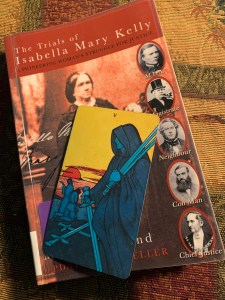
The Five of Swords is about a battle in which there are no winners – by the time someone had triumphed, it is over anyway. There may ‘officially’ be winner and a loser… but from over here it kinda looks like everyone lost.
Isabella Mary Kelly (no relation to Victorian bushranger Ned Kelly) was born in Dublin, and arrived in Australia in 1835, a wealthy single woman in a man’s world. Kelly was surely the only woman who alone in those wild days took up virgin forest for settlement as a pioneer in Australia. She was the first, or one of the very first, ‘free’ selectorson the land north of the Manning.
Isabella ran her property herself, using assigned convict labour. Isabella was disliked by her male counterparts who lived nearby and was eventually accused and convicted of a crime she did not commit She struggled to prove her innocence and obtain justice.
When this card appears in a reading it calls upon you to think about the areas of conflict in your life. Is the fight still worth it? Was it ever worth it at all? The truth is that old grudges eat up our energy, take up brain space and cause you pain and harm. Sometimes it is better to just walk away – even if that means admitting defeat?
In this case however, Isabella, accused amongst other things of being a gun-toting wildcat. does need to have her name cleared. Stories concerning Miss Kelly’s heart-less doings in those wild days have been many, and particularly outrageous tales have easily been attached to this ‘Pioneer in Skirts,’ for she seems to have had very few friends to advocate her cause.
Read the printed material of the tme and you would be led to believe that she was a masculine, evil-minded, ill-tempered, unnatural sort of individual. For instance, it is alleged that she shot down convicts with the two big old horse pistols, that she carried at her belt; that she murdered her maid servant in her tantrums; and even drove chained convicts 50 miles on foot, to Port Macquarie to be flogged after they had saved her own life in a swollen river.
Such stories are outrageously libellous to her memory, one even accusing her of flogging men to within an inch of their lives for refusing her favours. Most of these accounts end with Kelly receiving her just desserts by dying as an impoverished beggar living in a cellar in Sydney’s dockland in the 1890s.
The truth is less spectacular. Kelly successfully managed her property herself, becoming a noted breeder of horses. Current thinking about Kelly is that she was greatly resented for the free lifestyle she led as an unmarried woman. Posthumously, The Trials of Isabella Mary Kelly, by Maurice Garland offers a different picture of this spirited individual and provides some justice for Isabella. It reveals the lengths her adversaries went to and shows just what a stoic female pioneer she was.
Isabella died in Sydney in 1872, not wealthy but certainly not a beggar. She is now recognised in the Manning River area as a pioneer woman of great determination and ability.


