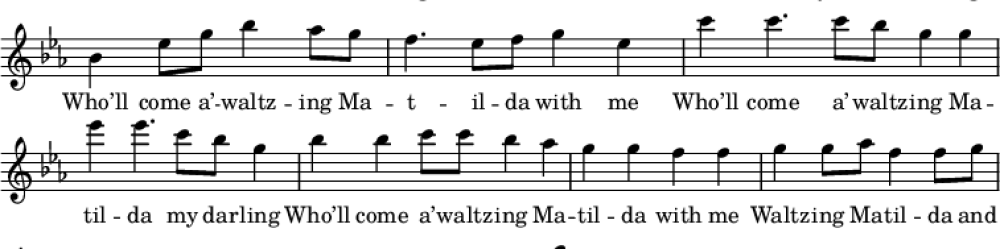
In 1993, Margaret Rossiter coined the phrase The Matilda Effect to describe systematic bias whereby a woman is ignored, denied credit or dropped from sight by a man who takes credit for scientific advances. As this short video highlights, the Matilda Effect is still alive and well in Australian Curriculum.
The Matilda Effect does not only apply to women in Science. This needs to change!History must tell the whole story. For girls, knowing women’s achievements expands their sense of what is possible, offers ideas about what legacies they may leave for those who follow. This site is dedicated to celebrating the achievements of women in all fields.
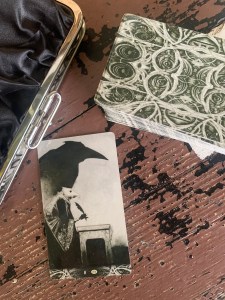
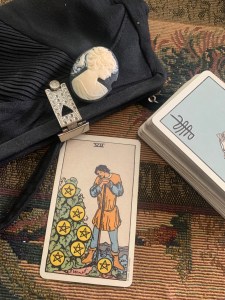
This Eight of Pentacles indicates a time when you have to work hard and hone you skills. It demands focusing entirely on your tasks. The task that you need to accomplish can be personal or professional.
From Murder of Crows Tarot
The Raven Scribe seen here is focused. She is busily working at her desk, documenting stories of the trials, challenges and celebrations of the flock who call her world of Crows home.
Her interest was piqued when she heard about Waltzes with Matildas and suggested that there could be a whole section featuring the stories of women who are actively contributing to the Tarot community in a myriad of fascinating ways.
A deck creator may well choose the Eight of Pentacles to write about the labour and devotion demanded. Another woman might choose the Four of Wands to help her talk about milestones she is celebrating and to spread the word of work she is doing.
Really the possibilities are endless. I wonder if anyone will come and play and exchange a story? There are no hidden costs and nothing to lose. Everyone who engages, no matter their nation, will potentially be a winner as they extend their reach.
Hit the contact section if you want to come and play!
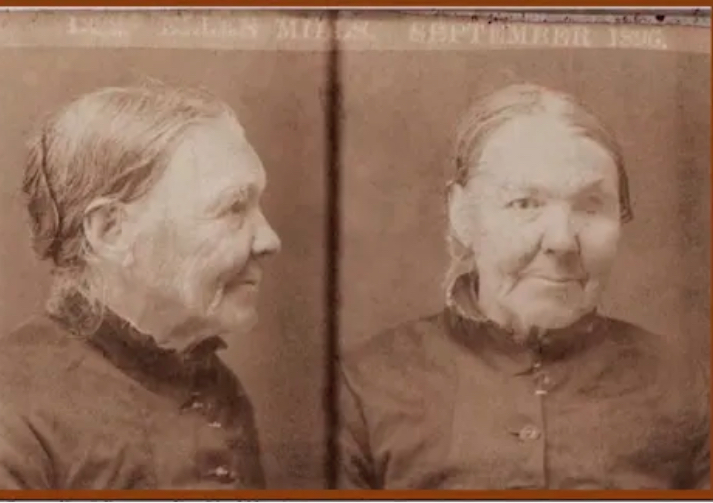
Lay down a whole deck of cards and you can be sure that many cards could be used to write about Ellen Miles, or for that matter, any woman featured here – any of us. Her story matters to us today because hers is a rare and unmediated voice from the criminal underclass of women and children who were transported to Australia.
child convict, goldfields pickpocket and vagrant
“—Me name’s Miles; Ellen Miles, remarked an old woman at the City Court yesterday.
—And you are charged with vagrancy, stated Sergeant Eason. Can you show the Bench that you have means of support?
—‘How can I support myself when I’m continually in gaol and not a shilling coming into the house? What is it at all? What are us old people to do? There is no institution in the country,’ replied Mrs Miles“
Ellen (Buzzwinkle) Miles was a child of the 1830s and lived until 1916. How aware she ever was of the Great World outside her tiny one of back lanes, brothels and bars, we have no idea, but her life spanned the history of Victoria from the discovery of gold to Gallipoli.
She did register to vote in 1903, but hers was an underlife as she waddled around Canvas Town, Romeo Lane, the gold fields, Collingwood – and for one mad adventure, to Adelaide, her copious skirts concealing her latest stolen goods. Wherever there was a lurk to exploit and a lark to celebrate, Ellen was there.
The Two of Cups is a very positive card. While it normally relates to unity and love in romantic relationships it can signify harmony and mutual respect and appreciation in friendships and partnerships.
A strong pair is indicated here, the joy of two becoming one.
The Two of Cups is an exchange. You offer your cup – a container for all the love and pain and mystery in your heart – to someone, to something. In return, you receive their cup. There is so much trust here, so much willingness to be naked in this way.
If the Ace of Cups represents the flow of love from within, the Two of Cups is the flow of love between two people. With this card, you are creating deep connections and partnerships, based on shared values, compassion, and unconditional love.
So, when professional surfer Caroline Marks held up her cheque for winning the first competition of the 2019 WSL’s Championship Tour, and it displayed the same amount as on the cheque in the men’s competition, it was a watershed moment.
For many of the women who had pioneered women’s rights in the sport in years past, it marked an incredibly special moment in history.
Jodie Cooper, Pauline Menczer, Jolene and Jorja Smith, Wendy Botha, Alisa Schwarzstein, Rochelle Ballard, Layne Beachley, Pam Burridge, Frieda Zamba, and Lisa Anderson are some of the pioneers of women’s surfing who preserved for years on end without equality in the sport.
When you pull this card in a reading, it stands for harmony, togetherness, and working as a team to build a strong partnership.
Jodie and Pauline established a close bond. They both trained in Bondi and travelled to competitions together, meeting regularly in the water.
The Two of Cups is a very positive card. While it normally relates to unity and love in romantic relationships it can signify harmony and mutual respect and appreciation in friendships and partnerships.
A strong pair is indicated here, the joy of two becoming one.
The Two of Cups is an exchange. You offer your cup – a container for all the love and pain and mystery in your heart – to someone, to something. In return, you receive their cup. There is so much trust here, so much willingness to be naked in this way.
If the Ace of Cups represents the flow of love from within, the Two of Cups is the flow of love between two people. With this card, you are creating deep connections and partnerships, based on shared values, compassion, and unconditional love.
When the cameras started rolling on Phyllis Papps and Francesca Curtis in October 1970, both their lives and Australia would never be the same.
“The early 1970s were very, very conservative … Gay women were invisible, because people didn’t think lesbians existed,” said Ms Papps.
The Tarot Card Two of Cups as a person is someone who is very well-balanced and content with their life. They have a strong sense of inner peace and harmony and can bring that positivity to their relationships. They are devoted to their emotions and can express them clearly and openly to those around them.
The Chariot is the card of triumph, determination, courage, and purposeful action. Traditionally it depicts a warrior standing proudly in a chariot, focused on the road ahead. The Chariot is not a card of endless thinking or emotional hesitation. It is a card of movement. It is about taking the reins and pressing forward despite the obstacles.
The Charioteer knows where she is going and refuses to be diverted. Although the two sphinxes at the front of the chariot pull in different directions, her strength of will keeps them moving as one. Through discipline, resolve, and unwavering purpose, she guides them towards her chosen destination.
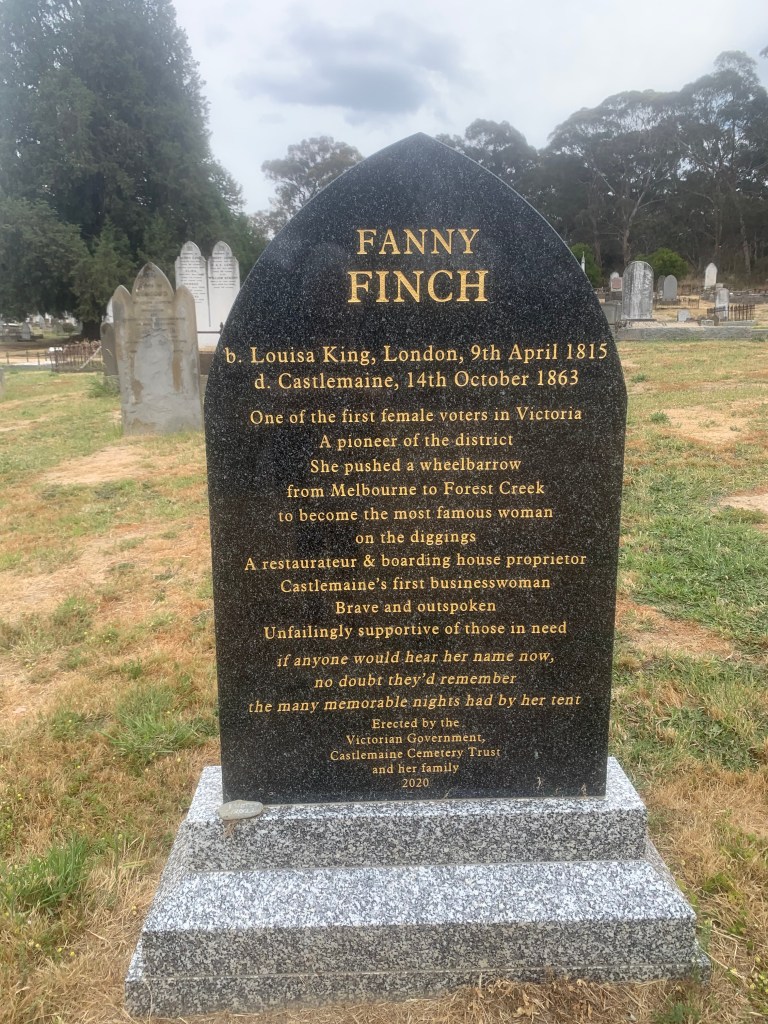
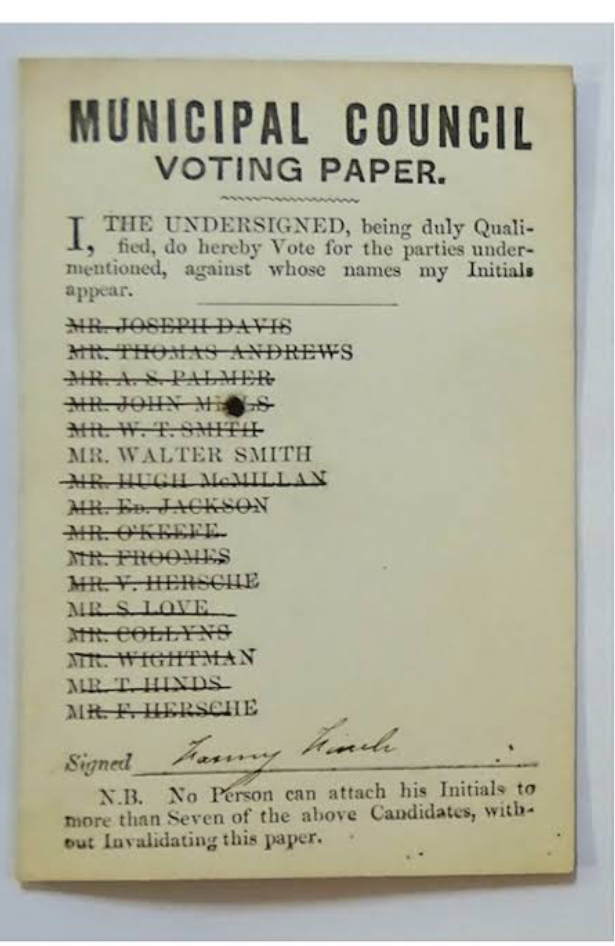
Few Australians embody the spirit of The Chariot more completely than Fanny Finch.
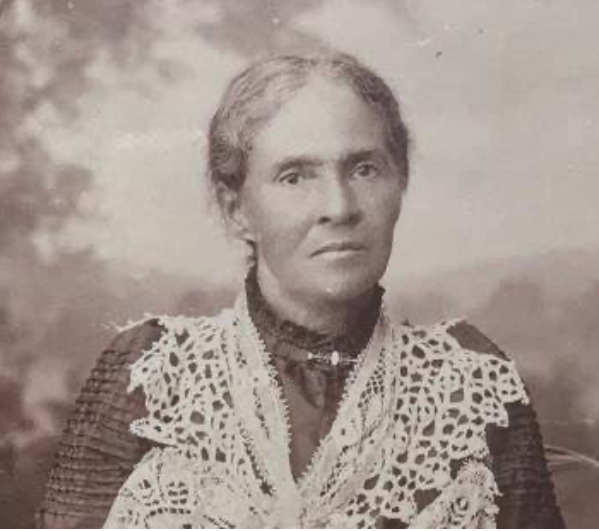
Born Frances Combe in London in 1815, Fanny was believed to be of African descent. Just eight weeks after her birth, her mother died, leaving her orphaned following a relationship with a footman that ended in pregnancy but not marriage. She was raised in the St Pancras Fledgling Home, where she received an education and protection at a time when opportunities for a child in her circumstances were painfully limited.
History often remembers Fanny as the first woman in Australia to cast a vote in an election, defying both convention and authority in 1856. Yet that remarkable act was only one chapter in an extraordinary life. Long before she signed her name on a ballot paper, Fanny had already demonstrated remarkable courage, resilience, and an unshakeable determination to shape her own future
The Chariot tarot card is all about overcoming challenges and gaining victory through maintaining control of your surroundings. This perfect control and confidence allows the charioteer to emerge victorious in any situation. The use of strength and willpower are critical in ensuring that you overcome the obstacles that lie in your path.
In 1836, at the age of twenty-one, she was granted free passage to the young colony of South Australia as a servant to the respected surgeon William Wyatt. There she married a sailor and became the mother of four children. When the marriage turned abusive, Fanny left with her children and forged a new life on her own terms. She walked from South Australia to Melbourne and, from there, pushed a wheelbarrow to the Forest Creek goldfields, where she began again.
At Forest Creek, Mrs Finch’s Boarding House became a respectable and much-needed place of accommodation for the thousands of men and women drawn to the goldfields. Later, after moving to Castlemaine in 1854, she established a successful restaurant and earned a reputation as a capable and respected businesswoman.
Evidence also suggests that, while raising four children alone, Fanny undertook sex work to support her family. As historian Kacey Sinclair observes, “She was a single mother of four and there was no other way to send her kids to school, feed them, and keep a roof over their heads.” Rather than diminishing her story, this reality speaks to the extraordinary lengths she went to in order to provide for her children.
Fanny’s businesses were frequently targeted by police harassment, including a conviction for selling alcohol without a licence
“I am a woman of but few words and plainly spoken…whatever my position may be, I have worked hard to keep my daughters in a good school and give them an education as I myself have not got…”
Fanny Finch died in 1863 and was buried in an unmarked grave.
More than 150 years later, historian Kacey Sinclair, together with Fanny’s great-great-great-granddaughter, author and actress Alice Garner, helped restore her rightful place in Australian history. A memorial, funded through a government grant, now honours her with the words:
“Brave and outspoken, unfailingly supportive of those in need.”
Like the Charioteer, Fanny Finch refused to surrender the reins of her life. Faced with hardship, prejudice, violence, and poverty, she continued to move forward with extraordinary determination. Her victory was not won in a single vote, but in the countless courageous decisions she made along the way.
Facts and Fiction
A Letter to Mother is a fictional Aussie yarn about another woman whose life journey bought her to Castlemaine
Being outed, quitting your job, getting fired, getting dumped. Getting totally called out (and being able to learn from it). These are all examples of Tower moments. Shock events that feel incredibly painful, but that ultimately move us forwards, to a point of no return.
In this Pro Talk by Rachel Pollack, for the Arts University of Plymouth, Pollack provides rich insight into how liberating the destruction of the tower can be for transgender people who finally come out and claim their true identity.
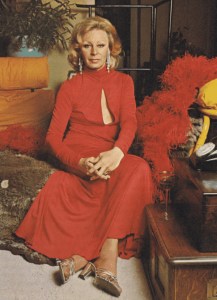
Perhaps best known as the star performer at Capriccios, the first gay club to open in Oxford St, Sydney, in the early 1970s, Rose Jackson’s career as both a costumier and entertainer boasted many highlights.
Born Barry Jackson on September 11 1935 at Paddington Women’s Hospital, Rose said she knew “from the minute she was born” that a male body was not right for her. An athletic young man, Barry loved to swim and for a short period was even a Bondi lifesaver. But it was ‘too butch’. Instead, gay men introduced Barry to a secret Sydney world of parties, fine dining and fashion; and when he began going out in public as a woman. He took the name Rose, after Marilyn Monroe’s character in Niagara, Rose Loomis.
The thing that has always distressed me – and it has taken me years and years to get over it – is the fact that one does have to lie. … It came to the point where I had to say: ‘This is the way I want to be’. But not without thirty years of the most dreadful traumatic pressure. When you consider that you have to live a lie for your parents, to the public, to your friends and your work, the problem seems insurmountable. It takes a long, long time to be able to say: ‘I don’t care about the rest of the world: this is my life and I cannot cheat myself by not living it’. All those things need to said. It takes great strength. From a monologue by Rose Jackson
By the age of 18, Barry was working as a window dresser at David Jones. His design talent was noticed and he soon accepted a position as display manager for Curzons, where he coordinated around 300 fashion parades as well as designing and supervising the seasonal window displays. At 24, Barry went to Europe and, after time in London and Paris, worked as a display manager for a leading chain of department stores in Sweden.
By the time Barry returned to Sydney five years later, in 1964, his home city had changed. Walking home one night to his apartment in Kings Cross, he discovered a club called the Jewel Box, where not only were there drag performances but some of the boys were taking hormone therapy.
By the late 1960s, Barry was living fully as a woman in Paddington. Making costumes for Sydney’s leading theatre company, the Old Tote, by day, he performed at the Purple Onion club at night. It is the Purple Onion — on the site of the current Kens at Kensington — that can claim to have pushed Rose’s costume design skills to the fore, as well as introducing her to regular performing. Rose and the other cast members lived above the premises in what she described as “a drag kibbutz”.
In 1969, Dawn O’Donnell opened Capriccios, to offer drinks, a dancefloor, and a fully costumed drag show. It wasn’t long before Rose was the undisputed star, with a persona that highlighted an elegant femininity.
In 1983 David Mitchell and David Penfold created a show for Rose based on her life and career called Rose’s Turn. It played at Kinselas and was a huge success. She then opened her own club, Rose’s, on Goulburn St.
There Rose performed with stars including Judi Connelli and Tony Sheldon. Sheldon has said his interpretation of Bernadette in Priscilla, Queen of the Desert, currently playing in New York, is based on Rose Jackson.
Diverse Tower Moments
“The dust will settle. And you will be standing in the rubble, watching the air clear. There may be some mourning to be done, some goodbyes to say or loose ends to tie up. People, including you, may be scared or lost. But. The tower that was dominating the landscape is now gone, and there is space for something new”. Sourced from Little Red Tarot
The Eight of Swords can represent feeling trapped, confined, restricted or backed into a corner or having your hands tied. It signifies fear, terror, anxiety and psychological issues. It is a Minor Arcana card of hopelessness, helplessness, powerlessness, slavery, persecution and being silenced or censored.
A little like the Devil, the Eight of Swords gives us a picture of bondage. It presents a figure with their hands tied, blindfolded, surrounded by sharp swords. This can be a difficult card to see emerge in a spread for it is a card that demands you investigate your status as a victim and acknowledge your own role in any possible downfalls that may be occurring around you.
To gain more understanding of how we might see this energetic play out it helps to see through the eyes of an Australian women who felt trapped and bound by the imprisonment and public judgements.
On August 17, 1980, at a campsite near Australia’s famous Ayer’s Rock, a mother’s cry came out of the dark: “My God, my God, the dingo’s got my baby!” Soon the people of an entire continent would be choosing sides in a debate over whether the cry heard that night marked an astonishing and rare human fatality caused by Australia’s wild dogs or was, rather, in the words of the man who would eventually prosecute her for murder, “a calculated, fanciful lie.” A jury of nine men and three women came to believe the latter story and convicted Lindy Chamberlain for the murder of her ten-week-old daughter, Azaria.
The Chamberlains fought to prove their innocence, until they reached the end of all legal means available to them. But suddenly, bowing to multiple pressures, the Northern Territory released Lindy and established a Royal Commission to review all the evidence. Ultimately, the Chamberlain’s convictions were quashed and they were exonerated. Four years later they received some compensation.
Perhaps the most extraordinary thing about the Chamberlain case is that it helps us address both the upright and reversed interpretations of this card.
On the Labyrinthos site it states that “getting the reversed Eight of Swords is a good sign, since it shows maturity and self-acceptance, and a recognition of one’s own power and responsibility – especially after a long struggle of doubt. It means that one is capable of making conscious decisions because they are confident in who they are, and their power to affect change in both themselves and the world. It’s time to free ones self from the past and proverbially clear out their closet, creating room for new things and experiences”.
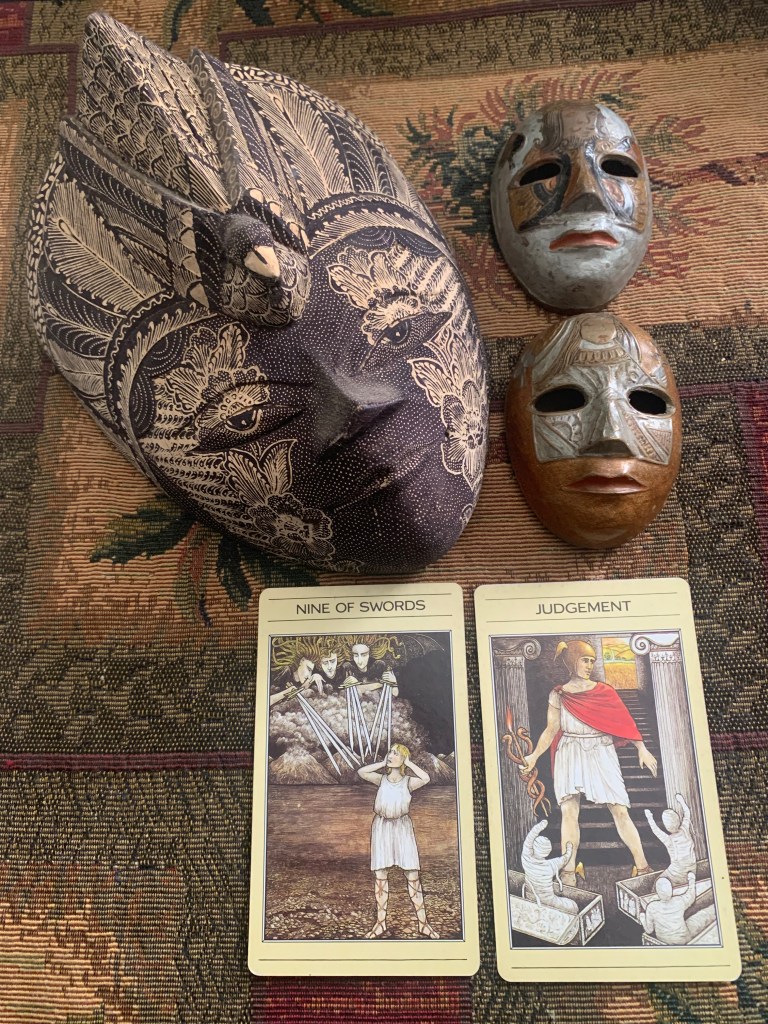
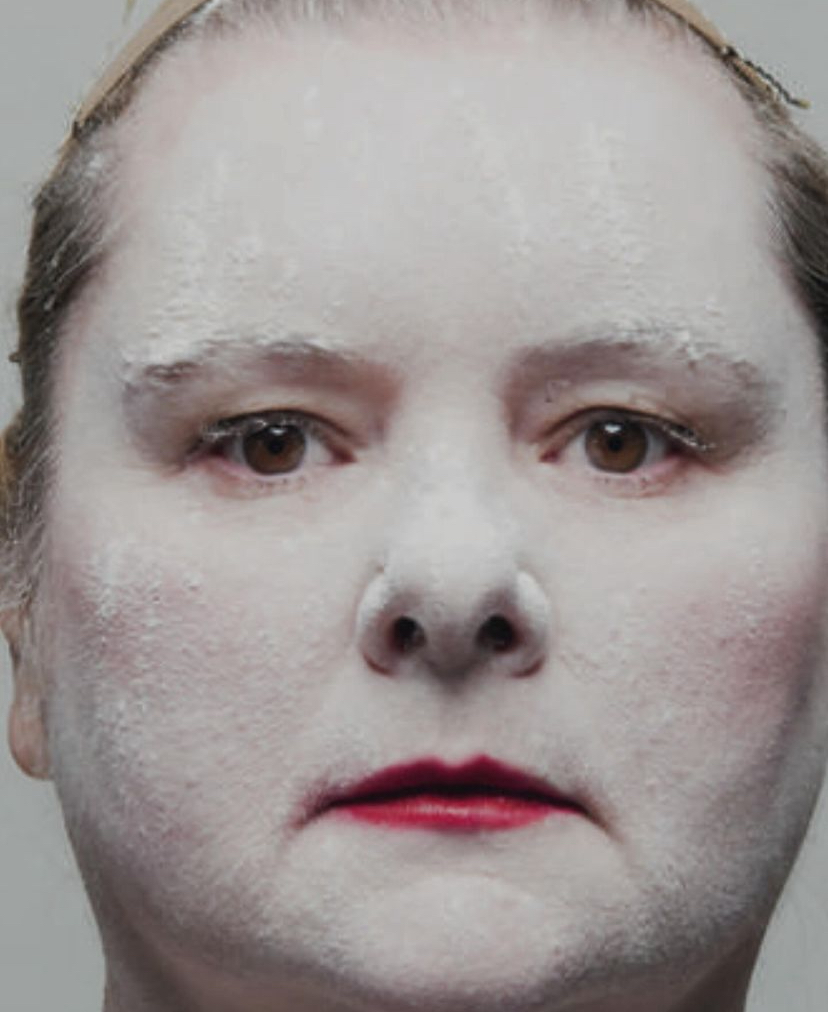
For some the weighty Judgement card is the penultimate card of accountability. Some interpret it as offering an opportunity to pull off the masks we have been wearing and be accountable to ourselves, be honest about our choices.
Holding up a mirror on our life and the lives of our ancestors takes courage. It is not easy to hear the accusing voices and own up to it all, to acknowledge the successes and failures, to feel. regret about choices made, opportunities lost, moral infringements. But the self acceptance that comes with doing a reckoning is liberating. It sets us free when we dispassionately see the pattern of our lives.
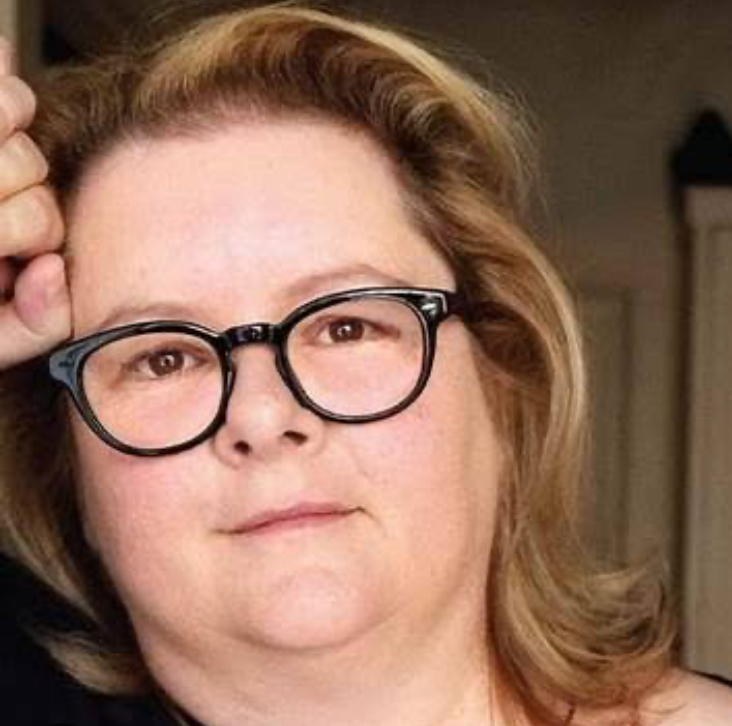
Magda Szubanski is indisputably one of Australia’s most loved comic actors. However her true identity has been hidden within the characters she has played, like Sharon, the unlucky in love netball player, who shot to fame in the comic series Kath and Kim.
When Szubanski took up the challenge of writing her memoir, entitled ‘Reckoning’, she peeled back protective coatings and unflinchingly exposed old emotional wounds. Like a forensic scientist she explores wounds passed from one generation to another.
Are you up for this kind of introspection and reckoning?
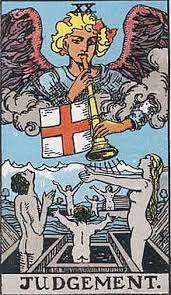
The word Judgement is loaded. In the Judgement Card in the Rider Waite deck we see an angel, with a huge horn, beckoning the dead to rise from their graves and, presumably, face judgement. It certainly invokes ideas expressed in the New Testament where the primary idea of redemption is the deliverance from bondage, specifically the bondage of sin.
However many readers do not subscribe to the idea that there is a judgement, ransom or reckoning taking place and this view is supported by artists like Rachel Pollack’s who replaces the word Judgement with ‘Awakening’ in her ‘Shining Tribe Tarot‘. The idea is that the Angel is calling upon the dry bones to awaken and reincarnate into a fresh new life.
It would be easy to think of this kind of awakening or transition as some kind of rebirth, but really, as Lisa Freinkel Tishman points out in her book ‘Mindful Tarot’ it is more about simply responding to a divine calling, responding to the trumpeter and accepting the intervention of a higher power. It implies that the time is right for the querent to move into a brand new phase. The querent can look forward to dynamic new beginnings.
Sandra’s personal life is an incredible tale of trauma, transition, transformation, and survival.
Sandra Anne Pankhurst’s early experience was horrendous. It was not a good beginning. At the age of seven, when she still identified as a boy, Sandra’s given name was ‘Peter’. As Peter he was told by his adoptive family that he was “no longer wanted”. After that, he survived 10 years of severe physical and psychological abuse before running away from home.
At 18, Peter married and soon after had the first of two boys with his then-wife. At 23, when Peter’s wife discovered that he had been visiting gay bars, Peter went through a major transition. He moved out of the family home, separated from his wife, and embraced his emerging identity as a woman, as Sandra.
For many trans people, transitioning is a process of becoming the gender identity they always wanted to be. But for Sandra, it wasn’t like that – she didn’t always want to be a woman. In Sandra’s experience, she decided to transition when she learned that it was possible.
Read the Trauma Cleaner and marvel at how Sandra Anne Pankhurst, an individual, who had faced a lifetime of hostility and transphobic abuse eventually responded to a calling and became dedicated to cleaning up the messes left behind after the trauma of suicide, meth labs, and hoarding. The idea for her trauma cleaning business emerged when she was a funeral director, as there were no death/crime scene specialist cleaners.
Pankhurst was also an active advocate for aged care rights, disability, mental health and ethics. She was extremely passionate about making a positive impact on the welfare of people of all lifestyles in the aged care and mental health sector.
The word judgement usually implies that one is going to evaluate evidence before making a decision. However in the case of Tarot the Judgement card is often said to signal a time of resurrection and awakening, a time when a period of our life comes to an absolute end one must make way for a new dynamic beginning.
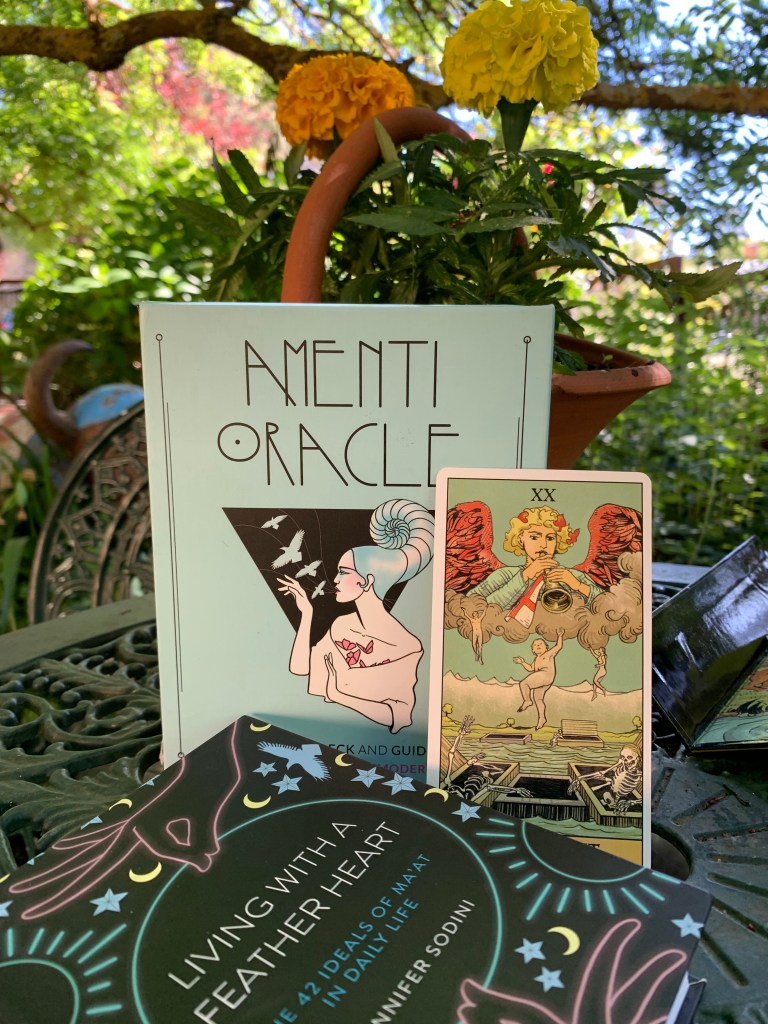
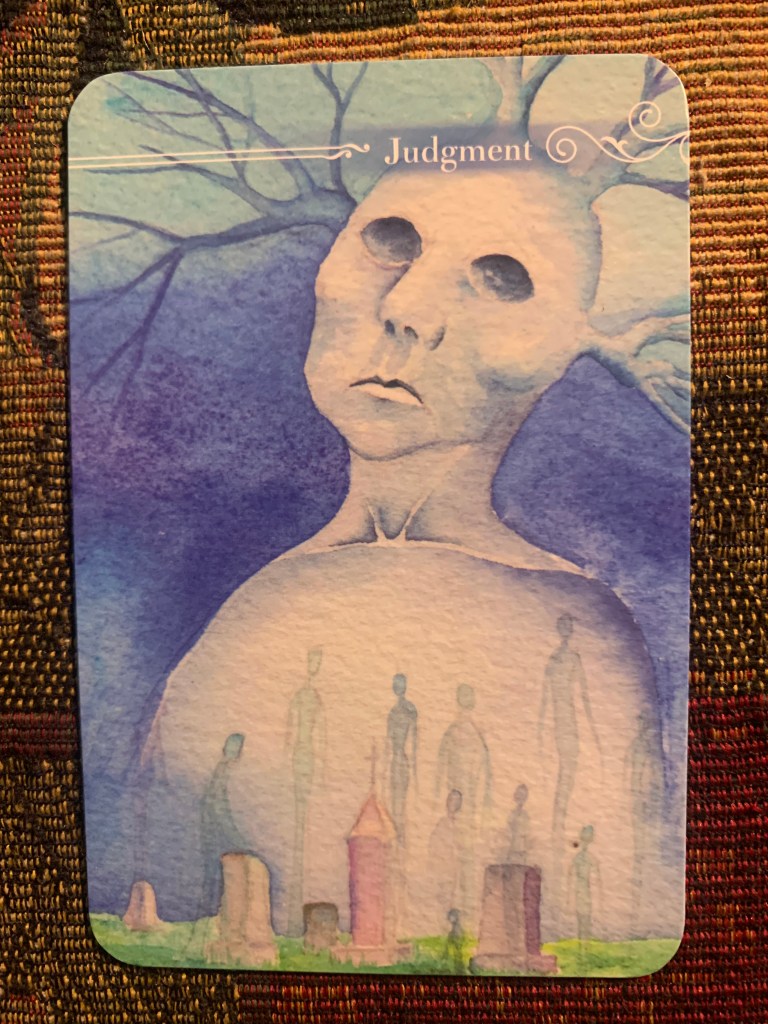
Both the Amenti Oracle and the After Tarot bring to mind our so called ‘Day of Judgment’, the time when an individual has to account for their lives before resurrection. The Guardian Tarot which depicts figures rising from what appears to be an urban area gives some weight to the idea that historywill be the judge of our actions (finally determining what is the good and the true).
The Judgement card is a call to face yourself, completely. To hold up a mirror to your entire life, to see it all. To own it all. Your successes and your failures. The good times and the bad. Everything you’re proud of, and all that you wish you’d done differently. It’s yours – and you must own it all, you must accept it all.
The problem with the idea of a day of judgement, that somewhere in the future there will be a commuppance for those who sinned, is that modern society is strewn with harmful acts that were justified as serving some higher purpose. We all bear the rippled impact of such heinous acts.
Rather than orientate towards the shortcomings of moral recklessness it is, perhaps, more helpful to talk about the actions of those whose contributions provide an example for others to follow.
Mary Bennett was the daughter of a successful squatter. Although she wrote with love and admiration about her father in her book Christison of Lammermoor, by the end of her life she would describe Western Australian squatters as the “enemy” of Aboriginal people. In 1927 she referred to the 1891 striking shearers as “a cruel and cowardly lot,” but three decades later she worked with their union, the Australian Workers’ Union, to gain wage justice for Indigenous workers.
Although she has been described as a feminist, she fell out with Perth feminists in the 1930s when they failed to oppose the removal of Aboriginal children from their mothers. She never went to school herself, but she became a gifted and progressive educator on Mount Margaret Mission. Her thinking about Indigenous Australians and their place in Australian society displayed great intelligence, a strong moral compass and a palpable love for the first peoples of this land.
On her death in 1961, a large crowd of Wongatha, the Aboriginal people from the Kalgoorlie region, gathered in the heat on the red earth of the area’s main cemetery to mourn the loss of their friend and patron. There were elderly folk, weather-beaten pastoral workers and family groups carrying their young children. The mourners’ lives would become more difficult with the loss of their friend and advocate.
As Australians collectively recover from the fallout of the Voice Referendum it is worth looking to figures like Bennet for guidance about how to ensure we are accountable to our descendants and don’t leave a legacy of guilt. Far better to show we have contributed to the well being of all people in a positive way.
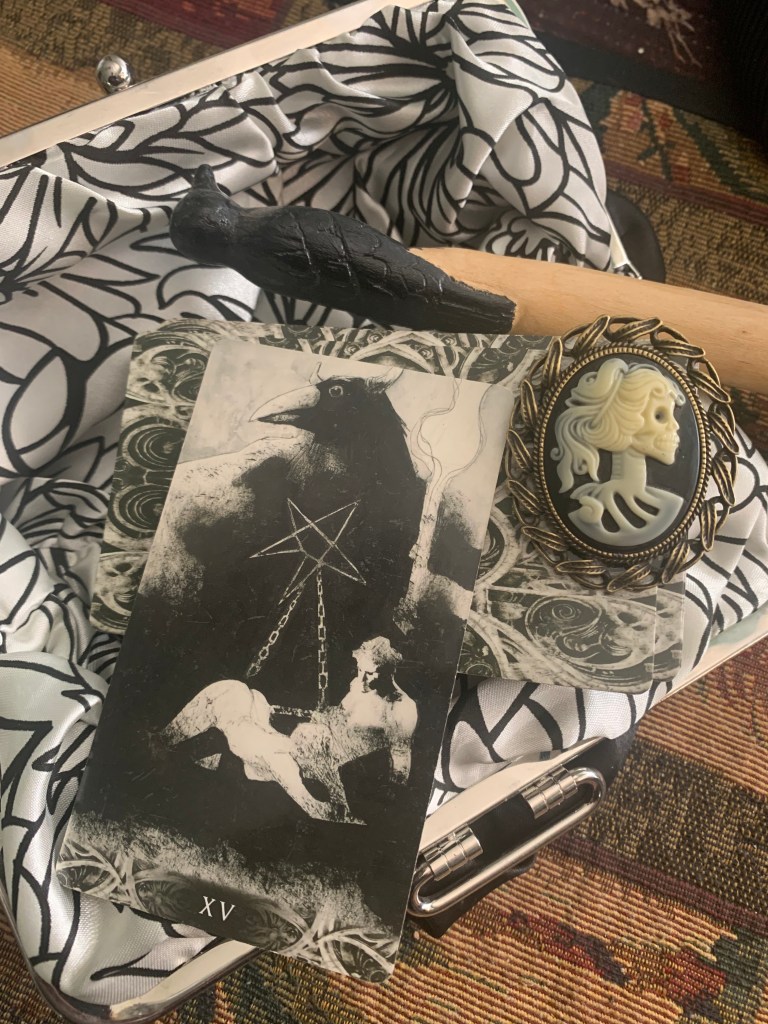
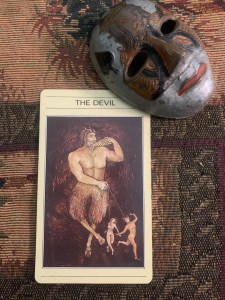
The Devil holds number 15, and it is the sixteenth tarot card of the Major Arcana cards. At its core, it usually represents being tied up to something or someone, to the point of unhealthy addiction.
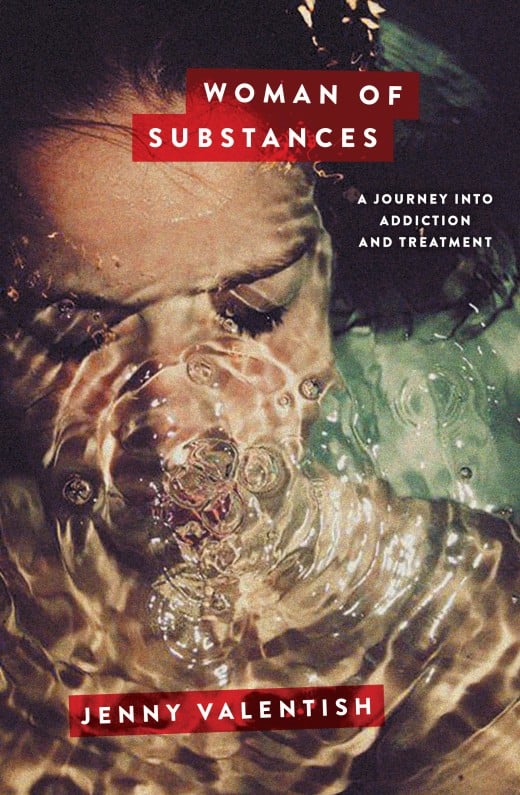
Jenny Valentish, a British journalist who now calls Australia home published ‘Woman of Substances’.
In Woman of Substances Valentish investigates the female experience of drugs and alcohol, using her own story to light the way. Her travels around Australia take her to treatment facilities and AA groups. Mining the expertise of leading researchers, she explores the early predictors of addiction, such as childhood trauma and temperament, and teenage impulsivity.
Drawing on neuroscience, she explains why other self-destructive behaviours – such as eating disorders, compulsive buying and high-risk sex – are interchangeable with problematic substance use. Her work helps us understand how the Devil chains us.
From the Mythic Tarot
On an inner level the Devil is an image of bondage to the crudest, most instinctual aspect of human nature. His image arouses fear within us, fear that he is holding a mirror and exposing our most base self. The Devil is associated with uncivilised sexual impulses and Dionysian behaviours. Unfortunately, while society may compel us to relegate him to the shadows, his presence is very real, manifesting itself in all sorts of nefarious ways. The challenge is to free oneself by gaining knowledge and establishing an honest relationship with this aspect of self. In doing so one releases the chains and lessens the Devil’s control.
Releasing the Devil’s Hold
Forced to accept an unwanted situation
Being under someone’s control
Dealing with addiction and obsession
Being codependent
Being tied down against your own will
Being materialistic
Over-indulging
Being caught up in physical appearances
Being ignorant of the truth
Facing limitations
Fearing the unknown
Lack of faith
Giving to despair
Tarot as a Tool to Confront the Devil
I use tarot through a lens of self-care, choosing to find usefulness in the cards, and ultimately supporting myself by engaging with the challenges in my life rather than hiding from them.
Working with tarot can help to shift the understanding of our life experiences from an entirely subjective inner mind monologue to something with a shade more objectivity, simply by grounding our ideas in a physical object that we can actually hold and examine.
It is well worth watching these videos by Katey Flowers and seeing how she reads the cards in the spreads she presents. Katey no longer presents in this forum but her vault of videos is well worth checking out.
Spread 1 courtesy of Katey Flowers
Why do I do it?
What does it take from me?
What is a small thing I can do today?
How can I stay on track?
Spread 2 courtesy of Katey Flowers
Why did I fall off the wagon?
How can I learn and forgive myself for this happening?
It is not surprising, given that life can often feel like a fight, that when readers consider the wands suit they often talk about battles. Everyone has, at some point in time, been called on to speak out, stand up for themselves or overcome the inner voice that can feel like the greatest force of oppression
The Seven of Wands is perceived to be an activist’s card and a woman like Lowitja O’Donoghue, who has fought tirelessly for Aboriginal rights, is the kind of person who might come to mind. For some of us the Seven of Wands might help us understand our fight for survival in a society that doesn’t accept our existence. For others, it is about standing tall and getting our message out there so it can be heard.
In some decks, we see a physical battle. A person standing alone, their single wand held high, fighting a sea of faceless others. This is how it can feel sometimes, when we are called to defend our truths or overcome the seemingly insurmountable.
Other decks, like the Light Seers Tarot by Chris Anne represent the Seven of Wands differently. A card like hers can be interpreted as depicting a defiance and taking a stand that changes the energy flow.
A person, who could be perceived to have defiantly faced what seems like a truly insurmountable battle and changed the flow, is Turia Pitt.
In 2011, age 24, Turia was an ex-model, fitness fanatic and successful mining engineer when she was caught in a freak firestorm while competing in a 100km ultramarathon in Western Australia. She was choppered out of the remote desert barely alive, with full thickness burns to 64 percent of her body.
“Simply AMAZING! Turia’s presence on the stage captivated our audience. Her ability to overcome the physical trauma of her experience and then battle through the mental and emotional challenges that followed is justly inspiring. Turia was able to share her brave story with connection to our audience, who were completely silent for the duration, until the end when Turia was given a 100% standing ovation. Turia is a truly remarkable human. We would recommend Turia as an inspirational or motivational speaker with absolute enthusiasm.” Place Conference
Surviving against overwhelming odds is the least of her achievements. Turia has gone on to thrive in the ultimate story of triumph over adversity. Pitt is living proof that, with the right mindset, anything is possible.
“The Seven of Pentacles represents the not-so-distant days of our ancestors when everything was grown and made by hand.
Before large-scale farming and manufacturing existed, people toiled day in and day out. They worked in difficult, and sometimes dangerous, conditions to provide for their families. For most, the goal was to make it to harvest season.
During harvest time, the crops could finally be gathered and sold. All of the planning and hard work manifested into fruits and vegetables of their labor. What once were small seeds in the ground became coins in their pockets.
Although few of us actually work in the agricultural business today, the message of the Seven of Pentacles still remains the same: long-term success is near if you are willing to put in the work”. Source: Little Spark of Joy
The Seven of Pentacles unquestionably represents accomplishments we have earned through the investment of blood, sweat and tears. It is eye wateringly unbelievable that until 1994 Australian women who worked farms could not declare that their occupation was farmer. Instead they were identified as farmer’s wife, or providing home duties. It is especially amazing given the significant contribution women have made to agriculture since colonisation.
In 1844 Dr Christopher and Mary Penfold arrived in the new world onboard the Taglioni with a vine cutting and a bold vision. A doctor, with an eye for medicinal winemaking, Penfold and his wife, Mary sought a new life filled with hope and prosperity.
The family purchased 500 acres of ‘the choicest land’ in early colonial South Australia. Here, Christopher planted vines and set in motion philosophies that remain with us to this day and set about inventing tonics, brandies, and fortified wines made from grapes and Australian sunshine.
The 7 of Pentacles indicates that you recognise the importance of investing time and effort now to reap long-term benefits and that you have a deep willingness to invest in long-term success. You’re not trying for instant gratification. You may want to make sure you’re focusing your efforts on the correct places rather than spending time and money on projects that won’t help you achieve your goals
Christopher was seen at the forefront of the winery. The Australian Wine Industry, in its wisdom, believed that the founder of Penfolds Wines and the Maker of the World famous Grange Hermitage should never be a woman and said that Dr Christopher Penfold was responsible for it all.
However, it was certainly not Dr Christophe Penfold who was responsible for the enormous success of Penfolds. He devoted most of his time to being a doctor. It was actually Mary Penfold who was the unsung chief of Penfolds. She was responsible for many of experimentations, growth and winemaking philosophies. Everything she knew about wine, she taught herself – insisting on having the grapes blended to her own taste. A woman standing confidently at the helm of a thriving business in the 1800s was unheard of. She’d command from a white mare, watching over the vineyard with her treasured spyglass close at hand.
“Emotion and imagination can produce wonderful visions, but without grounding in both action and the outer realities of life these fantastic images remain daydreams, ‘fancies’ without real meaning or value. … They lack meaning because they don’t connect to anything outside of themselves”. Rachael Pollack
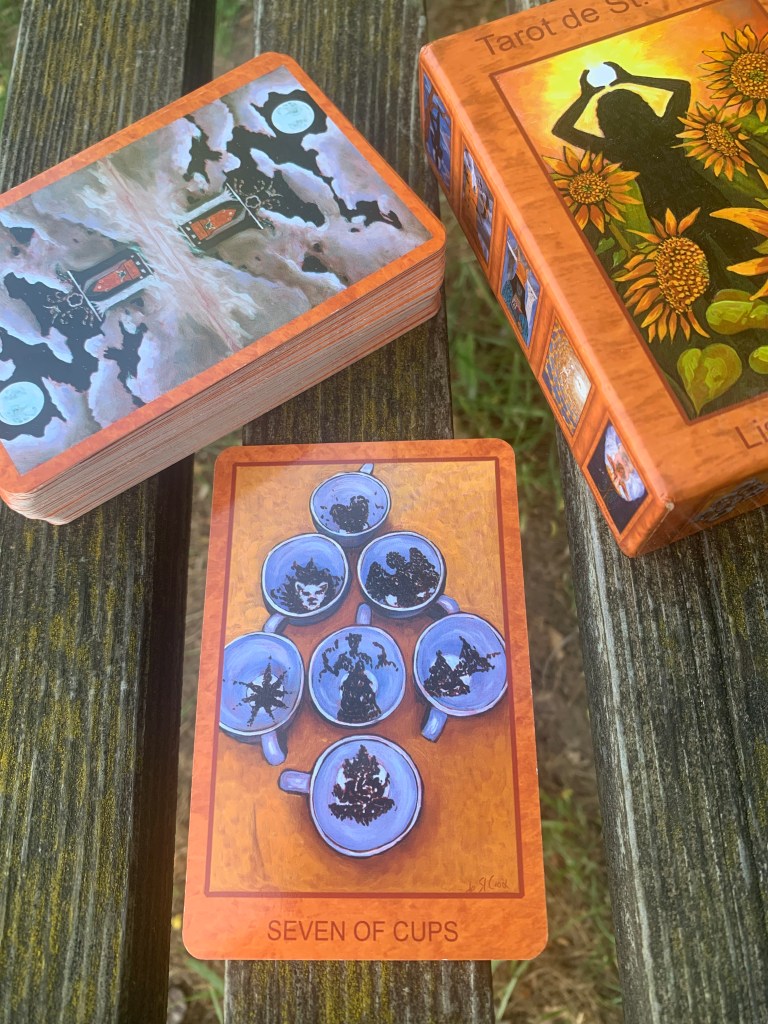
Traditionally the Seven of Cups shows cups filled with various gifts. Biddy Tarot writes that “some cups bear desirable gifts such as jewels and a wreath of victory. But others hold gifts that are not gifts at all; instead, they are curses, such as the snake or dragon. The clouds and the cups symbolise the man’s wishes and dreams, and the different gifts inside suggest that you need to be careful what you wish for as not everything is as it seems”.
By contrast, this rendition by Lisa de St Croix features tea leaves, which she notes depict fantasies, hopes and dreams. In a world where material wealth is so unevenly distributed its worth taking moment to introduce seven Australian philanthropists in the hope that something flows from their cups of generosity and commitment. Be in no doubt! These women acted on their dreams.
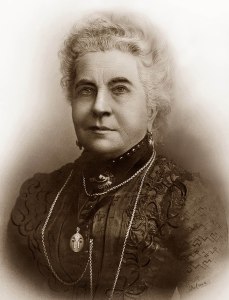
Australian women’s philanthropy has its roots in charitable work. Nineteenth-century women who, like Lady Clarke, were able to supplement their voluntary work with large financial contributions were few and far between, and were inevitably the wives and daughters of wealthy men. Australia did not have the aristocratic wealth of the United Kingdom, where Baroness Angela Burdett-Coutts gave away close on £3 million before the turn of the century. Nor did it have the vast wealth of the industrialising United States, allowing twelve women philanthropists in Chicago alone to give nearly $800,000 to charitable causes in the 1880s.
However this is not to diminish what Australian women have contributed to Australian society.
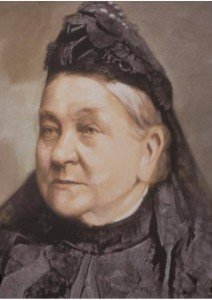
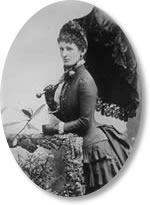
Janet Marion Clarke was born in 1851, the eldest daughter of pastoralist and later parliamentarian Peter Snodgrass and his wife Charlotte. Educated, apparently at home, in literature and the classics, she rose to prominence in 1873 when she became the second wife of wealthy pastoralist, William Clarke, who had previously employed her as a governess to his children. Schooled in her responsibilities by Lady Bowen, wife of the Victorian Governor, she used the family property at Rupertswood and their East Melbourne mansion, Cliveden, to establish herself as a society hostess. By the beginning of the twentieth century, the now widowed Janet, Lady Clarke was at the head of many philanthropic enterprises in Melbourne. Bestowed with the title, Lady Bountiful, Janet Marion Clarke was upheld as the ultimate example of beneficence in a human being.
Lonely and in many ways shy, Ann Fraser made few close friends, but to those in need, especially the Aboriginals, she showed compassion and generosity. Dispossessed members of the Taungerong tribe had found a refuge at Wappan; in the 1860s they were resettled at Coranderrk near Healesville, but on their annual return for shearing they kept Mrs Bon informed of their treatment by the Board for the Protection of the Aborigines. Her home at Kew was a refuge for the sick and needy and she regularly visited Aboriginal patients in Melbourne hospitals.
Dr Lucy Gullet may have been a socialite but she was also a socially conscious woman. Lucy Gullett ran a private practice in North Sydney from 1912. She was a physician to the Renwick Hospital for Infants 1918-1932 and founded the New South Wales Association of Registered Medical Women in 1921 and the Rachel Forster Hospital in 1925. The Rachel Forster Hospital, offered training for female medical students and catering to the needs of ‘home-tied’ mothers.
Initially directing her philanthropy towards saving infant life, in 1874 Lady Mary Windeyer supported a foundling hospital—to ‘remove temptation to infanticide’—and its reorganization in 1875 as a home (later Infants’ Home, Ashfield) for destitute and homeless new mothers, provided they remained in residence to breastfeed their babies. For older children in need of care, she favoured ‘boarding out’ from orphanages, a system which her friend Caroline Emily Clark had begun in South Australia.
Mary Raine’s story is inspirational. Her humble beginnings were an unlikely launching pad for the success and wealth she came to achieve in her lifetime. Through hard work and the application of business acumen rarely seen in a woman in the early years of the 20th century, Mary Raine went on to build a large real estate empire.
She was a visionary and saw the establishment of the Raine Foundation as a unique opportunity for her life’s work to live on in perpetuity – to grow and develop into something more important and more valuable than the business success and wealth that she had personally achieved. She did this by giving scientists and clinicians the means and opportunity to embark on medical research and to seek answers to questions that were not known in her lifetime. This gift has seen outstanding results and better health outcomes in medical research and will continue to grow and benefit future generations of medical scientists while providing better health outcomes for the general community.
Una B. Porter (née Cato) was a renowned psychiatrist, philanthropist and devotee of the Methodist Church in Melbourne, Victoria. She was the first female member of staff at Ballarat Mental Hospital in 1946. In 1963 she was elected World President of the YWCA and travelled extensively. In recognition of her services to the community she was appointed Officer of the British Empire (OBE) in 1961, and Commander of the British Empire (CBE) in 1968.
Meriel Wilmot-Wright has dedicated her life to making the world a better place. Wilmot-Wright was the first full-time research officer appointed by an Australian foundation. She transformed the Foundation and the nature and administration of philanthropy in Australia. Most notable was the introduction of the concept of seed funding, providing an initial grant and persuading others to continue support for particular projects, such as the Aborigines in Australian Society Project, subsequently continued by the Social Science Research Council.
In 2021, aged 100, she ensured her legacy of giving will last for generations by leaving a gift to her own Named Fund.
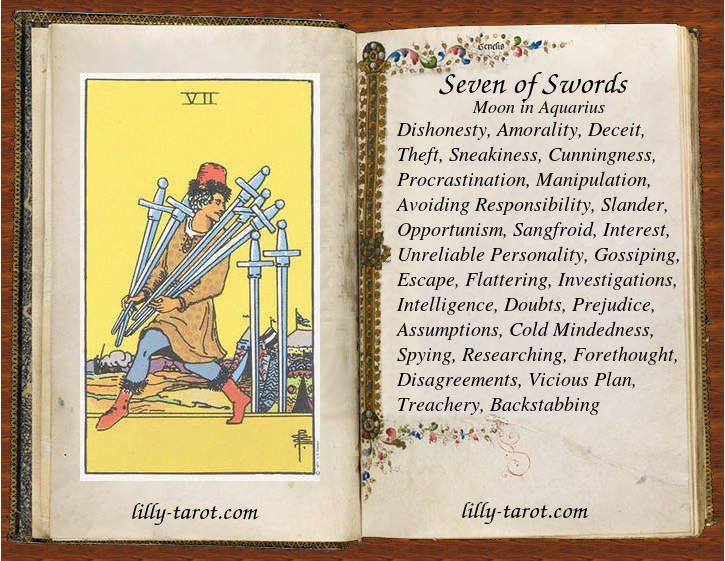
There are many reasons why people might lie, or hide the truth. You may be afraid to be yourself. It may not be safe to tell the whole truth. The Seven of Swords is about what you – or someone else – is/are hiding or holding back, and asks you to consider why.
This card can be about straight-up dishonesty or theft. Underhand tactics or sneaky behaviour. It shines a light on areas of our lives where dishonesty is present, asking us to confront them, to deal with whatever is going on.
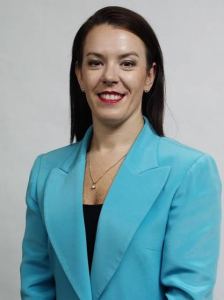
Melissa Caddick allegedly swindled her clients out of an eye watering $23 million dollars, misappropriating investor money of family and friends to fund a lavish lifestyle, buying luxury items including jewellery, watches, designer clothing and shoes.
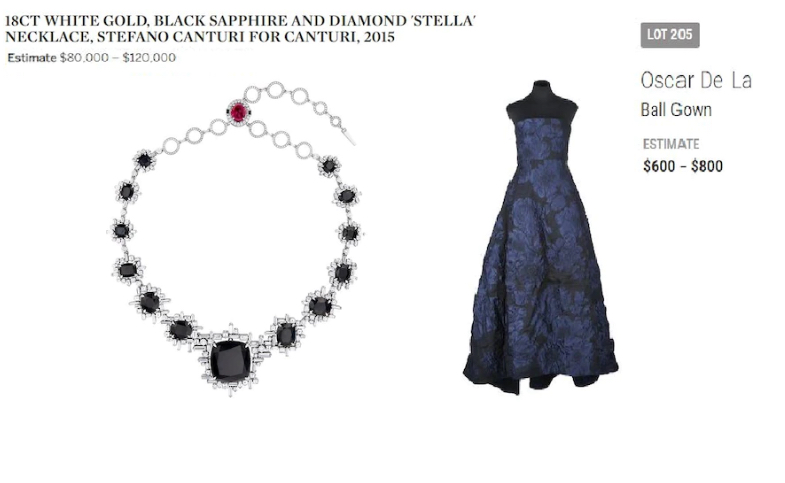
In the image below Caddick is seen enjoying the good life. She looks very like the Nine of Pentacles as she shows off a designer gown and sapphire and diamond jewellery estimated to be worth $100,00.
Of course the thing about the Seven of Swords, or the Nine of Pentacles for that matter, that is prudent to remember, is that things can change very quickly. Caddick’s world came crashing down when the ASIO came investigating. She vanished just hours after the Australian Federal Police and Australian Securities and Investments Commission raided the home. She was declared dead four months after her disappearance in February 2021 when a decaying foot was found on a beach 400km south of Sydney.
Designer clothing, art, luxury goods and jewellery belonging to Caddick have since been sold for $860,000 at auctions in Sydney.
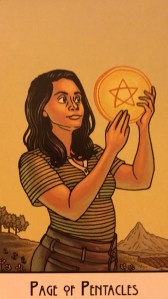
Pages are also known as the messengers – they deliver a message, a positive one, that represents a solid beginning of some sort.
The Page of Pentacles, as the Light Seers Tarot explains, has a childlike quality, asks questions, is curious and adventurous, interested in the world around her. She looks carefully at her surroundings, her body, her environment and enjoys studies.
Pages represent youth and immaturity. In the Tarot de St Croix Lisa de St Croix chooses to feature her son approaching his work with youthful zeal exuberance. This Page is focused and concentrating. He is on an artistic mission, intent on capturing an image. Here, the Page, depicted in the This Might Hurt Tarot is focused and contemplating a fresh project. No matter our age fresh projects await.
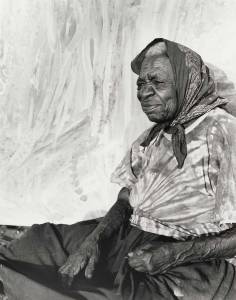
“Emily Kame Kngwarreye is one of Australia’s most significant contemporary artists. Emily was born at the beginning of the 20th century and grew up in a remote desert area known as Utopia, 230 kilometres north-east of Alice Springs, distant from the art world that sought her work.
Although Emily began to paint late in her life she was a prolific artist who often worked at a pace that belied her advanced age. It is estimated that she produced over 3,000 paintings in the course of her eight-year painting career – an average of one painting per day.
Her remarkable work was inspired by her cultural life as an Anmatyerre elder, and her lifelong custodianship of the women’s Dreaming sites in her clan Country, Alhalkere”.
Working with the Page of Pentacles
In an article entitled A Spread for Your Inner Child, Barbara Moore explains that “the page cards are perfect cards to work with when it comes to inner child work.” She says that “some of us have happy and joyful inner children, some do not. They can be wounded, angry, hurt, neglected, alone, or feel unloved. Inner child energy is very powerful and can be responsible for bad habits and self- destructive patterns of behavior”