Judge not, lest you be judged!
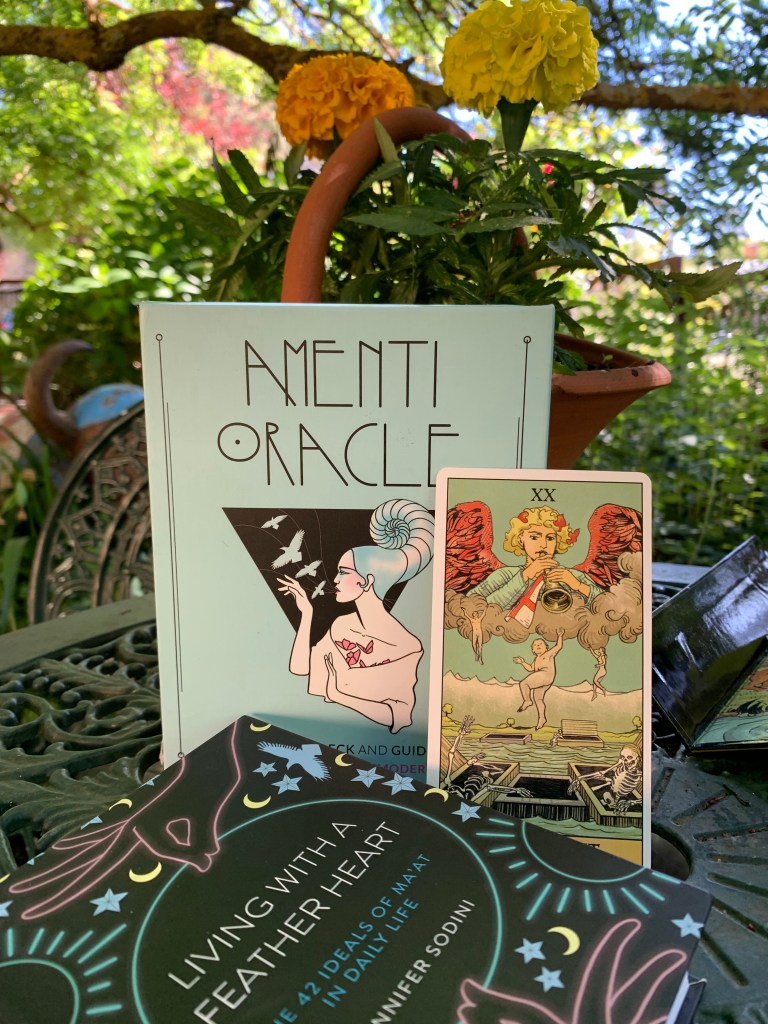
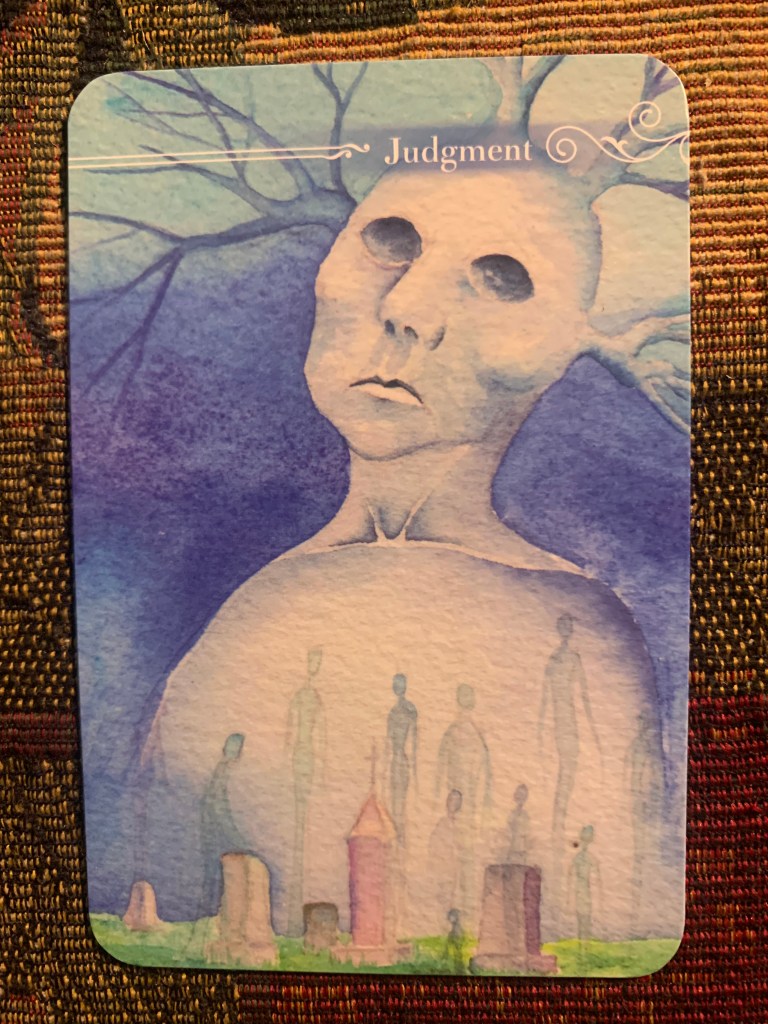
The word judgement usually implies that one is going to evaluate evidence before making a decision. However in the case of Tarot the Judgement card is often said to signal a time of resurrection and awakening, a time when a period of our life comes to an absolute end one must make way for a new dynamic beginning.
Both the Amenti Oracle and the After Tarot bring to mind our so called ‘Day of Judgment’, the time when an individual has to account for their lives before resurrection. The Guardian Tarot which depicts figures rising from what appears to be an urban area gives some weight to the idea that history will be the judge of our actions (finally determining what is the good and the true).
The Judgement card is a call to face yourself, completely. To hold up a mirror to your entire life, to see it all. To own it all. Your successes and your failures. The good times and the bad. Everything you’re proud of, and all that you wish you’d done differently. It’s yours – and you must own it all, you must accept it all.
The problem with the idea of a day of judgement, that somewhere in the future there will be a commuppance for those who sinned, is that modern society is strewn with harmful acts that were justified as serving some higher purpose. We all bear the rippled impact of such heinous acts.
Rather than orientate towards the shortcomings of moral recklessness it is, perhaps, more helpful to talk about the actions of those whose contributions provide an example for others to follow.
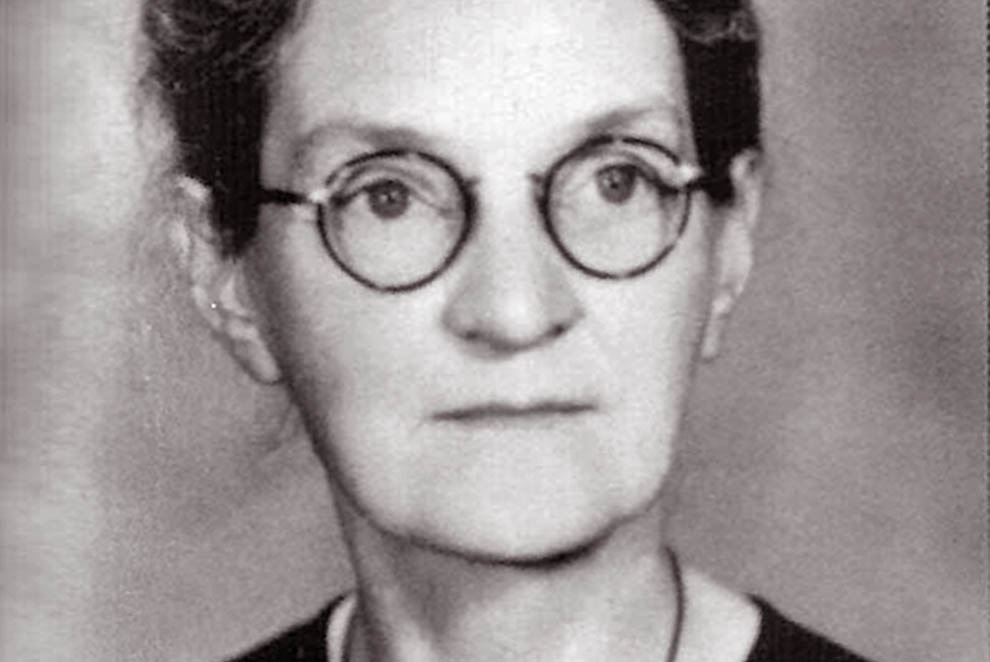
Mary Bennett was the daughter of a successful squatter. Although she wrote with love and admiration about her father in her book Christison of Lammermoor, by the end of her life she would describe Western Australian squatters as the “enemy” of Aboriginal people. In 1927 she referred to the 1891 striking shearers as “a cruel and cowardly lot,” but three decades later she worked with their union, the Australian Workers’ Union, to gain wage justice for Indigenous workers.
Although she has been described as a feminist, she fell out with Perth feminists in the 1930s when they failed to oppose the removal of Aboriginal children from their mothers. She never went to school herself, but she became a gifted and progressive educator on Mount Margaret Mission. Her thinking about Indigenous Australians and their place in Australian society displayed great intelligence, a strong moral compass and a palpable love for the first peoples of this land.
On her death in 1961, a large crowd of Wongatha, the Aboriginal people from the Kalgoorlie region, gathered in the heat on the red earth of the area’s main cemetery to mourn the loss of their friend and patron. There were elderly folk, weather-beaten pastoral workers and family groups carrying their young children. The mourners’ lives would become more difficult with the loss of their friend and advocate.
As Australians collectively recover from the fallout of the Voice Referendum it is worth looking to figures like Bennet for guidance about how to ensure we are accountable to our descendants and don’t leave a legacy of guilt. Far better to show we have contributed to the well being of all people in a positive way.


