Posted in Women's Stories

Rosaleen Norton – Devil or High Priestess?

Rosaleen Norton rose to infamy in the 1950s in Australia, after a series of lurid public scandals in which she was accused of participating in orgies and satanic rituals. She was prosecuted on charges of obscenity and blamed for the downfall of a world-famous conductor. Demonized by the press, her life became fodder for tabloids. 

As all good readers of Tarot cards know, you cannot typecast a person with just one card. Everyone is complex and each card reveals something about each person. A documentary called “The Witch of Kings Cross” — named for Rosaleen Norton’s bohemian neighborhood in Sydney — explores the life of the artist and self-professed witch and shows that scandal isn’t really the heart of Norton’s story.

The High Priestess is an ancient archetypal energy that embodies wisdom, inner knowledge and guidance. She is associated with Mystery, Sensuality, Desirability, Fertility, Creativity, Subconscious, Thirst for knowledge, High power, Intuition, Inner voice and the Divine feminine

Rosaleen Norton (1917–1979) was an Australian artist, writer, journalist, and occult practitioner whose life and work challenged the conservative social and religious norms of mid-twentieth-century Australia. Best known today as the “Witch of Kings Cross,” Norton became one of the country’s most controversial cultural figures, attracting intense media scrutiny for her spiritual beliefs, artistic imagery, and unconventional lifestyle.

During the 1940s and 1950s, Norton produced visionary artworks inspired by mythology, nature, paganism, and the occult. At a time when Australia maintained strict censorship laws and Christian values dominated public life, her depictions of nude figures, mystical beings, and alternative spiritual practices were considered shocking by many. Several of her publications were censored, and she faced prosecutions for obscenity, becoming a frequent target of sensationalist newspaper coverage.

Yet the scandals that surrounded her reveal only part of the story. Norton was also a gifted illustrator, journalist, and horror writer who contributed to Smith’s Weekly and other publications. Her work explored themes of personal freedom, spiritual exploration, sexuality, and humanity’s relationship with the natural world. While critics condemned her, others were fascinated by her intelligence, creativity, and refusal to conform.

The documentary The Witch of Kings Cross invites viewers to look beyond the lurid headlines and discover a complex woman whose life became a battleground between artistic expression and social conformity. Viewed through a contemporary lens, Rosaleen Norton emerges not simply as a scandalous figure, but as a pioneering artist and spiritual seeker whose courage to live authentically came at a considerable personal cost.

Follow the links and watch the Youtube video provided here examine her art and learn more about this fascinating, complex woman. Then you can decide for yourself which cards best speak of her energetic.
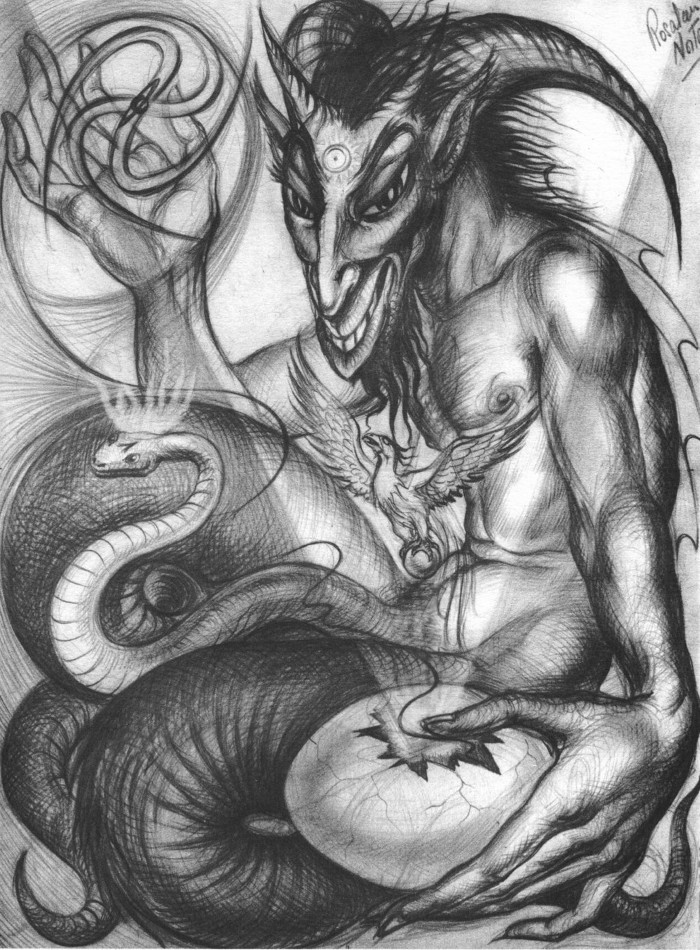
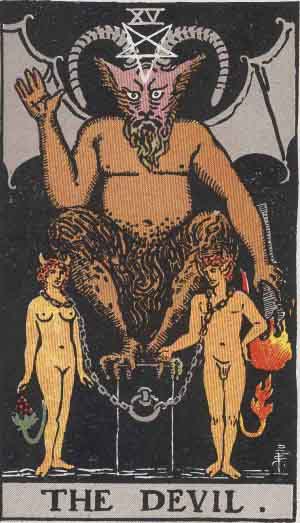
Image taken from Visionary Art
Posted in Matilda's, Memoir Writing, Narrative Therapy, Women's Health, Women's Stories

The Devil – Annie Lock

A rich inventory of monstrous figures exists throughout Aboriginal Australia. The specific form that their wickedness takes depends to a considerable extent on their location.

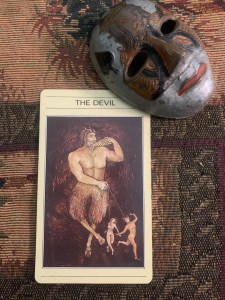
The Devil, with its foreboding images of demons and chains and some dark, scary hellscape points to the devil we all carry within us.

In the most literal sense many Indigenous people were chained.

As a student Catherine Bishop says she naively thought she had uncovered a feminist heroine when she discovered material about Australian missionary, Annie Lock. However, once she researched more carefully she found a woman of deep contradictions and was quickly disabused of any notion of the woman being a heroine: for all of Lock’s intrepid and gutsy behaviour, she held intensely socially conservative views in line with her religious conviction. The legacy of work done by her and other missionaries reverberates to this day and for first nations people may well be perceived to be the work of the devil.

In the Australian Central and Western Deserts there are roaming Ogres, Bogeymen and Bogey women, Cannibal Babies, Giant Baby-Guzzlers, Sorcerers, and spinifex and feather-slippered Spirit Beings able to dispatch victims with a single fatal garrote.

An interpretive drawing of Annie Lock by Heather Blakey October 2022

The places where Annie Lock was the ‘big boss to the natives’ were created and designed to ‘protect’ First Australians in a very patronising, paternalistic sense. Mainstream Australian thinking at the time was that Australia’s First Peoples were a ‘dying race’. Protectionist policies were developed reflecting this view. The interesting thing about Lock is that she didn’t adhere to all these view and her view that white Australians had taken Aboriginal land and owed them compensation was ahead of her time.

Born in 1876 into a Methodist sharefarming family of 14 children in South Australia’s Gilbert Valley, Lock was a practical woman with a very basic education. A dressmaker by trade, in 1903 she joined what would become the United Aborigines Mission.

It operated on faith lines: missionaries were unpaid and could not actively solicit donations, relying on prayer to answer all needs. Lock, like her colleagues, developed a nice line in inviting supporters to “join her in prayer” for very specific needs, such as “a nice staunch horse for £12”, hoping for a “practical” show of sympathy.

Follow the links and judge for yourself. Lock was a very contradictory, controversial figure. However, “while one may not admire all of Annie Lock’s actions or opinions, one cannot help but have respect for her courage, perseverance and the fact that she offered a friendly hand, albeit with strings attached. She was a significant figure in Australian history, one of an army of female missionaries who had profound effects, both positive and negative, on generations of Indigenous people. Lest we forget”.

Posted in Matilda's, Narrative Therapy, Women's Health, Women's Stories

Ann Hamilton Byrne – The Devil

King Solomon of Israel captured and contained 72 rebellious demons within a brass vessel. He threw that vessel into a deep Babylonian lake in order to keep others from discovering the power it held. While searching for the treasured vessel, the Babylonian’s broke it, releasing the demons.

Given the sheer evil that exits in the world any attempts to thwart the Devil would seem to have been in vain. This reviled figure has managed to have an impact no matter the gender.

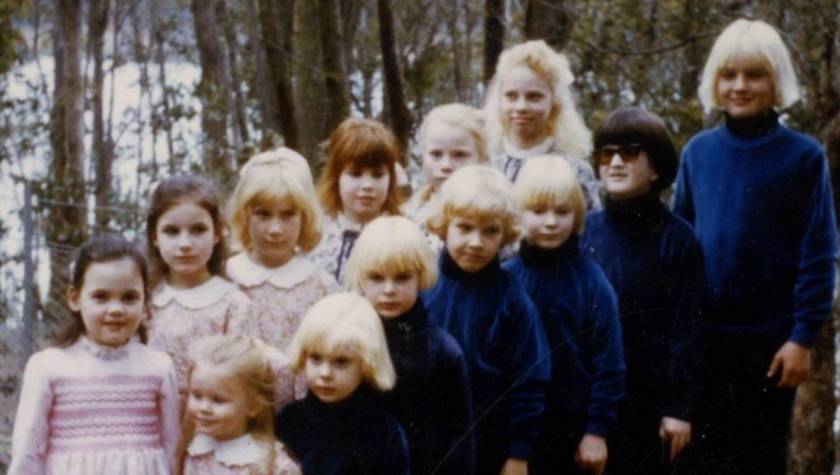
The subject of a True Life Podcast, Anne Hamilton-Byrne wore pearls and Chanel perfume. She played the harp and sang soprano. She had blonde hair, styled in waves that caught the light. As leader of The Family, the Australian doomsday cult she founded in the 1960s, she claimed to be Jesus reborn as a woman.

One of the few female cult leaders in history – and apparently one of the cruellest – Hamilton-Byrne operated in almost total secrecy over two decades. Hidden away in the countryside outside Melbourne, The Family’s motto was “Unseen, unknown, unheard”. The police, acting on information from two child escapees, raided the cult in 1987. It emerged that over the years Hamilton-Byrne had collected 28 children through bogus adoptions and “gifts” from followers, dressing them in identical clothes and bleaching their hair platinum. To keep her eerie brood under her control, they say she subjected them to vicious beatings, starvation and emotional torture.

The Hand of the Devil?

Satan, or the Devil, is one of the best-known characters in the Western traditions of Judaism, Christianity, and Islam. Surprisingly, this entity was a late-comer in the ancient world. Satan, as a totally evil being, is nowhere to be found in the Jewish Bible. He evolved during the height of the Persian Achaemenid Empire (beginning c. 550 BCE) and was adopted by Jews living under Persian rule at the time. His formal name, Satan, derives from the Hebrew ‘ha-Satan’. ‘Ha’ means ‘the’ and ‘Satan‘ means ‘opposer’ or ‘adversary’. 

Posted in Matilda's, Women's Health, Women's Stories

Confronting the Devil – Jenny Valentish

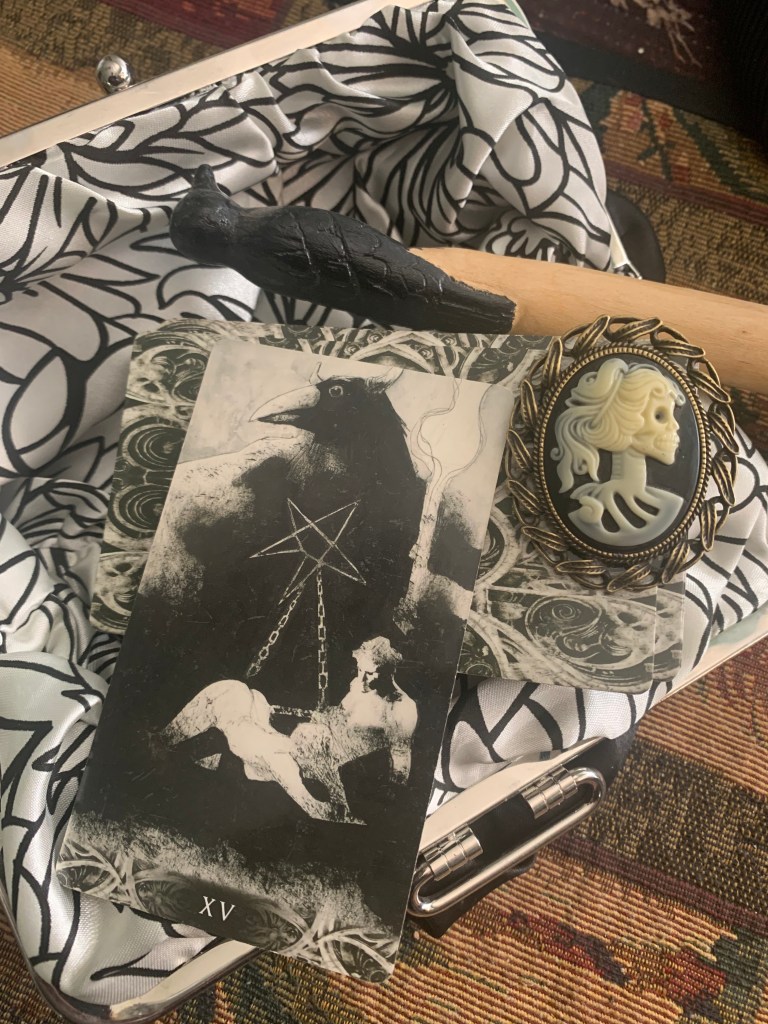
The Devil holds number 15, and it is the sixteenth tarot card of the Major Arcana cards. At its core, it usually represents being tied up to something or someone, to the point of unhealthy addiction.

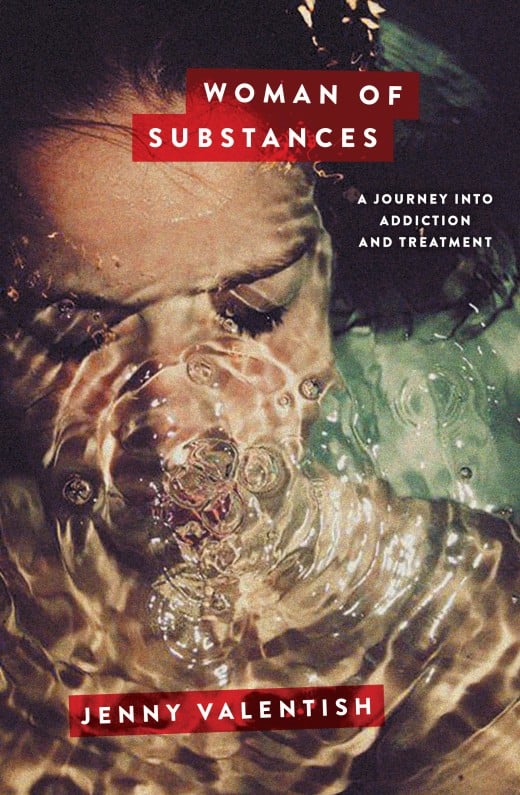
Jenny Valentish, a British journalist who now calls Australia home published ‘Woman of Substances’.

In Woman of Substances Valentish investigates the female experience of drugs and alcohol, using her own story to light the way. Her travels around Australia take her to treatment facilities and AA groups. Mining the expertise of leading researchers, she explores the early predictors of addiction, such as childhood trauma and temperament, and teenage impulsivity.

Drawing on neuroscience, she explains why other self-destructive behaviours – such as eating disorders, compulsive buying and high-risk sex – are interchangeable with problematic substance use. Her work helps us understand how the Devil chains us.

From the Mythic Tarot

On an inner level the Devil is an image of bondage to the crudest, most instinctual aspect of human nature. His image arouses fear within us, fear that he is holding a mirror and exposing our most base self. The Devil is associated with uncivilised sexual impulses and Dionysian behaviours. Unfortunately, while society may compel us to relegate him to the shadows, his presence is very real, manifesting itself in all sorts of nefarious ways. The challenge is to free oneself by gaining knowledge and establishing an honest relationship with this aspect of self. In doing so one releases the chains and lessens the Devil’s control.

Releasing the Devil’s Hold

Forced to accept an unwanted situationBeing under someone’s control
Dealing with addiction and obsessionBeing codependent
Being tied down against your own willBeing materialistic
Over-indulgingBeing caught up in physical appearances
Being ignorant of the truthFacing limitations
Fearing the unknownLack of faith
Giving to despair

Tarot as a Tool to Confront the Devil

I use tarot through a lens of self-care, choosing to find usefulness in the cards, and ultimately supporting myself by engaging with the challenges in my life rather than hiding from them.

Working with tarot can help to shift the understanding of our life experiences from an entirely subjective inner mind monologue to something with a shade more objectivity, simply by grounding our ideas in a physical object that we can actually hold and examine.

It is well worth watching these videos by Katey Flowers and seeing how she reads the cards in the spreads she presents. Katey no longer presents in this forum but her vault of videos is well worth checking out.

Spread 1 courtesy of Katey Flowers

  1. Why do I do it?
  2. What does it take from me?
  3. What is a small thing I can do today?
  4. How can I stay on track?

Spread 2 courtesy of Katey Flowers

  1. Why did I fall off the wagon?
  2. How can I learn and forgive myself for this happening?
  3. How can I be better next time?
  4. How can we get back on track?
  5. How can I be firm or kind to myself?

Spread 3 courtesy of Katey Flowers

  1. What am I doing well?
  2. How can I do better?