Van Diemen’s Land was the colonial name of the island of Tasmania used by the British during the European exploration of Australia in the 19th century. A British settlement was established in Van Diemen’s Land in 1803 before it became a separate colony in 1825. Its penal colonies became notorious destinations for the transportation of convicts due to the harsh environment, isolation and reputation for being inescapable. Macquarie Harbour and Port Arthur are among the most well-known penal settlements on the island.
Between 1788 and 1868 more than 162,000 convicts were transported to Australia. Transportation as a form of criminal punishment emerged in the British legal system from the early 17th century as an alternative to execution.
Many of the crimes for which they were transported are considered minor offenses by today’s standards. The most common crime by far was stealing—food, clothing, money, household items—mostly items worth no more than £5.
One can only imagine how my great great grandmother, Mary Ann Maule, had been living prior to her sentencing after a series of petty thefts. Clearly Mary was no angel but conditions in Liverpool were particularly harsh. Houses were severely overcrowded and the impact of the Great Famine, known as the Irish Famine was profound.
Friedrich Engels was shocked when he visited Liverpool in the 1840s. “Liverpool, with all its commerce, wealth, and grandeur yet treats its workers with the same barbarity. A full fifth of the population, more than 45,000 human beings, live in narrow, dark, damp, badly ventilated cellar dwellings, of which there are 7,862 in the city.
“Strength does not come from winning. Your struggles develop your strengths. When you go through hardships and decide not to surrender, that is strength.”– Arnold Schwarzenegger
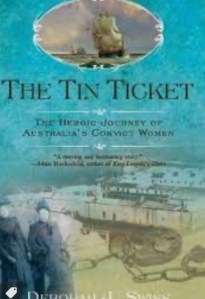
“Their stories immediately captured my heart when I learned that if you were a working-class girl in London or Dublin in the 1800s you had two choices: enter prostitution, which was not a crime or steal food or clothing to be able to live another day,” Deborah says. “And so I began my six-year journey of researching and getting to know these remarkable female convicts.”
Having survived the long, perilous journey on board the convict ship, there can be no doubt that life would have been no easier when she arrived in the colony. However, the scarcity of women opened up opportunities for convict women as servants and wives. Many, including Mary Ann, successfully merged into colonial society, creating new families, and through good conduct and hard work forged new lives. Convict women, like my great great grandmother, demonstrated a diversity of character, aspirations and behaviour, which contradicted their stereotype as ‘damned whores’.
As a part of a series of past life stories an imagined version of Mary Ann appears in ‘A Letter to A Mother’.
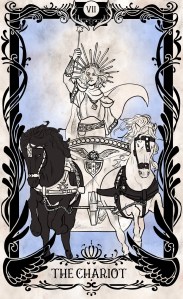
The Chariot is the card of triumph, determination, courage, and purposeful action. Traditionally it depicts a warrior standing proudly in a chariot, focused on the road ahead. The Chariot is not a card of endless thinking or emotional hesitation. It is a card of movement. It is about taking the reins and pressing forward despite the obstacles.
The Charioteer knows where she is going and refuses to be diverted. Although the two sphinxes at the front of the chariot pull in different directions, her strength of will keeps them moving as one. Through discipline, resolve, and unwavering purpose, she guides them towards her chosen destination.
Few Australians embody the spirit of The Chariot more completely than Fanny Finch.
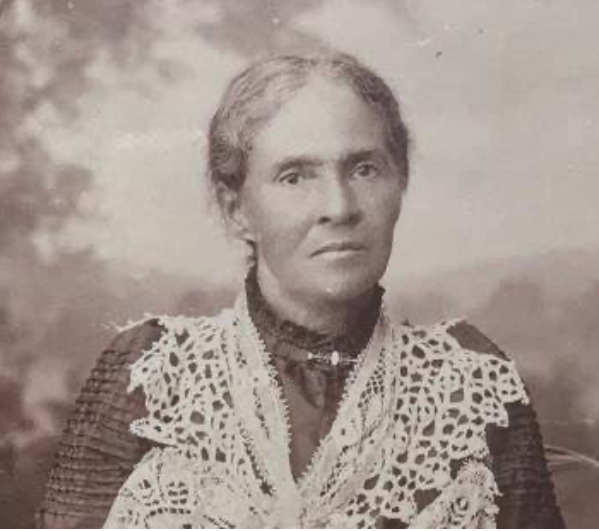
Born Frances Combe in London in 1815, Fanny was believed to be of African descent. Just eight weeks after her birth, her mother died, leaving her orphaned following a relationship with a footman that ended in pregnancy but not marriage. She was raised in the St Pancras Fledgling Home, where she received an education and protection at a time when opportunities for a child in her circumstances were painfully limited.
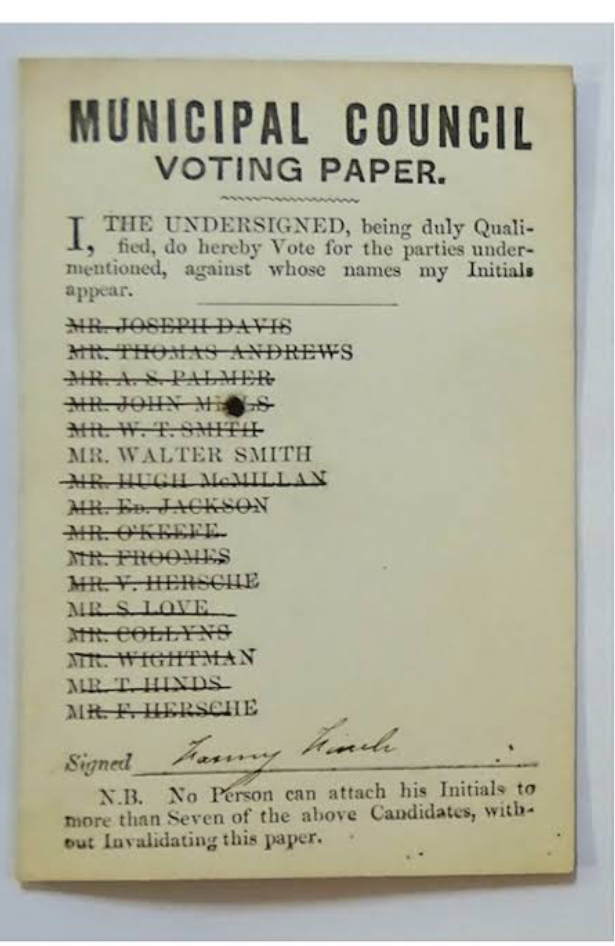
History often remembers Fanny as the first woman in Australia to cast a vote in an election, defying both convention and authority in 1856. Yet that remarkable act was only one chapter in an extraordinary life. Long before she signed her name on a ballot paper, Fanny had already demonstrated remarkable courage, resilience, and an unshakeable determination to shape her own future
The Chariot tarot card is all about overcoming challenges and gaining victory through maintaining control of your surroundings. This perfect control and confidence allows the charioteer to emerge victorious in any situation. The use of strength and willpower are critical in ensuring that you overcome the obstacles that lie in your path.
In 1836, at the age of twenty-one, she was granted free passage to the young colony of South Australia as a servant to the respected surgeon William Wyatt. There she married a sailor and became the mother of four children. When the marriage turned abusive, Fanny left with her children and forged a new life on her own terms. She walked from South Australia to Melbourne and, from there, pushed a wheelbarrow to the Forest Creek goldfields, where she began again.
At Forest Creek, Mrs Finch’s Boarding House became a respectable and much-needed place of accommodation for the thousands of men and women drawn to the goldfields. Later, after moving to Castlemaine in 1854, she established a successful restaurant and earned a reputation as a capable and respected businesswoman.
Evidence also suggests that, while raising four children alone, Fanny undertook sex work to support her family. As historian Kacey Sinclair observes, “She was a single mother of four and there was no other way to send her kids to school, feed them, and keep a roof over their heads.” Rather than diminishing her story, this reality speaks to the extraordinary lengths she went to in order to provide for her children.
Fanny’s businesses were frequently targeted by police harassment, including a conviction for selling alcohol without a licence
“I am a woman of but few words and plainly spoken…whatever my position may be, I have worked hard to keep my daughters in a good school and give them an education as I myself have not got…”
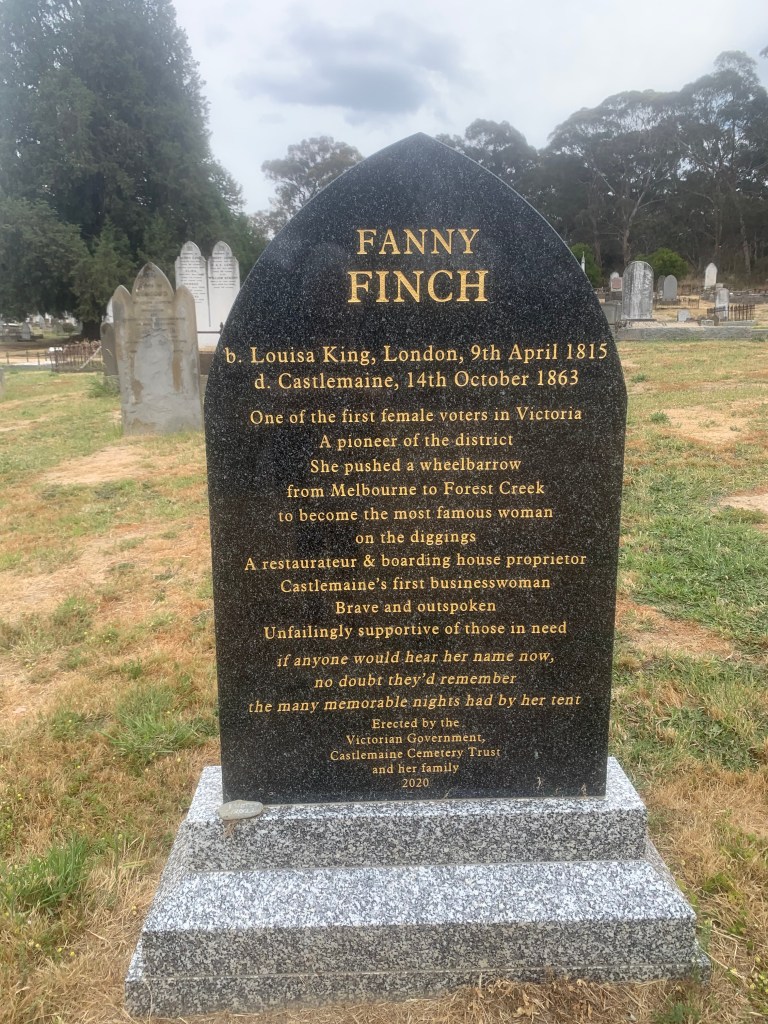
Fanny Finch died in 1863 and was buried in an unmarked grave.
More than 150 years later, historian Kacey Sinclair, together with Fanny’s great-great-great-granddaughter, author and actress Alice Garner, helped restore her rightful place in Australian history. A memorial, funded through a government grant, now honours her with the words:
“Brave and outspoken, unfailingly supportive of those in need.”
Like the Charioteer, Fanny Finch refused to surrender the reins of her life. Faced with hardship, prejudice, violence, and poverty, she continued to move forward with extraordinary determination. Her victory was not won in a single vote, but in the countless courageous decisions she made along the way.
Facts and Fiction
A Letter to Mother is a fictional Aussie yarn about another woman whose life journey bought her to Castlemaine