WARNING: Aboriginal and Torres Strait Islander viewers are warned that the following feature may contain images and voices of deceased persons. All photos were sourced from the public domain.
It is no secret that Aboriginal and Torres Strait Islander women are placed well down on the scale of relevance and importance in Australia. They are invariably the last to be recognised. Perhaps this is because of their tireless pursuit of rights and betterment for their people. This may explain why individual achievements are rarely important and why they are often overlooked and don’t receive credit where credit is due
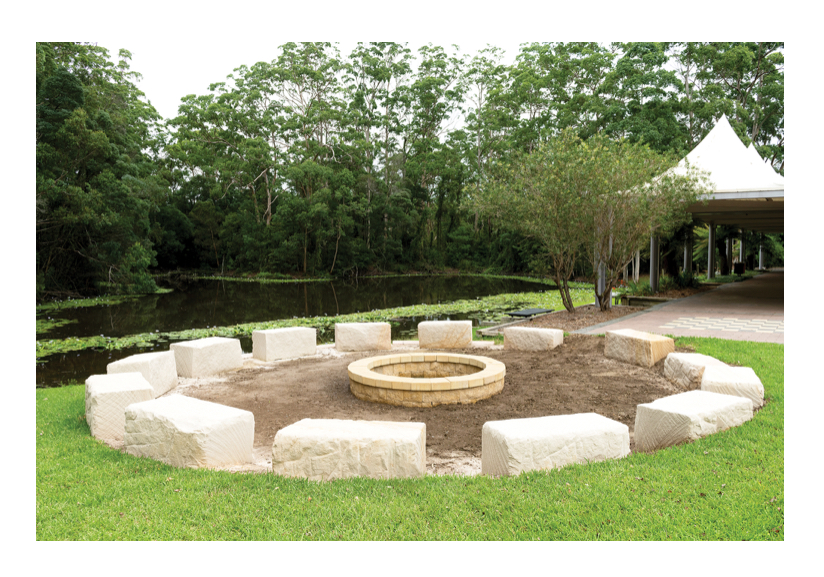
This listening circle provides fourteen places to seat influential First Nations Australian women. This offers an opportunity for deep listening and to redress this lack of acknowledgement.
June Oscar June Oscar AO is a proud Bunuba woman from the remote town of Fitzroy Crossing in Western Australia’s Kimberley region. She is a strong advocate for Indigenous Australian languages, social justice, women’s issues, and has worked tirelessly to reduce Fetal Alcohol Spectrum Disorder (FASD). Listen to her speaking at the National Press Club of Australia
Ruby Hunter (1955-2010), singer/songwriter, was a Ngarrindjeri/ Kukatha/ Pitjantjatjara woman from South Australia. At the age of eight she and her four siblings and herself were taken from their family. During her life Ruby worked tirelessly to support and encourage young Aboriginal people, running an open house for teenagers. Ruby and Archie together cared for 14 children in a family house group home run by the Victorian Aboriginal Child Care Agency.
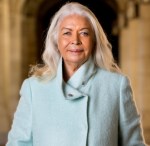
Professor Marcia Langton AO (b. 1951), anthropologist, geographer and academic, is a descendant of the Yiman and Bidjara nations of Queensland. Langton is Associate Provost and Foundation Chair of Australian Indigenous Studies at the University of Melbourne, and is a frank and forceful presence in the Australian media.
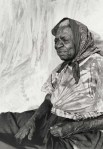
“Emily Kame Kngwarreye is one of Australia’s most significant contemporary artists. Emily was born at the beginning of the 20th century and grew up in a remote desert area known as Utopia, 230 kilometres north-east of Alice Springs, distant from the art world that sought her work. Although Emily began to paint late in her life she was a prolific artist who often worked at a pace that belied her advanced age. It is estimated that she produced over 3,000 paintings in the course of her eight-year painting career – an average of one painting per day. Her remarkable work was inspired by her cultural life as an Anmatyerre elder, and her lifelong custodianship of the women’s Dreaming sites in her clan Country, Alhalkere”.
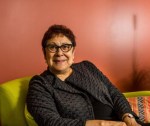
When you think about feminism, unless you are Indigenous, the names that come to mind are Steinem, Ginsburg, Greer but rarely will you hear about the trailblazing work of Geonpul woman, Professor Aileen Moreton-Robinson who is an academic, feminist, author and activist for Indigenous rights. She has guided and paved the path for emerging black feminists to continue the conversation and continue to shine a light on intersectional feminism.
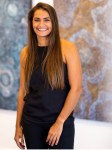
Indigenous Artists nourish us all with their depictions of country and land. Sarrita King is known for her artworks that connect land, experiences, family and kinship. She collaborates with her sister Tarisse King, and their works are sought after by collectors and galleries in Australia and internationally.
Sarrita has Gurindji ancestry from the Northern Territory. Stylistically, Sarrita utilises traditional Aboriginal techniques such as ‘dotting’ but also incorporates unorthodox techniques taught to her by her father as well as self developed practices. Her art is a fusion of past, present and future and represents the next generation of artists who have been influenced by both their indigenous history and current Western upbringing. Sarrita creates frenetic energy on the canvas with her Lightning series and searing heat with her Fire series.
Sarrita’s aesthetic has a universal appeal and provides an entry point for people to experience the power and uniqueness of the Australian landscape and its harsh climate. On a world scale, her depictions couldn’t be timelier.
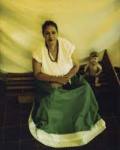
Destiny Deacon, who died in May 2024, once described herself as ‘just an old-fashioned political artist’. The sardonic title of Deacon’s Daisy and Heather discuss race certainly winks at the idea of race ever being the subject of polite conversation, especially between people of different racial backgrounds.
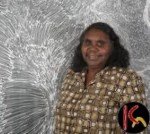
Anna Petyarre was born within the region of Utopia in 1960 and belongs to the language group of the eatern Ammatyerre. Currently she divides her time living both at her birth plave Boundary Bore (Atneltyeye) and in Alice Springs. Anna is a highly respected Utopia artist with splendid skills and original talents that highlights and instantly defines her painitings and themes.
Anna was introduced to painting whilst still a child with the guidance of her artistic mother the late “Glory Ngale” however she was also surrounded by other famous artists whom she is related to (the late “Emily Kame Kngwarreye” and Kudditji Kngwarreye”) through her grandfather who was bother to Emily and Kudditji father.
Highly regard for her artistic awareness to detail within her paintings, often consisting of intricate and blended designs that are so meticulous in structure that purposely focus on expressing her ancestral heritage which is major factor in describing Anna’a pallet as original.
Current works tend to illustrate her ancestral country, denoted by fine rows of dots indicating locations of various landmarks such as sand hills and river flood plains along with waterholes and ceremonial sites.
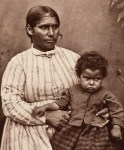
Louisa Briggs (1836-1925), Aboriginal leader, was born on 14 November 1836 on Preservation Island, Bass Strait, the second daughter of Polly Munro and Robert Strugnell, who in 1818 as a seventeen year old chimney-sweep had received a seven year sentence of transportation.
‘The Story of Louisa Briggs’ is a short installation film commissioned by Bunjilaka, Melbourne Museum as part of its internationally award winning ‘First Peoples’ permanent exhibition.
The film accompanies and interprets a range of objects and photographs of early encounters the Boon Wurrung people had with the sealers and whalers that came from England.
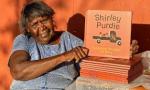
Shirley Purdie, was born on Mabel Downs Station, Western Australia. She grew up there whilst her mother Madigan Thomas was working alongside the stockmen. At just 14, Shirley began work as a domestic on pastoral stations.
Purdie is a strong law and culture woman, and important ceremonial singer and dancer in the community, is also a senior artist with the community-owned Warmun Art Centre. She is especially precious within her community because, as well as being a major artist she is a senior cultural leader and custodian, a teacher of dreaming stories (Ngarranggarni), and an accomplished storyteller.
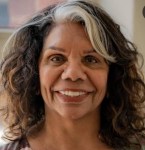
Rosemary Wanganeen is a proud South Australian Aboriginal woman with ancestry and ancestral links to Kaurna of the Adelaide Plains and Wirringu from the West Coast. After the Death of their beloved mother, Rosemary and six of her eight siblings became part of the Stolen Generation. It’s a traumatic story, but by reconnecting with her Spiritual Ancestors, Rosemary managed to survive the many years of loss, grief and fear.
Years later, as an intuitive researcher and respected academic trying to make sense of her experience, Rosemary had a life-changing epiphany. She realised her own contemporary loss and unresolved grief was compounding and complicating the broader, systemic cultural losses and unresolved grief that all Aboriginal people have experienced since invasion/colonisation. She saw how all Aboriginal Australians – an entire community – was being funnelled into disadvantage.
Rosemary utilised this intuitive research to develop a new and innovative academic cultural methodology. She reframed the deficit western construct of ‘Aboriginal disadvantage’ and re-classify it under the umbrella of Griefology. The unique and innovative model she personally developed – The Seven Phases to Integrating Loss and Grief© – is the path to Aboriginal prosperity.
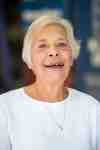
When we hear about the ‘first Aboriginal to graduate from University’ many of us think of Charlie Perkins. He is after all, the one to be credited with this achievement as he graduated from Sydney University in May of 1966. However it was not Charlie who was the first Indigenous graduate. He was not even the second.
Bundjalung woman Margaret Williams-Weir was a trailblazer in many ways – she was the first Indigenous person to attend university, as well as the first to graduate from a university when she received her Diploma in Physical Education in 1959.
Dr Williams-Weir spent the following decades teaching around the world, including in England and Canada. She later returned to Australian and joined the Commonwealth Teaching Service, working in remote communities in the Northern Territory.
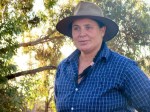
Koa woman, Dr Tauri Simone, a stockwoman herself who has worked across remote Australia, recently completed her PhD, Aboriginal Stockwomen: Their Legacy in the Australian Pastoral Industry. This PhD revealed the unacknowledged extent of First Nations women’s contribution to early pastoral development across Queensland, Northern Territory and north-western Australia. Dr Simone demonstrates how Aboriginal women played an important role and in the course of her research, she ‘yarned’ with numerous older aboriginal women subjects who had worked as stockwomen. An interview with her can be found here.
Inspired by the work of Dr Tauri Simone, Serene Fernando, Gamilaraay woman of north-west New South Wales, and David Pritchar curated a a State Library showcase recognising Aboriginal stockmen and stockwomen for their role in building Queensland’s cattle industry infrastructure.

