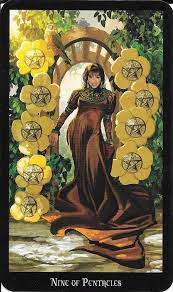
The Nine of Pentacles is a card of success and accomplishment. It represents the achievement of that kind of confidence and security that comes from having created something solid, something real, that you can now relax and enjoy. It’s a card of abundance and gratitude too. It represents feeling rich and strong in a really good way, having earned good things and appreciating them.
Known simply as ‘Sheila’, this foundation was launched in May 2019. ‘Sheila’ aims “to overturn decades of gender bias by writing Australian women artists back into our art history and ensuring equality for today’s women artists.” Sheila now supports female artists by purchasing and commissioning works; by providing scholarships for female art historians and curators; and by hosting an annual symposium on female Australian art.
This foundation exists because of the ground work of Lady Sheila Cruthers. The late Lady Sheila Cruthers was a passionate advocate for female artists. Leaving school at 14, Sheila had dreams of being a lawyer. She never got the chance, becoming instead a wife and mother. But this ambition, says Cruthers, channeled itself in other ways. In the 1970s she started to collect female Australian artists, dating from the contemporary back to the 1880s. (Just over 18% of the collection is Aboriginal.)
In 2007, the Cruthers Collection of Women’s Art – the country’s largest collection of its kind – was gifted to the University of Western Australia. Now housed at the Lawrence Wilson Art Gallery in Perth, her collection numbers over 700 works and is the largest, and the only stand-alone, collection of its kind in the country.
A rich inventory of monstrous figures exists throughout Aboriginal Australia. The specific form that their wickedness takes depends to a considerable extent on their location.
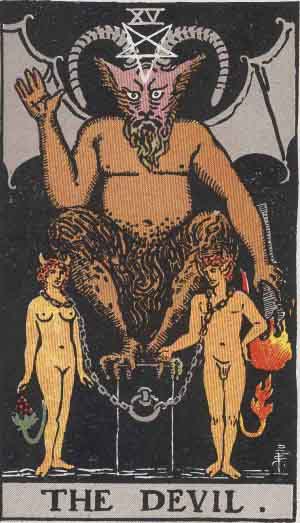
The Devil, with its foreboding images of demons and chains and some dark, scary hellscape points to the devil we all carry within us.
In the most literal sense many Indigenous people were chained.
As a student Catherine Bishop says she naively thought she had uncovered a feminist heroine when she discovered material about Australian missionary, Annie Lock. However, once she researched more carefully she found a woman of deep contradictions and was quickly disabused of any notion of the woman being a heroine: for all of Lock’s intrepid and gutsy behaviour, she held intensely socially conservative views in line with her religious conviction. The legacy of work done by her and other missionaries reverberates to this day and for first nations people may well be perceived to be the work of the devil.
In the Australian Central and Western Deserts there are roaming Ogres, Bogeymen and Bogey women, Cannibal Babies, Giant Baby-Guzzlers, Sorcerers, and spinifex and feather-slippered Spirit Beings able to dispatch victims with a single fatal garrote.
An interpretive drawing of Annie Lock by Heather Blakey October 2022
The places where Annie Lock was the ‘big boss to the natives’ were created and designed to ‘protect’ First Australians in a very patronising, paternalistic sense. Mainstream Australian thinking at the time was that Australia’s First Peoples were a ‘dying race’. Protectionist policies were developed reflecting this view. The interesting thing about Lock is that she didn’t adhere to all these view and her view that white Australians had taken Aboriginal land and owed them compensation was ahead of her time.
Born in 1876 into a Methodist sharefarming family of 14 children in South Australia’s Gilbert Valley, Lock was a practical woman with a very basic education. A dressmaker by trade, in 1903 she joined what would become the United Aborigines Mission.
It operated on faith lines: missionaries were unpaid and could not actively solicit donations, relying on prayer to answer all needs. Lock, like her colleagues, developed a nice line in inviting supporters to “join her in prayer” for very specific needs, such as “a nice staunch horse for £12”, hoping for a “practical” show of sympathy.
Follow the links and judge for yourself. Lock was a very contradictory, controversial figure. However, “while one may not admire all of Annie Lock’s actions or opinions, one cannot help but have respect for her courage, perseverance and the fact that she offered a friendly hand, albeit with strings attached. She was a significant figure in Australian history, one of an army of female missionaries who had profound effects, both positive and negative, on generations of Indigenous people. Lest we forget”.
Irene Torres, the Spanish artisan responsible for the Swiss Marseille Tarot and other Playing Cards, is currently the only female restorer of old decks of cards who redraws the images, creates the missing ones and fills them with vibrant colors, giving them a new life.
I was delighted when she accepted my invitation to, not only provide insight into how she works, but to talk about the Tarot card which best describes her as an artisan. Learn about how the Queen of Wands defines and informs her work.
“Like the Queen of Wands, I am a visionary who doesn’t follow paths already laid out by other people, since my skeptical and inquisitive nature prevents me from taking everything as good, without first passing it through my own filters. I love approaching tarot in my own way, because there are already other people who can do the same thing as always. That’s why I choose such special tarot decks or card decks to restore. Therefore, when I create a deck, the result is something totally personal and intimate, where I put part of my own essence, of my own being”.
The World represents self-actualisation and becoming. Becoming whole. Realising our wholeness, our completeness. Realising that we are one with the Universe, and really knowing that on a deep level, in our bones, in our minds, in our hearts, and in our souls.
Historically, women’s sport in Australia has received far from equal representation in the media, with men’s sport spread across newspapers and permanently featured in primetime TV slots. However, this has been flipped on its head in 2023 as the Matildas smashed TV ratings and records during the FIFA Women’s World Cup, surpassing both the AFL Grand Final and State of Origin. They have, quite literally, turbo charged girls football in Australia
The Matildas’ Women’s World Cup semi-final match against England made history by becoming the most-watched TV program since the current audience measurement system ‘OzTAM’ launched in 2001. The Matildas’ clash with England attracted a national average audience of 7.13 million viewers, with Seven West Mediaannouncing that the Matildas’ semi-final match had smashed the record for the most streamed event ever in Australia.
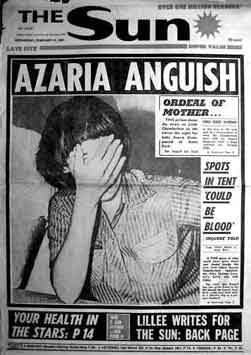
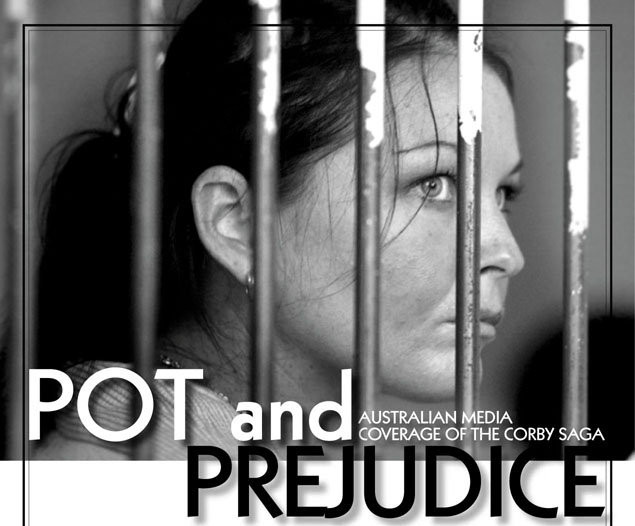
THE notion of Trial by Media is best understood as a situation where the media not only report the evidence presented inside a courtroom, but actually shape that news with very particular sets of opinion. In its most basic form, this is a ‘process in which mainstream media organizations ‘pick sides’ and act as de facto prosecutors or defence advocates before taking on the role of judge and/or jury.
When Trial by Media occurs in instances like the reporting regarding Lindy Chamberlain and Schapelle Corby the subsequent reporting firmly sets an agenda for many media consumers, who somehow end up feeling that they are now qualified to be members of the jury. The media and readers seem to feel that they have all the relevant information at their disposal and are able to sit in judgement. They have been positioned by these media reports as legal experts, and are encouraged by talkback radio and media-sponsored opinion polls to judge the merits of the case. In many instances, they go further by openly criticizing the performances of those acting in a professional capacity inside the courtroom.
The Judgement card is a call to face yourself, completely. To hold up a mirror to your entire life, to see it all. To own it all. Your successes and your failures. The good times and the bad. Everything you’re proud of, and all that you wish you’d done differently. It’s yours – and you must own it all, you must accept it all.
It is stunning to consider the tonnes of newsprint and hours and hours of broadcasting material devoted to Schapelle Corby’s arrest in October 2004, and her subsequent trial and conviction in May 2005. Three television networks (Seven, Nine and Pay TV’s SkyNews) telecast the verdict live in a three-hour satellite special. This was broadcast during a non-peak viewing period (Friday afternoon), yet still managed to draw over a million Australian viewers. In the first few weeks following the verdict, there were ongoing related stories about possible appeal processes, prisoner exchange schemes, differences of opinion between those advocating Corby’s innocence, and, of course, the alleged related incident at the Indonesian Embassy in Canberra, where some mysterious white powder was posted to officials.
Don’t pass judgment. If you find yourself being judgmental, stop yourself. This takes a greater awareness than we usually have, so the first step (and an important one) is to observe your thoughts for a few days, trying to notice when you’re being judgmental. This can be a difficult step. Remind yourself to observe.
Once you’re more aware, you can then stop yourself when you feel yourself being judgmental. Then move to the next step.
Understand. Instead of judging someone for what he’s done or how he looks, try instead to understand the person. Put yourself in their shoes. Try to imagine their background. If possible, talk to them. Find out their backstory. Everyone has one. If not, try to imagine the circumstances that might have led to the person acting or looking like they do.
Accept. Once you begin to understand, or at least think you kind of understand, try to accept. Accept that person for who he is, without trying to change him. Accept that he will act the way he does, without wanting him to change. The world is what it is, and as much as you try, you can only change a little bit of it. It will continue to be as it is long after you’re gone. Accept that, because otherwise, you’re in for a world of frustration.
Judgement as an Awakening
The word judgement usually implies that one is going to evaluate evidence before making a decision. However in the case of Tarot the Judgement card is often said to signal a time of resurrection and awakening, a time when a period of our life comes to an absolute end one must make way for a new dynamic beginning.
The Sun tarot card is a beacon of positivity and triumph, symbolizing abundance, joy, and unwavering faith in the universe’s love and guidance. As a major arcana card, the Sun signifies reaching a place of true clarity, illumination, and satisfaction after overcoming obstacles. When the Sun card appears in a tarot reading, it is a vibrant, energising sign of approval from the universe, promoting growth and encouraging you to follow your instincts and aspirations.
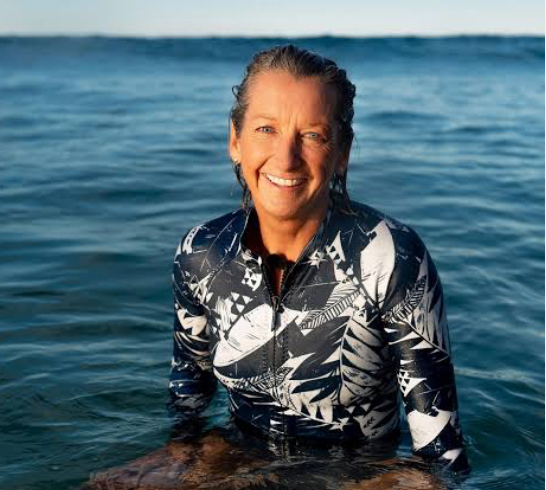
When the Sun tarot card appears upright in a reading, it generally signifies joy, accomplishment, and embracing one’s true potential. There is no question in anyone’s mind that Lane Beachley reached her full potential.
Layne Beachley is the most successful competitive Australian surfer of all time. Her list of achievements and accolades is impressive. Her dominance saw her win seven world championships, including a record six in a row, as she towered over the sport and inspired other young women to take to the waves.
It’s about success, good luck, things going your way. The Sun is a life-force that beams down and blesses all it touches with warmth. It encourages growth, it brings things to life. There is so much positive energy in this card, it is beaming with it.
The charismatic, cheerful, and uber-talented wave-riding champion from Dee Why was also the first surfer – male or female – to win six back-to-back world titles.
Beachley is often regarded as one the greatest female big wave riders in the sport’s history and was once considered the most influential woman in surfing.
Layne Beachley AO was inducted into the Sport Australia Hall of Fame in 2011 as an Athlete Member and was elevated to legend in 2023 for her contribution to the sport of surfing.
The Sun Card in Tarot Represents
The Sun reminds us to connect to life’s simple joys, the things that make us feel happier, lighter, freer, more connected. It’s about feeling grateful for the good things we have, realising the abundance in our lives, saying yes, and saying thank you on a deep level.
A time of harmonious relationships
Emotional growth
Enlightenment
Self-discovery
Fulfillment
Abundance
Success
Optimism
Confidence
Happiness
Joy
Contentment
This card encourages us to joyfully embrace our true selves and to be open to exciting new experiences.
As a figure stands beside overturned cups, the Five of Cups shows us a moment of pure sadness. What happened? It doesn’t really matter! This is a painful reminder of things that are gone and cannot be retrieved.
It is confronting, but do take the time to watch this interview with Marjorie Woodrow who was stolen from her parents when she was 2 years old. Like so many others like Marion Woodrow suffered abuse in many children’s homes. Read moreAbuse of Stolen Children – Creative Spirits
Sydney woman Valerie Linow became the first member of the stolen generations to win monetary compensation for her cruel treatment after authorities removed her from her family. When she was nine, she was taken to south-west New South Wales, to the Cootamundra domestic training home for Aboriginal girls. She left six years later and was forced to work in the town of Wombat for a former police officer, who raped her when she was 15.
The Star is a card of hope, I renewal, and quiet endurance. It appears after upheaval and reminds us that even in the shadow of great sorrow, light still exists. This card speaks of courage, faith, and the small acts of kindness that guide people through uncertain times. It asks you to trust that what is needed will arrive, and that hope itself can become a beacon for others.
Before thousands of Australian soldiers departed for the battlefields of World War I, many fixed their gaze upon a small, windswept island near Albany in Western Australia. There lived Fay-Catherine Howe, the teenage daughter of a lighthouse keeper.
Skilled in semaphore and Morse code, fifteen-year-old Fay became an unexpected lifeline between the departing troops and the families they were leaving behind. From the island she relayed messages to the soldiers using signal flags, then transmitted their replies back to Albany by telegraph and undersea cable, where they were delivered as telegrams to waiting loved ones.
Though she never truly knew the men she signalled to, Fay became a cherished symbol of home — a final human connection before the ships disappeared beyond the horizon. Her compassion and dedication left such an impression that many soldiers later sent postcards to her from the front.
The image of the Tower card is powerful, depicting a solid tower being struck by lightning, and fire crawling out from the small windows at its top.
As Death shows us, change can be hard. With the Tower, it can be brutal. Rosie Batty has written about her heartbreak.
“The Tower – whatever it represents in your reading – comes crashing to the ground. All that you held to be true is suddenly…not true. The world looks different, and it can feel like a disaster. This card’s usual image of lightening destroying a tower is incredibly scary – destruction is all that we can see. The ground is unsteady beneath our feet. We don’t know what to hold on to.”
Quite rightly Batty still wonders “How on Earth, when you become one of these tragedies — these worse-case scenario tragedies — how do you live with murder?”
“If anything comes out of this, I want it to be a lesson to everybody that family violence happens to everybody no matter how nice your house is, no matter how intelligent you are. It happens to anyone and everyone.”The Batty Effect
Many tarot readers talk about their own ‘Tower moments’, referring to those huge and very challenging moments in our lives where everything shifted. Most recall the terror at the moment of fallout but also observe that when the dust has settled things do regain some balance. There is no doubt that Batty’s work to raise awareness about family violence since Luke’s death, gave her “new distractions, new purpose”. Whether she will ever get over what happened is debatable. However, the impact of her work has been far reaching and provides some comfort for her.
By January 2016, she had spoken at approximately 250 events and addressed more than 70,000 people. She had also inspired Victorian Premier Daniel Andrews to commit to an Australian-first Royal Commission into Family Violence. She has, quite literally, changed the conversation about domestic violence in Australia.
Rebuilding
When you are ready, the Tower is also about those steps you take to rebuild.
The Hanged Man tarot card symbolizes sacrifice, surrender, and letting go. It often appears in readings to indicate a time of pause, reflection, and reevaluation of one’s beliefs and priorities.
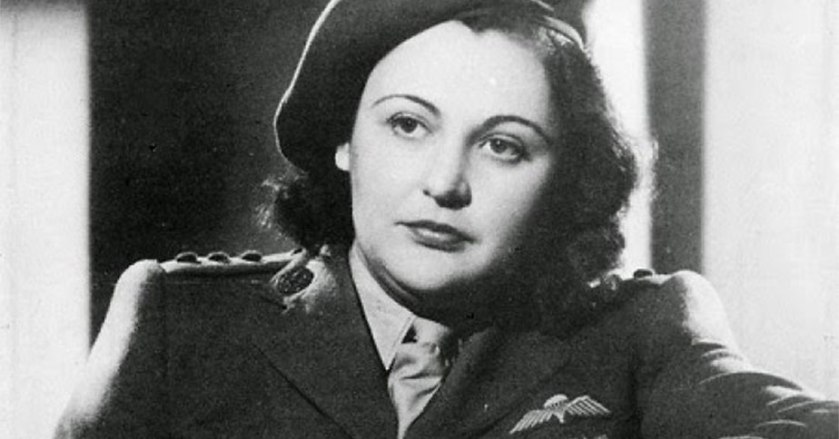
Nancy Grace Ausgusta Wake was born on 30 August 1912 in Wellington New Zealand. She was the youngest of six children and was raised in Australia. Shortly after moving them to Australia her journalist father deserted the family leaving them to face poverty and hardship. This event is believed to have sparked her rebellious nature and fearsome temper.
At 16 Wake used a £200 inheritance from an aunt to travel to London, where she studied journalism before moving to Paris. While travelling through France writing articles to support herself, Nancy met the man whom she later married. Henri Fiocca was a wealthy French industrialist living in Marseilles where the two settled prior to the war.
As a naive, young journalist, Nancy Wake had witnessed a horrific scene of Nazi violence in a Viennese street. In 1933 on one of her first assignments Wake was to interview Adolf Hitler in Vienna. It was at this point that Nancy Wake first came face-to-face with impending rise of the Nazi regime. From this point, she was committed to bringing down Hitler and his regime and she was true to her word. Among other things she helped build a highly successful escape network for Allied soldiers, perfectly camouflaged by her high-society life with Fiocca n Marseille.
The Hanged Man card is sometimes referred to as the traitor card. As history makes blatantly clear, persons whose individual conscience is in opposition or divergent from the collective viewpoint, can appear as traitors to the Establishment. Often upside down in relation to family, friends and the government, nonconformists can be even branded as criminals.
Though she was never caught, word spread throughout the German Gestapo of a mysterious dark-haired woman operating the southern escape. She became one of the Gestapo’s most wanted and with a five million franc bounty on her head she became known as ‘The White Mouse’ for her continued ability to evade capture. Her husband was not so fortunate and was tortured and executed when he would not reveal the whereabouts of his wife.
After the war she was decorated by Britain, France and the United States. She received the George Medal, 1939-45 Star, France and Germany Star, Defence Medal, British War Medal 1939-45, French Officer of the Legion of Honour, French Croix de Guerre with Star and two Palms, US Medal for Freedom with Palm and French Medaille de la Resistance for her courageous endeavours.
Unable to adapt to life in post-war Europe, she returned to Australia in January 1949 aged 37 and, not surprisingly, given all that she had done and witnessed, never really settled.
King Solomon of Israel captured and contained 72 rebellious demons within a brass vessel. He threw that vessel into a deep Babylonian lake in order to keep others from discovering the power it held. While searching for the treasured vessel, the Babylonian’s broke it, releasing the demons.
Given the sheer evil that exits in the world any attempts to thwart the Devil would seem to have been in vain. This reviled figure has managed to have an impact no matter the gender.
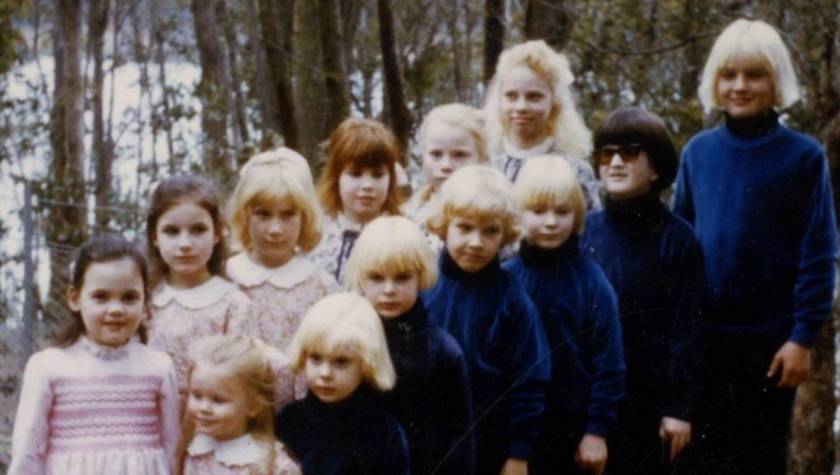
The subject of a True Life Podcast, Anne Hamilton-Byrne wore pearls and Chanel perfume. She played the harp and sang soprano. She had blonde hair, styled in waves that caught the light. As leader of The Family, the Australian doomsday cult she founded in the 1960s, she claimed to be Jesus reborn as a woman.
One of the few female cult leaders in history – and apparently one of the cruellest – Hamilton-Byrne operated in almost total secrecy over two decades. Hidden away in the countryside outside Melbourne, The Family’s motto was “Unseen, unknown, unheard”. The police, acting on information from two child escapees, raided the cult in 1987. It emerged that over the years Hamilton-Byrne had collected 28 children through bogus adoptions and “gifts” from followers, dressing them in identical clothes and bleaching their hair platinum. To keep her eerie brood under her control, they say she subjected them to vicious beatings, starvation and emotional torture.
The Hand of the Devil?
Satan, or the Devil, is one of the best-known characters in the Western traditions of Judaism, Christianity, and Islam. Surprisingly, this entity was a late-comer in the ancient world. Satan, as a totally evil being, is nowhere to be found in the Jewish Bible. He evolved during the height of the Persian Achaemenid Empire (beginning c. 550 BCE) and was adopted by Jews living under Persian rule at the time. His formal name, Satan, derives from the Hebrew ‘ha-Satan’. ‘Ha’ means ‘the’ and ‘Satan‘ means ‘opposer’ or ‘adversary’.
Death (XIII) is the 13th trump or Major Arcana card in most traditional Tarot decks. The Death card signals that one major phase in your life is ending, and a new one is going to start.
“For Life and Death are one, even as the river and the sea are one.” – Khalil Gibran
Helen Callanan is a death doula who established an organisation called Preparing the Way.A death doula is a companion, advocate and educator for the dying and their family through the process of death. They nurture and support the dying and their family in a practical and empathetic way with the ability to tailor their approach to each person’s needs.
Pragmatic Approaches to Death
Let’s get real! Denial does not protect any of us. No one gets off this planet alive and unless we head off first we inevitably face the deaths of those close to us. It makes complete sense to stop with the frightened stuff and be prepared. To be prepared is actually life affirming.
When my husband died in 2007, we didn’t use the traditional funeral parlour. It was news to me that you could have a funeral in the back yard or a park if you wanted to. Syd Peak and Daughter enabled us to have a ‘transformative’ funeral in the park opposite our home, of the kind that Natural Grace Funerals, Tender Funerals and Zenith Virago are now offering. Perhaps the most moving aspect of what we did at the time is that his biking community took his ashes, sewn into a toy bear, on the biking trip to Queensland that he had so wanted to do.
Making Descansos
If you don’t have a specific place to mark a death you can set up a website or pull out your art and craft supplies and create a collage.
In my experience it is the living, rather than the dead that need to find a way to RIP! After all, the dead are dead aren’t they? It is the living who have to manage to go on living!
All cultures have ways of dealing with and managing grief. I first learned about the concept of Descansos when I read Clarissa Pinkola Estes ‘Women Who Run With Wolves’. Estes describes how when you travel in Old Mexico, New Mexico, southern Colorado, Arizona, or parts of the South, you will see little white crosses by the roadside. These are descansos mark resting places and formally marking these resting places with crosses, memorabilia and flowers offers some solace to those left behind. The concept of marking resting places is not confined to the United States or Mexico. They may be found in Greece, Italy and many other countries, including Australia.
Over the years I have encouraged participants in my writing classes to address their losses by making Descansos in their journals or on a website. When I made a site after the death of my husband I was applying the concept of Descansos to mark the loss. Making Descansos is a wonderful way to honour all the big and little deaths, the endings, the transformative events that we have experienced.
Death Signalling the Need to Adapt
The Death card is the number 13 card of the Major Arcana. It’s astrologically associated with the sign of Scorpio, the sign representing “sex, death, and taxes.” Seeing the Death card in a reading is not a foreboding omen. It does not foretell the death of the person being read, or anyone else for that matter. Rather, it symbolizes the ending of a cycle and the transition into a new one.
Of course, faced with actual death we inevitably end one cycle and move into another. Unless we end one phase of our life, we cannot begin a new one. Children move out of home, we change jobs, relationships end, we move houses, states and countries.
The Northern Animal Tarot reminds us to look at nature and to learn from the cycles she goes through. Another option is to go online and learn about how different cultures deal with death and dying.
Pull out your journal and consider some of the following.
1. What things have changed in your life?
2. Faced with death, will you have any regrets about choices you have made?
3. In order to make the most out of life, is there something you feel you need to change?
4. Has something blocked you from making this change? What have you never done that you want to do before you die?
5. Is there something you need to walk away from now?
6. What are the barriers to making the changes you need in your life?
8. What makes you frightened of, or threatened by, change?
9. What will you lose if you make the changes that you want to make?
10. What support would help you to make these changes?
11. How do you see your life after making the changes that you need to make?
12. How can you help others to accept the changes that you have to make?
13. Is it time for you to put the old ways of thinking behind you; to finally free yourself from a past which no longer serves you?
The story of Margaret Clement is the stuff of fiction or a true life crime podcast. Was it an accident? Did she simply fall victim to the murky floodwaters surrounding her derelict homestead and get washed out to sea? Was she murdered? And, if she was murdered, who was the killer?
These questions still haunt the case of the missing Australian Margaret Clement, now know as “the Lady of the Swamp.”
Clement had been the belle of Melbourne society. She held some of the best society parties, travelled the world, was invited to Buckingham Palace and was stinking rich.
And then one day it was all gone.
The Wheel of Fortune is essentially the wheel of life. No matter what happens, the wheel will keep turning, keep throwing life lessons our way and constantly keep us on our toes. We can never truly know what is coming next.
Margaret Clement’s lifestyle of gleaming carriages and fancy garden parties gave way to a life of squalor.
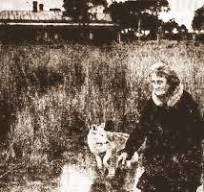
The 17-room Gippsland mansion she shared with her sister fell into disrepair and became increasingly surrounded by swamp waters. Dressed in an old coat with a fur collar, Ms Clement was forced to wade waist-deep through the murky water to the nearest town 11km away for supplies and to send letters to her family begging for money. She finished her days living alone in a swamp in Gippsland in her decaying mansion Tullaree surrounded by waist-deep water.
Justice represents the balancing of scales. The payment of dues. The ‘right’ outcome. The serving of justice as we enjoy it in films and literature. Social change, progress. Justice is, in principle and by definition, about fairness, balance, equity.
Justice, sword aloft, scales in hand, is a powerful archetypal figure representing a social and personal ideal. Without justice, there cannot be peace. Regardless of the injustice around us, this card asks us to get clear about our own ideas of justice, and how we can embody these principles in our lives.
The idea that those who withdraw from the world accrue great wisdom is an old and powerful one. In Hindu philosophy, all humans ideally mature into hermits. As the Indian guru Sri Ramakrishna put it: “The last part of life’s road has to be walked in single file.”
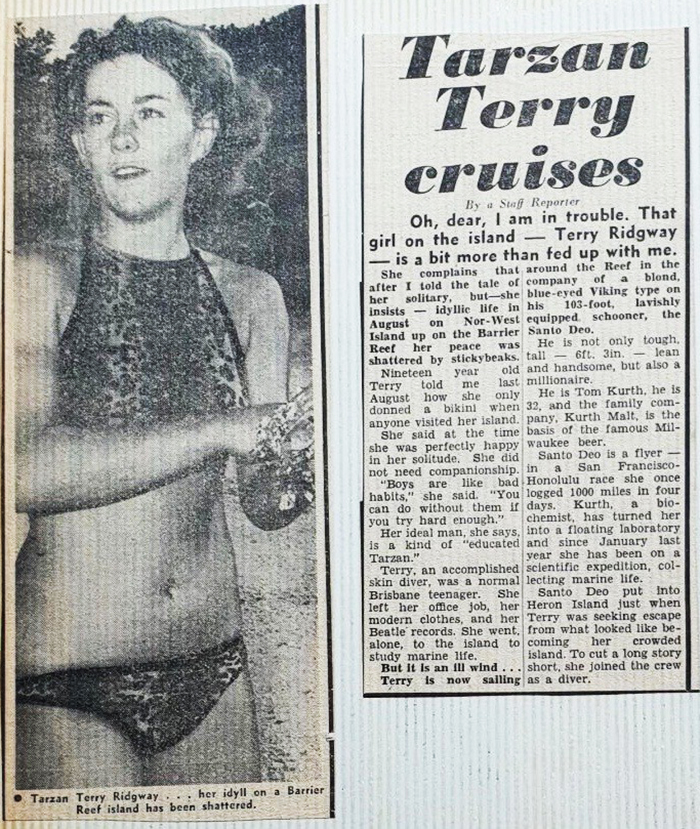
A typist who moved to a remote island alone in the Great Barrier Reef to study marine life vanished from the history books in 1966, never to be heard of, until 2020.
Having abandoned the folly of riding a 50cc motorbikes across the Nullarbor with her friend, Gillian Warry, but feeling adventurous, Terri Ridgway just got on a train and headed north. She got a job as a barmaid on Heron Island, a resort that was also home to a marine research station owned by the University of Queensland.
While there, after befriending the researchers working on the island, she became an accomplished diver and developed a fascination with marine biology. Tired of the long hours as a barmaid she moved to North West Island, which was nearby, into a beautiful little shack near the beach with her diving gear, books, paints, a 12v battery and a light. Ostensibly she came to eat she stalks wild fowls, dives for seafood and grows vegetables in the island’s rich soils.
There was a research station that shared the island and all the boys and girls over at the research station were just fabulous and I used to go out with them when they were specimen collecting and I just hung on every word and every little thing I could learn. I used to also go out with all the boys … and get fresh fish for the table for the resort and so I had every excuse to go in the water … I learned a lot from both the researchers and the divers I worked with at the resort but seeing as how I didn’t get off shift in the bar until about 2am, my friend would leave one of the windows open in the research station so I could climb in window and go into the library and I’d just sit there after my shift and just read and read and read
She could never have imagined that she would become a headline. The world was fascinated with the then 19-year-old whose story made headlines across the globe. American newspapers of the day ran headlines declaring: “Gay Nature girl gambols Down Under” describing the teenager as a “bikini-clad nature nymp and other stories described her living in a hut near the beach in her “leopard-skin mini-bikini”.
Then she disappeared and has only resurfaced in 2020 and what she did afterwards is the stuff fiction writers dream up.
If you are currently contemplating that you need to be alone do not be afraid to take the chance to reflect, as it could help you clear your mind of all the clutter that comes with everyday life.
Van Diemen’s Land was the colonial name of the island of Tasmania used by the British during the European exploration of Australia in the 19th century. A British settlement was established in Van Diemen’s Land in 1803 before it became a separate colony in 1825. Its penal colonies became notorious destinations for the transportation of convicts due to the harsh environment, isolation and reputation for being inescapable. Macquarie Harbour and Port Arthur are among the most well-known penal settlements on the island.
Between 1788 and 1868 more than 162,000 convicts were transported to Australia. Transportation as a form of criminal punishment emerged in the British legal system from the early 17th century as an alternative to execution.
Many of the crimes for which they were transported are considered minor offenses by today’s standards. The most common crime by far was stealing—food, clothing, money, household items—mostly items worth no more than £5.
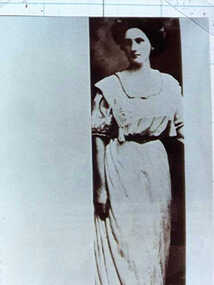
One can only imagine how my great great grandmother, Mary Ann Maule, had been living prior to her sentencing after a series of petty thefts. Clearly Mary was no angel but conditions in Liverpool were particularly harsh. Houses were severely overcrowded and the impact of the Great Famine, known as the Irish Famine was profound.
Friedrich Engels was shocked when he visited Liverpool in the 1840s. “Liverpool, with all its commerce, wealth, and grandeur yet treats its workers with the same barbarity. A full fifth of the population, more than 45,000 human beings, live in narrow, dark, damp, badly ventilated cellar dwellings, of which there are 7,862 in the city.
“Strength does not come from winning. Your struggles develop your strengths. When you go through hardships and decide not to surrender, that is strength.”– Arnold Schwarzenegger
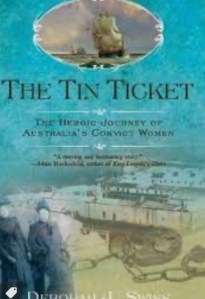
“Their stories immediately captured my heart when I learned that if you were a working-class girl in London or Dublin in the 1800s you had two choices: enter prostitution, which was not a crime or steal food or clothing to be able to live another day,” Deborah says. “And so I began my six-year journey of researching and getting to know these remarkable female convicts.”
Having survived the long, perilous journey on board the convict ship, there can be no doubt that life would have been no easier when she arrived in the colony. However, the scarcity of women opened up opportunities for convict women as servants and wives. Many, including Mary Ann, successfully merged into colonial society, creating new families, and through good conduct and hard work forged new lives. Convict women, like my great great grandmother, demonstrated a diversity of character, aspirations and behaviour, which contradicted their stereotype as ‘damned whores’.
As a part of a series of past life stories an imagined version of Mary Ann appears in ‘A Letter to A Mother’.
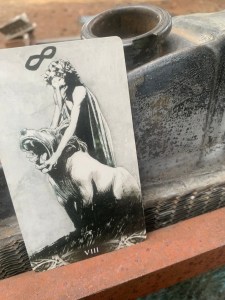
The Strength card is a symbol of inner fortitude, which helps us prevail in the face of life’s challenges. Strength is something that needs to be reinforced every day. Just as muscles need to be continuously used to maintain their power, so too does inner-strength need to be habitually exercised.
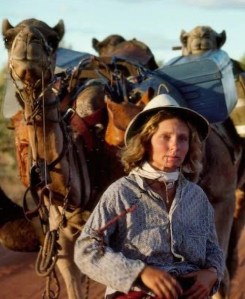
The ‘Camel Lady’, Robyn Davidson, with her beloved dog, Diggity, and four camels, trekked 2700 kilometres across some of Australia’s most remote and inhospitable deserts, from Alice Springs to the Indian Ocean, in 1977.
Davidson wrote about her 1,700-mile journey across the deserts of Western Australia in her bestselling memoir Tracks. She painted an intimate portrait of the experience of solitude and loneliness in a context where life has lost all its previous forms, a concept more of us can relate to since the pandemic. She went weeks on end without seeing anyone, navigated miles of arid desert without water, slept under the stars and fended off poisonous snakes and aggressive bulls charging towards her.
Strength’s tarot meaning is one of my favourites because it has a very potent, supportive energy that lets you know that you can do what needs to be done. That you have the inner strength to push through whatever is holding you back or causing you pain and negativity right now.Self Care Emporium
Tarot Memoir
From the Murder of Crows Tarot
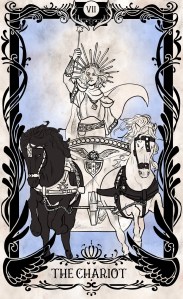
The Strength card represents strength, determination, and power – like The Chariot. However, while The Chariot signifies outer strength and will, the Strength card speaks to the inner strength and the human spirit’s ability to overcome any obstacle. Strength is about knowing you can endure life’s obstacles. You have great stamina and persistence, balanced with underlying patience and inner calm. You are committed to what you need to do, and you go about it in a way that shows your composure and maturity. Biddy Tarot
the quality or state of being physically and emotionally strong.
Write about a time when you needed to show great fortitude.
Women like my great great grandmother were sentenced for petty crimes and transported to Van Dieman’s land. They certainly needed fortitude to survive the journey and life in the early colony. Read about more of these women.
Write a portrait of a woman whose sheer strength of will and courage you admire.
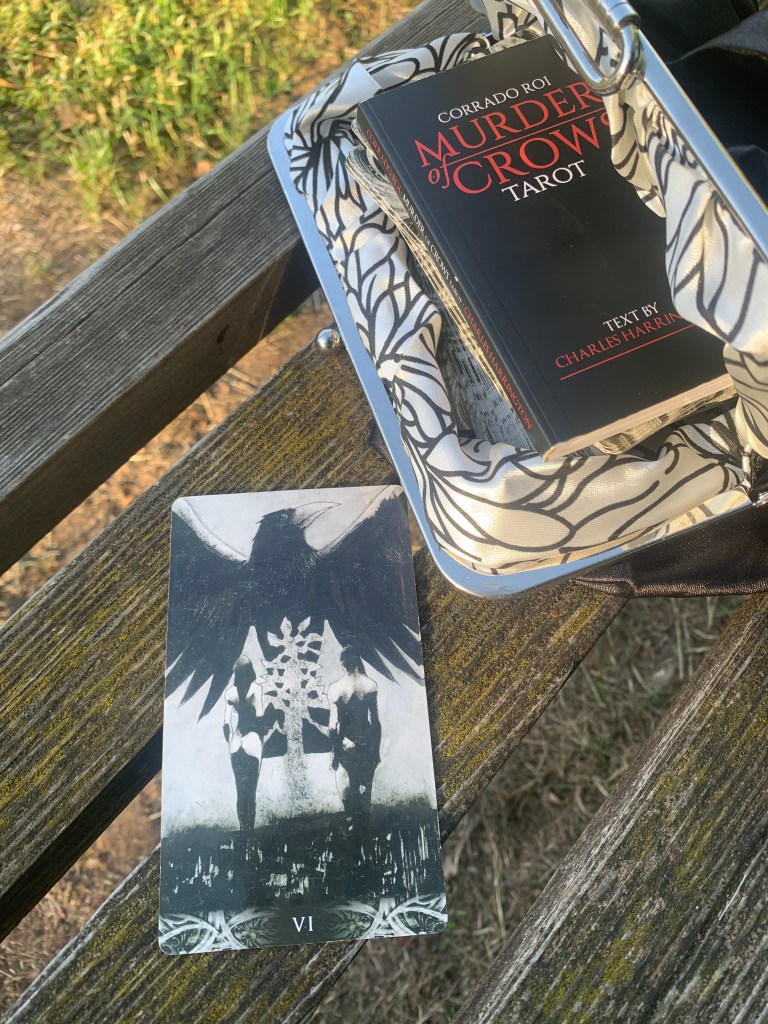
The Lovers card is all about love and being in sync with someone special. It’s like when you and your partner really understand each other and everything feels just right. This card is about making good choices in your relationships. It’s like finding your perfect match, your soulmate.
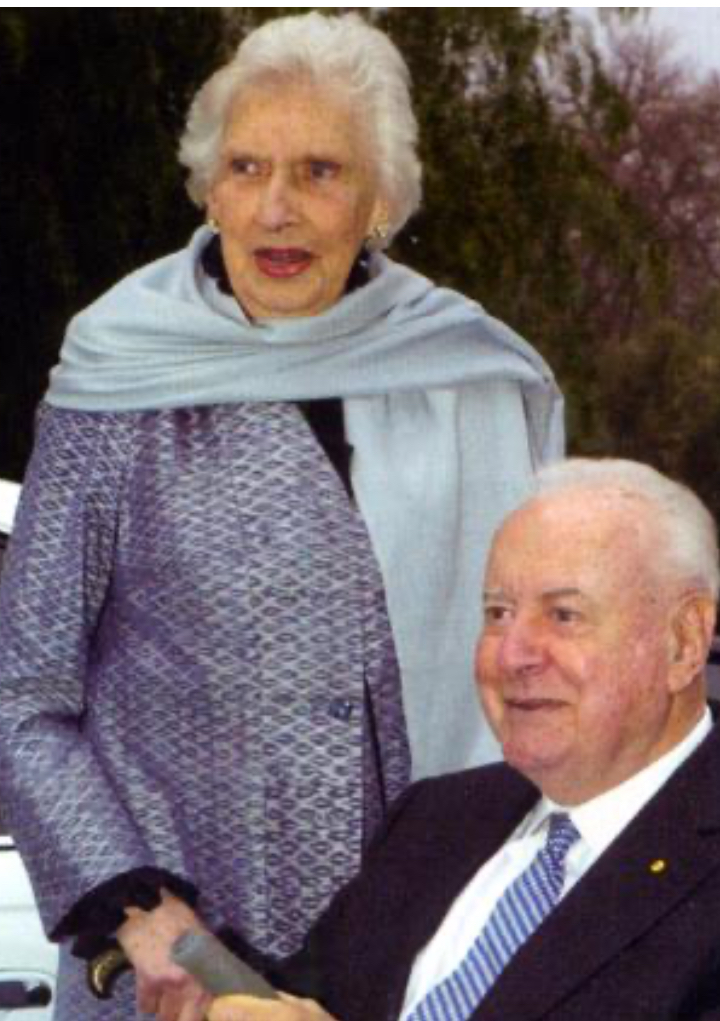
Margaret Elaine Dovey met Gough Whitlam at Sydney party in the summer of 1939. World War II had just started. He was 23 and studying law, she was 20 and a social work student. “Quite the most delicious thing I’d ever seen,” she recalled for a biographer years later
Height may have helped, too: with her standing 188cm, Whitlam’s 194cm frame was just what the doctor ordered for the tall young woman who had swum for Australia in the 1938 British Empire Games.
They married in April 1942, six weeks before he was called up by the RAA.
The foundation of every good relationship (lovers, friends, and even business partners) is open and honest communication. In order to keep everything balanced and harmonious, you must be able to express yourself to the other person, be heard and understood, and then take the time to listen to the other party.
If you are travelling through Australia, pack two companions. One is a collection of poems by Kath Walker (Oodgeroo Noonuccal). The other is Loving Country, co-authored by Aboriginal Elder Bruce Pascoe and artist Vicky Shukuroglou.
At first glance, Loving Country appears to be a guide to some of Australia’s most beautiful landscapes. Spend time with it, however, and it becomes something far richer. It is a collection of honest, compelling yarns that reveal the true stories of Country as told by those who know and love her best: Aboriginal people whose ancestral connections reach back through countless generations.
Kath Walker – Aunty Oodgeroo Noonuccal (1920 – 1993) was an Aboriginal rights activist, poet, veteran, environmentalist and educator. ‘Oodgeroo’, meaning ‘paperbark tree’ (whose bark is used for drawing), referred to her role as writer and artist. ‘Noonuccal’ is the name of her people, the traditional owners of Minjerribah and adjoining land for more than 20,000 years.
The Lovers card is often reduced to romance, but it speaks of something much deeper. It is the card of relationship, certainly, but also of choice. Every day we choose what we love, what we honour, what we align ourselves with, and what we are willing to sacrifice in order to remain true to those choices.
Can you truly love yourself? Can you open your heart and be honest about who you are and what you feel? Can you look at your life, exactly as it is, with acceptance rather than judgement? Who are you in this moment? What do you believe? Where is your energy flowing? What are you choosing to serve?
These are Lovers questions.
Through her poetry, storytelling and activism, Oodgeroo Noonuccal answered them with extraordinary clarity. She expressed an unwavering love for Country and for the Aboriginal culture to which she belonged. She spoke honestly of the devastation wrought by colonialism while never relinquishing her profound love for the land itself. Love, for Oodgeroo, was never sentimental. It was courageous enough to speak the truth.
Her story makes that courage all the more remarkable. Oodgeroo’s mother, Lucy, was a member of the Stolen Generations. Removed from her family at the age of ten, she was placed in an institution in Brisbane and, at fourteen, sent into domestic service in rural Queensland without having been taught to read or write.
Oodgeroo herself grew up on North Stradbroke Island before leaving home to work as a domestic in Brisbane, receiving board and lodging but less pay than her white counterparts. Yet with her gift for language and her determination to write, she became one of Australia’s leading poets, authors, political activists, artists and educators
She often said that Aboriginal people were the inspiration for her work. She understood poetry to be both deeply personal and a natural continuation of the ancient oral traditions of storytelling and song that had carried knowledge across generations
In the end, perhaps that is the deepest invitation of the Lovers card. Love is not simply an emotion. It is a practice of relationship. It asks us to choose what we will stand beside, what we will protect, and what truths we are willing to carry with open hearts.
For her lifetime of service to Aboriginal people and her extraordinary contribution to Australian literature, Oodgeroo Noonuccal was awarded three honorary doctorates by Australian universities. Yet perhaps her greatest legacy is not the honours she received, but the enduring invitation she offers us: to enter into a more truthful, more loving relationship with Country, with one another, and with ourselves.
Existential Choices
The Lovers card may be understood alongside key ideas from the philosopher and theologian Søren Kierkegaard (May 5, 1813–November 11, 1855). We face an existential choice between two life paths, either one willfully hedonistic or one grounded in our sense of ethical duty.
As Rachael Pollack points out, the 6th Tarot Card was once entitled Choice, suggesting that an individual may have to choose between desires. Equally the choice can refer to a person’s whole life, the decision about where to direct one’s passion.
Imagine Oodgeroo Noonuccal is still alive. You are a journalist who will be given the opportunity to interview this leading activist, poet, environmentalist and educator. You are only allowed to ask her three questions about life choices she made. What will you ask her?
Now change roles. Imagine you are Oodgeroo, and, using the knowledge about her life and personality gleaned from any research you have been inspired to do, write the answers you believe she might have give to the questions you posed.
Finding and Following Your Bliss
The hero’s journey is one of self-discovery, of finding and following your bliss. No one else knows what makes your eyes light up and your heart leap. Take control of your own life. Reach for the stars.
Joseph Campbell was one of the pioneers in the discussion of bliss, suggesting that people “find their bliss.” He said, “The way to find out what makes you the happiest is to focus on being mindful of your happiest moments—not simply excited, not just thrilled, but deeply happy.”
To seek your own personal bliss, you might wish to sit quietly and meditate about a time in your life when you were the happiest. Remain with that moment, as well as the feelings stirring inside you. When you think you’ve figured out at least one thing that makes you feel blissful, then stay with it. Write about that state in your journal. Recording your feelings can help you dig deeper into self-discovery and determine the ways in which you can follow your bliss—always keeping in mind that bliss is a calling that’s calling you.
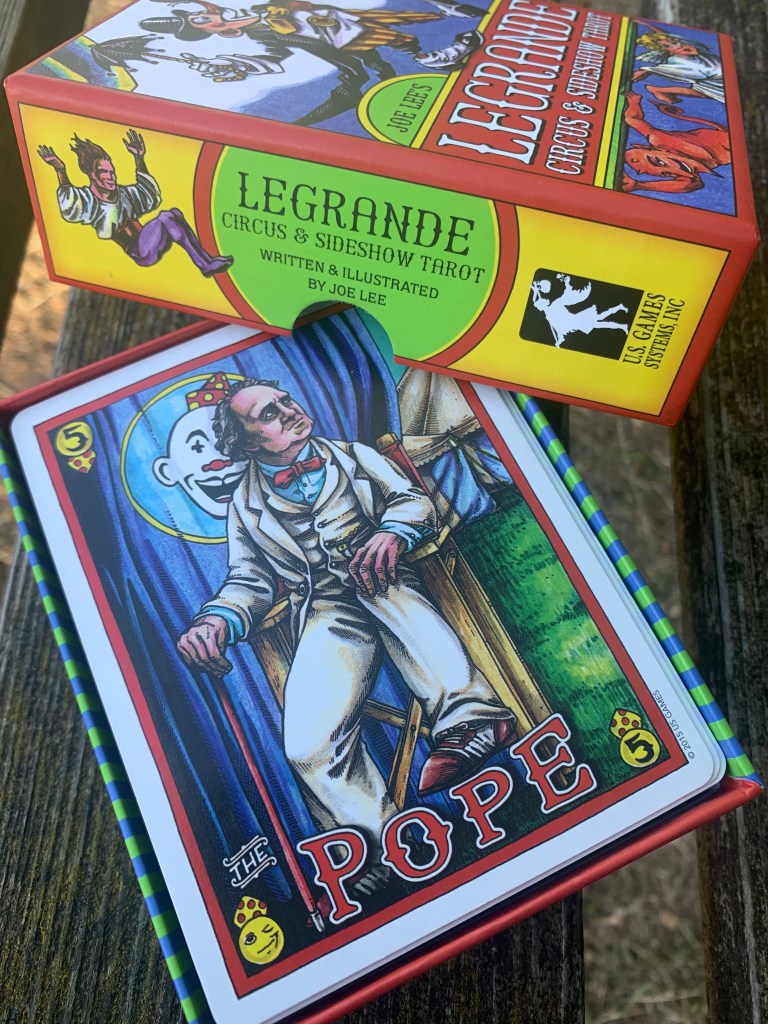
The Hierophant is the card of traditional values and institutions. The Hierophant can represent a counsellor or mentor who will provide you with wisdom and guidance or a spiritual or religious advisor such as a priest, vicar, preacher, imam, rabbi or a monk. However many decks present a very different interpretation of this card that daunts those who have issues with religious dogma and choose to present others as deserving the title.
It seems limiting to present the Hierophant as a robed religious Popish figure and to imply that such an individual is a receptacle for all wisdom and teaching.
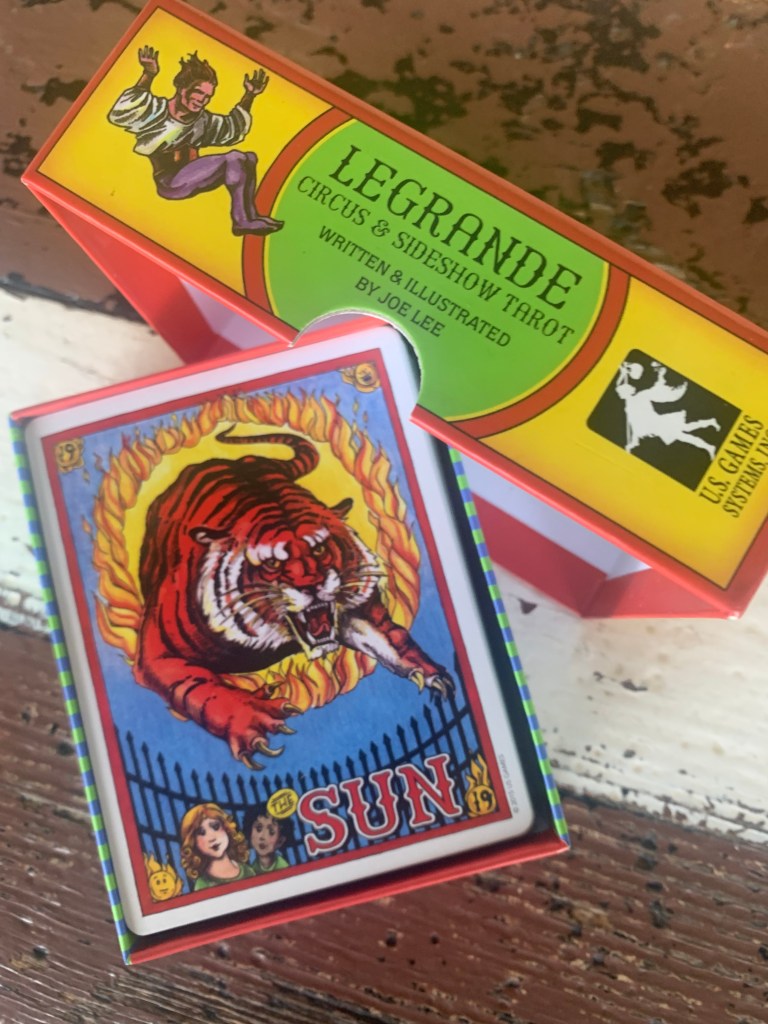
The LeGrande Circus Tarot presents the Pope or Hierophant as the entrepreneurial owner of the outfit. Circus owners were such a varied lot that it is doubtful if this title suits them all. Some were born into circus families. Some, like Al G. Barnes, ran away with the circus as youngsters and worked their way up through the ranks of ticket takers and candy butchers. Others were entrepreneurs and businessmen. And still more saw themselves as creative artists, sometimes even serving as headline performers.
A hierophant (Ancient Greek: ἱεροφάντης, romanized: hierophantēs) is a person who brings religious congregants into the presence of that which is deemed holy. As such, a hierophant is an interpreter of sacred mysteries and arcane principles.
When I think of a Hierophant I prefer to think of a wise trail blazer, a generous mentor who nurtures, gently guides and encourages others. Read the obituaries for Carolyn Jones, the first Australian female reporter on This Day Tonight and you will be left in no doubt about her stature among female journalists, women who she championed, who acknowledge her amazing contribution to their careers.
This wonderful, gracious, fierce, trail blazing, truth telling woman has left us. She was beyond kind to me and to so many other women in my profession.
In my mind Carolyn, universally loved by all, deserves the title of Hierophant and gets to wear the robs signifying her status.













 Waltzing With Matilda's