Perhaps it took an Englishwoman with unusual insight and spirit to see afresh “the amazing story of tragedy, coincidences and lost opportunity” of the inexperienced Irish policeman Burke and the English scientist Wills.
Sarah Murgatroyd
Journalist, author
1967-2002
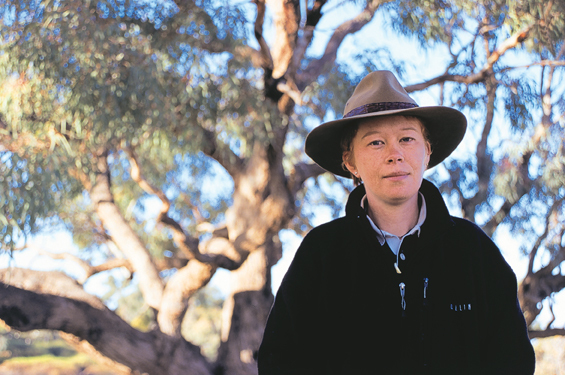
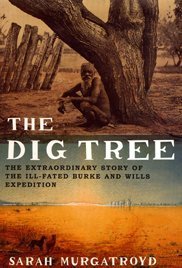
Sarah Murgatroyd’s ‘The Dig Tree’ is the most extraordinary book. The publisher’s words say what needs to be said about this amazing body of work that provides insight into all of those who were associated with this ill-fated expedition.
“For a long time I wanted to publish a book about Burke and Wills. Then, in late 1999, a young woman called me out of the blue. Her name was Sarah Murgatroyd and she worked as a radio journalist for the BBC. She was English but she seemed to know a lot about the exploration history of Australia.
In fact, she said, she and her husband Kevin had made a plan on their honeymoon to use Tim Flannery’s anthology The Explorers as a kind of road map to the continent. But that wasn’t why she was calling me. She wanted to write a book about Burke and Wills.
I asked Sarah for a proposal. It arrived early in 2000 and it was brilliant. On the strength of it we would find publishing partners around the world. When I offered her a contract, though, she gave me some dismaying news. She had cancer. One day it might kill her. But not yet, she said. Not before she finished her book. She made one condition: her illness was not to become a public commodity. She wanted her book to be assessed absolutely on its merits.
If she was asking me to take her on trust, I don’t think Sarah ever had any doubts herself about this book she was going to write. It became the purpose of her life. She drove and redrove the explorers’ route. She scoured the nation’s libraries. She got to know the Aboriginal people whose ancestors had cared for John King at Cooper Creek.
The chapters poured on to the page as though someone was dictating them to her. She discovered just what a beautiful writer she was: simple, clear and with the gift of bringing her readers into the circle of her story. She wrote about the desert as if its dust had always been in her eyes, even though she grew up on a pocket-sized farm in Sussex.
She knew more about her subject than anyone else on the planet but she never used words to show off.
She taught us the story of the expedition as though we knew nothing about it. When I read her completed manuscript I experienced a publisher’s thrill of being among the first to fall in love with a book that many others would love too.
And she never complained. I now know that the entire time she was working on the book she was watching her health like a hawk; neither her illness nor her treatment were going to be allowed to interfere with her writing. Everybody in our office came to love her lightness of being. She was a joy to work with and we all wanted to rise to her occasion.
Towards the end of last year we sent Sarah a finished copy of The Dig Tree. I can still hear the happiness in her voice when she called after receiving the package. It’s always a special moment when a writer holds a copy of her book in her hand for the first time. Whatever else may happen in her life, nothing can take away the achievement it represents. In Sarah Murgatroyd’s life this had a peculiar and moving truth.
We planned publication for February. Les Carlyon kindly agreed to launch the book at the old Royal Society building in LaTrobe Street, Melbourne, in the same room where the explorers’ bodies had lain in state before their 1863 funeral.
But when I talked to Sarah in January all was not well. Her breathing was poor and walking had become difficult. She would soon need to get around in a wheelchair. But she kept planning her next book. “Writing,” she told me, “will keep me sane.”
A week later, just as The Dig Tree was published to celebratory reviews, the sad news came. She had to fly home to England without delay. She couldn’t make the launch. She wouldn’t be coming back. She felt guilty that she had let everyone down. She wanted just one thing: to visit a bookshop on the way to the airport so she could see The Dig Tree on sale.
Sarah died last month just as The Dig Tree was making its splash in Britain. I still can’t believe that six weeks ago we were all supposed to be drinking champagne together. I think of her book as a kind of miracle, created by her extraordinary determination. To write in her circum-
stances about one of the signature events in Australian history as though she were born to it is a colossal achievement.
We have lost a writer just as we began to discover her talent. Something in Sarah, when she faced the greatest challenge of her life, responded to the transforming spirit that drove Burke and Wills, though she would have made a far more reliable explorer than the mad Irishman who got his wish to become a legend.
The endless space the doomed party traversed as they trudged to the Gulf and back set the writer in Sarah Murgatroyd free. I understand now why The Dig Tree begins and ends by evoking the sultry wind that blows off the desert. She could never bear to be in a house without throwing the windows open, no matter what the weather. When I think of her I will imagine her as she once described herself, scribbling in her notebook beneath the ancient coolibah on Cooper Creek that gives her book its name”. Michael Heyward

