Posted in Matilda's, Memoir Writing, Narrative Therapy, Women's Health, Women's Stories

Kath Walker (Oodgeroo Noonuccal) Love of Country

If you are travelling through Australia, pack two companions. One is a collection of poems by Kath Walker (Oodgeroo Noonuccal). The other is Loving Country, co-authored by Aboriginal Elder Bruce Pascoe and artist Vicky Shukuroglou.

At first glance, Loving Country appears to be a guide to some of Australia’s most beautiful landscapes. Spend time with it, however, and it becomes something far richer. It is a collection of honest, compelling yarns that reveal the true stories of Country as told by those who know and love her best: Aboriginal people whose ancestral connections reach back through countless generations.

Key WordsLove, relationships, seeking wholeness, commitments, partnerships, decisions, making clear choices, values, balance, romance, unity, harmony

Kath Walker – Aunty Oodgeroo Noonuccal (1920 – 1993) was an Aboriginal rights activist, poet, veteran, environmentalist and educator. ‘Oodgeroo’, meaning ‘paperbark tree’ (whose bark is used for drawing), referred to her role as writer and artist. ‘Noonuccal’ is the name of her people, the traditional owners of Minjerribah and adjoining land for more than 20,000 years.

The Lovers card is often reduced to romance, but it speaks of something much deeper. It is the card of relationship, certainly, but also of choice. Every day we choose what we love, what we honour, what we align ourselves with, and what we are willing to sacrifice in order to remain true to those choices.

Can you truly love yourself? Can you open your heart and be honest about who you are and what you feel? Can you look at your life, exactly as it is, with acceptance rather than judgement? Who are you in this moment? What do you believe? Where is your energy flowing? What are you choosing to serve?

These are Lovers questions.

Through her poetry, storytelling and activism, Oodgeroo Noonuccal answered them with extraordinary clarity. She expressed an unwavering love for Country and for the Aboriginal culture to which she belonged. She spoke honestly of the devastation wrought by colonialism while never relinquishing her profound love for the land itself. Love, for Oodgeroo, was never sentimental. It was courageous enough to speak the truth.

Her story makes that courage all the more remarkable. Oodgeroo’s mother, Lucy, was a member of the Stolen Generations. Removed from her family at the age of ten, she was placed in an institution in Brisbane and, at fourteen, sent into domestic service in rural Queensland without having been taught to read or write.

Oodgeroo herself grew up on North Stradbroke Island before leaving home to work as a domestic in Brisbane, receiving board and lodging but less pay than her white counterparts. Yet with her gift for language and her determination to write, she became one of Australia’s leading poets, authors, political activists, artists and educators

She often said that Aboriginal people were the inspiration for her work. She understood poetry to be both deeply personal and a natural continuation of the ancient oral traditions of storytelling and song that had carried knowledge across generations

In the end, perhaps that is the deepest invitation of the Lovers card. Love is not simply an emotion. It is a practice of relationship. It asks us to choose what we will stand beside, what we will protect, and what truths we are willing to carry with open hearts.

For her lifetime of service to Aboriginal people and her extraordinary contribution to Australian literature, Oodgeroo Noonuccal was awarded three honorary doctorates by Australian universities. Yet perhaps her greatest legacy is not the honours she received, but the enduring invitation she offers us: to enter into a more truthful, more loving relationship with Country, with one another, and with ourselves.

Existential Choices

The Lovers card may be understood alongside key ideas from the philosopher and theologian Søren Kierkegaard (May 5, 1813–November 11, 1855). We face an existential choice between two life paths, either one willfully hedonistic or one grounded in our sense of ethical duty.

As Rachael Pollack points out, the 6th Tarot Card was once entitled Choice, suggesting that an individual may have to choose between desires. Equally the choice can refer to a person’s whole life, the decision about where to direct one’s passion.

Imagine Oodgeroo Noonuccal is still alive. You are a journalist who will be given the opportunity to interview this leading activist, poet, environmentalist and educator. You are only allowed to ask her three questions about life choices she made. What will you ask her?

Now change roles. Imagine you are Oodgeroo, and, using the knowledge about her life and personality gleaned from any research you have been inspired to do, write the answers you believe she might have give to the questions you posed. 

Finding and Following Your Bliss

The hero’s journey is one of self-discovery, of finding and following your bliss. No one else knows what makes your eyes light up and your heart leap. Take control of your own life. Reach for the stars.

Joseph Campbell was one of the pioneers in the discussion of bliss, suggesting that people “find their bliss.” He said, “The way to find out what makes you the happiest is to focus on being mindful of your happiest moments—not simply excited, not just thrilled, but deeply happy.”

To seek your own personal bliss, you might wish to sit quietly and meditate about a time in your life when you were the happiest. Remain with that moment, as well as the feelings stirring inside you. When you think you’ve figured out at least one thing that makes you feel blissful, then stay with it. Write about that state in your journal. Recording your feelings can help you dig deeper into self-discovery and determine the ways in which you can follow your bliss—always keeping in mind that bliss is a calling that’s calling you.
More Lovers

Posted in Matilda's, Memoir Writing, Narrative Therapy, Women's Stories

The Hierophant – Carolyn Jones

The Hierophant is the card of traditional values and institutions. The Hierophant can represent a counsellor or mentor who will provide you with wisdom and guidance or a spiritual or religious advisor such as a priest, vicar, preacher, imam, rabbi or a monk. However many decks present a very different interpretation of this card that daunts those who have issues with religious dogma and choose to present others as deserving the title.

It seems limiting to present the Hierophant as a robed religious Popish figure and to imply that such an individual is a receptacle for all wisdom and teaching.

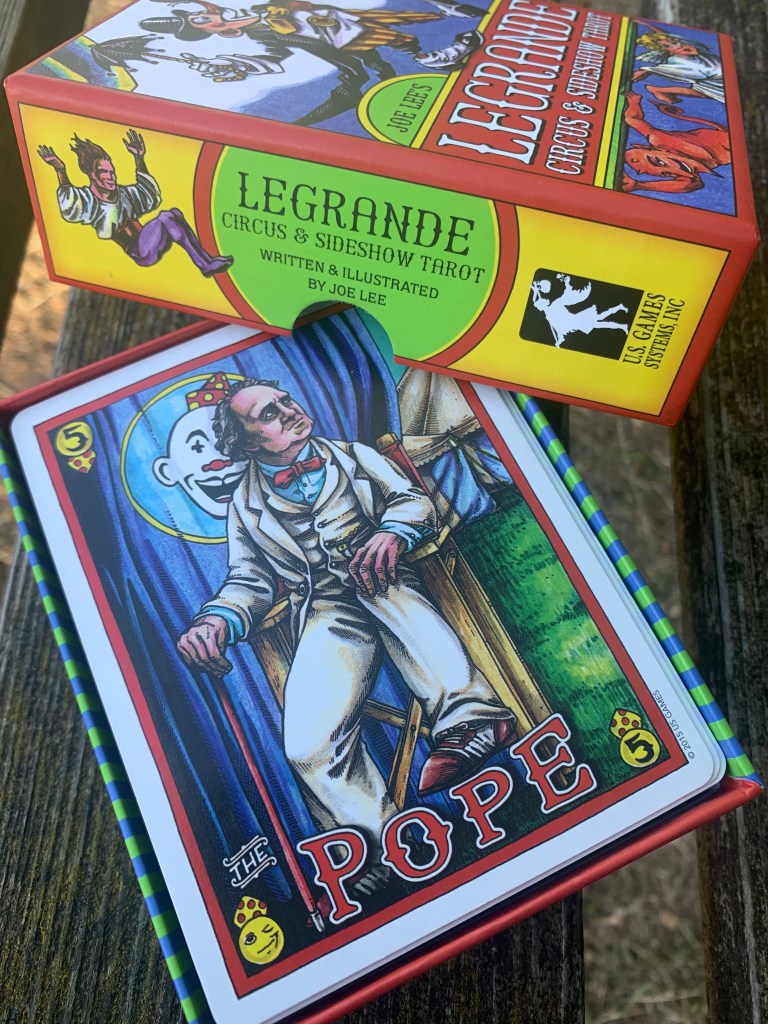
The LeGrande Circus Tarot presents the Pope or Hierophant as the entrepreneurial owner of the outfit. Circus owners were such a varied lot that it is doubtful if this title suits them all. Some were born into circus families. Some, like Al G. Barnes, ran away with the circus as youngsters and worked their way up through the ranks of ticket takers and candy butchers. Others were entrepreneurs and businessmen. And still more saw themselves as creative artists, sometimes even serving as headline performers. 

A hierophant (Ancient Greek: ἱεροφάντης, romanized: hierophantēs) is a person who brings religious congregants into the presence of that which is deemed holy. As such, a hierophant is an interpreter of sacred mysteries and arcane principles.

When I think of a Hierophant I prefer to think of a wise trail blazer, a generous mentor who nurtures, gently guides and encourages others. Read the obituaries for Carolyn Jones, the first Australian female reporter on This Day Tonight and you will be left in no doubt about her stature among female journalists, women who she championed, who acknowledge her amazing contribution to their careers.

This wonderful, gracious, fierce, trail blazing, truth telling woman has left us. She was beyond kind to me and to so many other women in my profession.

In my mind Carolyn, universally loved by all, deserves the title of Hierophant and gets to wear the robs signifying her status.

Posted in Matilda's, Memoir Writing, Narrative Therapy, Women's Health, Women's Stories

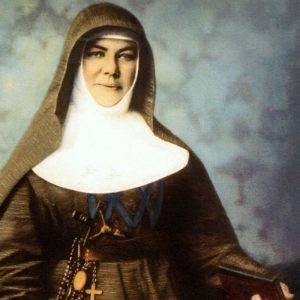
The Hierophant – St Mary MacKillop

The Hierophant is often described as the guardian of tradition, institutions and established wisdom. He can represent a counsellor, mentor or teacher—someone who offers guidance shaped by experience. In many Tarot decks he appears as a richly robed religious authority, suggesting that wisdom resides within formal structures such as churches, schools or ancient traditions.

Yet that interpretation can feel limiting. Wisdom does not belong exclusively to those who wear ceremonial robes or occupy positions of authority. Some of life’s greatest teachers sit quietly among their communities, passing on knowledge through compassion, storytelling, service and example.

The Hierophant in the Tarot of the Sweet Twilight offers a refreshing alternative. Rather than an imposing religious figure, we encounter a gentle elder seated upon a rock beneath the water, while fish shoal peacefully overhead. Beside him sits a young woman and her curious cat, evoking something of the dreamlike world of Alice in Wonderland. His great beard drifts freely in the current and his clothing is simple, devoid of religious regalia or symbols of rank. He feels less like a pontiff and more like an ancient storyteller—a keeper of cultural memory and one of many guardians of human wisdom.

15 things you may not have known about St Mary Mackillop

It is also worth asking why the Hierophant is so rarely imagined as a woman. Throughout history, countless women have quietly shaped communities through education, pastoral care and service, yet their contribution has often been overlooked. They may not have held positions of institutional power, but they have been profound teachers nevertheless.

One such woman is Saint Mary MacKillop, whose life beautifully embodies the deeper spirit of the Hierophant. Born in Melbourne in 1842 to impoverished Scottish immigrants, Mary understood hardship from an early age. Her father valued learning deeply and educated his children whenever circumstances allowed, planting in Mary a lifelong belief that education could transform lives.

As a young woman she worked to support her family before moving to Penola in South Australia, where she began teaching not only her relatives but also the poor children of the district. Encouraged by Father Julian Tenison Woods, Mary recognised that educating children who had been overlooked by society was both a practical and deeply spiritual calling.

Together they founded the Sisters of St Joseph of the Sacred Heart in 1866, Australia’s first religious order established by an Australian. Their first school operated from a converted stable, offering free education to children who would otherwise have received none. From these humble beginnings the sisters established schools, orphanages and refuges across the country, bringing learning, dignity and hope to thousands of people.

Mary’s journey was far from easy. She experienced conflict with church authorities, periods of misunderstanding and even excommunication before eventually being vindicated. Through it all she remained steadfast in her belief that faith must be expressed through compassionate action rather than status or privilege.

Canonised in 2010, Saint Mary MacKillop is remembered not because she sought authority, but because she lived her values with courage and humility. She reminds us that the Hierophant is not simply a guardian of institutions. At its best, this archetype represents the transmission of wisdom through service, education and quiet dedication to the wellbeing of others.

Perhaps that is the real lesson of the Hierophant. True teachers are recognised not by the robes they wear, but by the lives they help to shape.

Working with the Hierophant

  • Seek out the Hierophant in each of the decks you own and compare and contrast the messages that the artists provide in their companion texts.
  • Prepare some questions! Engage in active imagination and dialogue with your favourite Hierophant. Ask those hard questions!
  • Many communities had “memorisers” whose role was to memorise history, witness and memorise current events (including what happened, who attended, even what key figures wore), and identify and train up young people to become memoriser. In your journal carefully memorise the events of recent years making sure to include as much detail as possible.
  • Certain stories, such as Fairy Stories, are much more than mere entertainment – they are used as lessons and provide a moral, through the form of a traditional belief, that will help guide people through their lives. Create a story which you believe needs to be passed on.

More Hierophants

Posted in Matilda's, Memoir Writing, Narrative Therapy, Tarot Story Exchanges, Women's Health

Simone Young – Emperor

The Emperor is often interpreted as the archetypal Father, with the Empress embodying the Mother. Freudian and Jungian psychology both explore these figures through the lens of the parent–child relationship, yet the Emperor’s domain extends far beyond fatherhood. He is the embodiment of structure itself—law, institutions, social codes, and the systems that govern our lives. He speaks of order, hierarchy, discipline, and authority. At his best, he provides stability and protection; at his worst, he becomes rigid, authoritarian, and disconnected from those he leads. The Emperor values conformity, commercial success, decisive leadership, and the maintenance of established order.

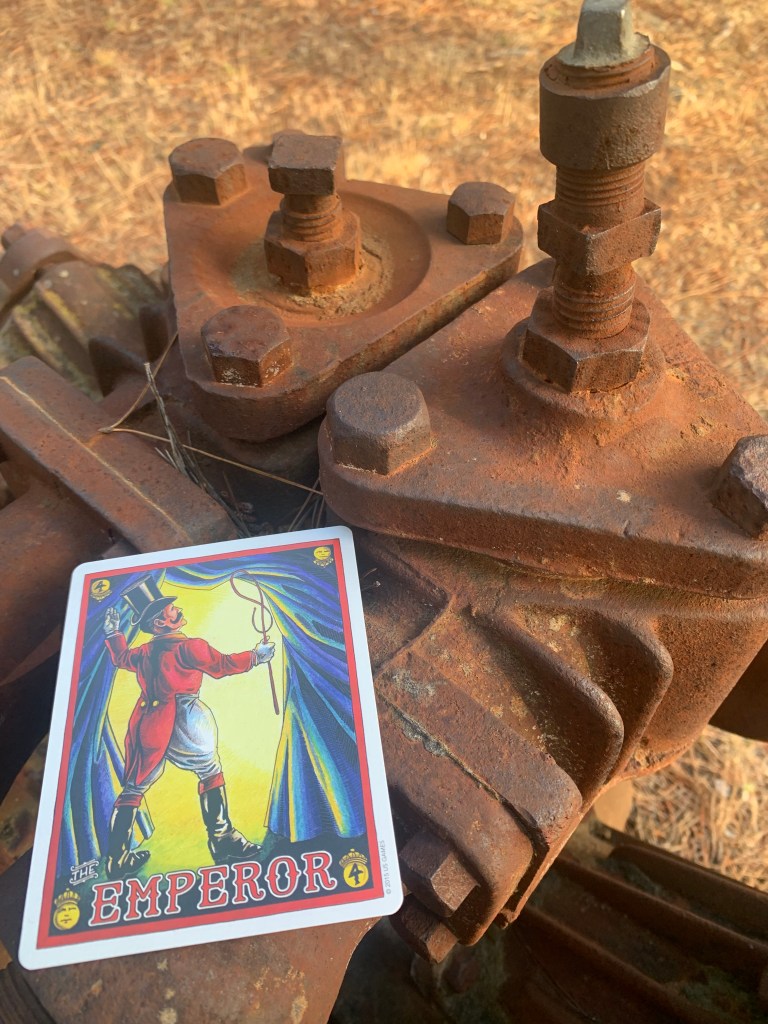
In the LeGrande Circus and Sideshow Tarot, the Ringmaster is cast as the Emperor—a fitting choice for the undisputed authority at the heart of the circus. Like the captain of a great ship, the Ringmaster commands every aspect of the performance. Every entrance, every cue, every moment of spectacle unfolds under their watchful eye. Nothing happens without the Ringmaster’s direction.

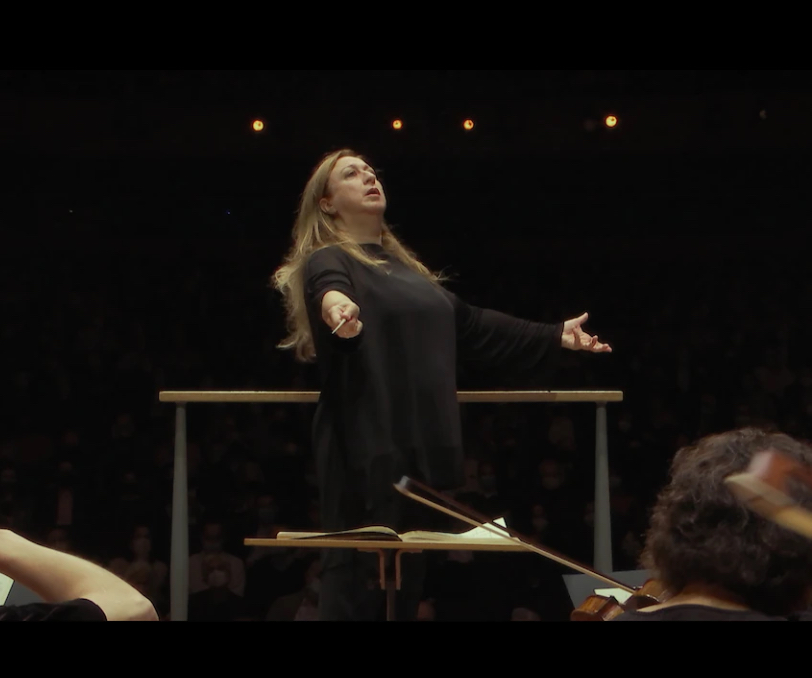
A symphony orchestra offers another compelling expression of the Emperor’s energy. Standing at the podium, baton in hand, the conductor shapes every nuance of the performance, bringing discipline, vision, and unity to hundreds of individual voices.

Few embody this role more powerfully than the Australian conductor Simone Young. After completing her musical studies in Sydney, she began her career in Germany, launching an international journey that has taken her to many of the world’s leading opera houses and symphony orchestras. Widely regarded as one of the foremost conductors of her generation, Young has broken barriers in a profession long dominated by men.

Executive produced by Academy Award-winning actress Cate Blanchett, Knowing the Score offers an intimate portrait of Simone Young, revealing the determination, authority, and artistic mastery required to lead at the highest level. It is a fascinating exploration of the Emperor’s qualities expressed through music rather than monarchy.

Feeling the Qualities of the Emperor

Whoever you are, sooner or later you will meet with the constrains of authority, discipline and power in yourself and in others. From an early age we are influenced by authority figures who have some control over our lives. The ultimate challenge is how we respond, how we balance and harness these qualities.

  • What is your understanding of the correct use of power, authority, control and discipline?
  • How do you utilise power in your life?
  • Consider, dispassionately and without judgement, how you are empowered or disempowered?
  • Be aware of what power means for you? How has controlling or being controlled impacted on your life?

“It’s a very hard thing to learn to know when to release control

Simone Young

More Emperors

This card is suggestive of stability and security in life. You are on top of things and everything in under your control. It is your hard work, discipline and self control that have bought you this far. It means that you are in charge of your life now setting up your own rules and boundaries.

Posted in Matilda's, Memoir Writing, Narrative Therapy, Women's Stories

The Emperor – Elizabeth Macarthur

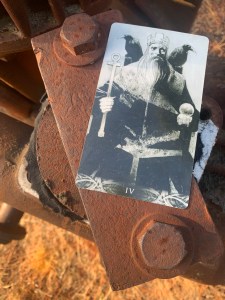
The Emperor wants you to know that in order to go out into the big world you need both inner and outer authority. Inner authority allows you to make the best decisions for yourself while outer authority enables you to create your place in the world and be seen and recognized.

The Emperor represents stability, order, and dominion. In the most practical terms, the Emperor Tarot card represents the highest leadership, a head of state, or the most exemplary and powerful person in the realm.When this stern fellow shows up in your reading, issues of power and control may be at play.  However the appearance of this card in a spread, given that it alludes to achievement through hard work and discipline, may also provide an opportunity to ask about the qualities which will successfully support a business venture. 

Within the Tarot community the Emperor is generally believed to represent dealings with male authority figures. However there are many women who have the same qualities. So, be you male or female, when you see this card in a reading it is an opportunity to take a moment and acknowledge your potential for mastery of your personal realm. It is a time to reinforce a sense of sovereignty within yourself, despite any self-limiting beliefs, habits, or appearances to the contrary.

Elizabeth Macarthur (1766-1850), was born on 14 August 1766 in Devon, England, daughter of Richard Veale, farmer, and his wife Grace, who were apparently of some education and affluence. Elizabeth received an education which allowed her to write letters of eighteenth-century style and grace and which equipped her to manage the complicated affairs of her husband’s business in later life. She married John Macarthur in October 1788. In June 1789 he joined the New South Wales Corps and Elizabeth accompanied him when he sailed to take up his position in the colony.

By 1794, the Macarthurs had built Elizabeth Farm, a brick house at Parramatta. They had a beautiful garden and the children received an excellent education. In 1809, her husband was forced to leave the colony and return to England. Business partners administered his mercantile affairs but Elizabeth was responsible for the care of their valuable merino flocks, the Camden Park estate and their convict labourers. She did so successfully for eight years, visiting their estate regularly despite the danger of venturing into the bush.

If the Emperor appears in a Tarot spread as a woman, that means that this person is a figure of authority, control, and discipline. This is someone who exudes an air of command, evident in her carriage, her gaze, and even the space she occupies. You can sense her influence and leadership capabilities, leaving little room for doubt that she’s a person of significant power.

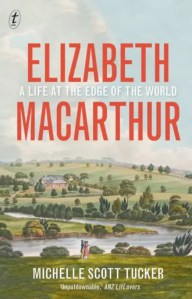
Michelle Scott Tucker lives on a small farm in regional Victoria with her husband and children. Her first book was Elizabeth Macarthur: A Life at the Edge of the World

Michelle Scott Tucker wrote a biography of Elizabeth Macarthur, highlighting that it was her who established the Australian wool industry (although her husband received all the credit).

In the words of historian Clare Wright, Tucker’s bio brings Elizabeth Macarthur out from the long shadow of her infamous, entrepreneurial husband.

The truth is that Elizabeth oversaw every aspect of the management of their flocks and communicated with her husband while he was in England. As a result of their joint interest they were able to sell their wool competitively in the British market and effectively established the reputation of the colony as a centre for this industry. It was Elizabeth’s critical contribution to the establishment of a local fine wool industry that helped set the course of Australian prosperity, and gave the wool trade’s its long-held significance to the national economy.

More Emperors

This card is suggestive of stability and security in life. You are on top of things and everything in under your control. It is your hard work, discipline and self control that have bought you this far. It means that you are in charge of your life now setting up your own rules and boundaries.

Posted in Matilda's, Narrative Therapy, Women's Health, Women's Stories

Cath Jamison – Magician

The Magician shows us that you are able to master any desired skill through practice, sacrifice and a determined focus on your outcome. He encourages you to invest the time to cultivate your potential abilities.
Patrick Valenza – Deviant Moon Tarot.

When she was just a five year old kid, Cath Jamison got a magic kit, loved it and started putting on magic shows for her family. She used to try to make the dog disappear and she confesses that she had a crack at making a pier vanish as well. But she is not about to divulge any of her secrets. This award winning Australian entertainer has no hesitation in saying that she was a quirky kid and that she still is a quirky person.

Pulling the Magician in a reading is a reminder that you have the necessary tools to manifest your dreams. Just as the man depicted in the Magician card has learned to wield the unseen forces of the universe, so, too, can we learn to master our own skills to get the outcomes we desire.

Today Cath’s mind-blowing and frequently uproarious shows have earned her a reputation as a leader in her field and she’s known as one of Australia’s most unusual women entertainers, wielding her trademark sass and mind illusion. Jamison is an impressive entertainer who delivers a masterful blend of magic, mentalism, and enjoyable audience engagement.

More Magicians

Elizabeth Blackburn – Scientist
Fiona Woods – Scientist

Posted in Matilda's, Memoir Writing, Narrative Therapy, Women's Health

Fiona Woods – Magician

Newton was not the first of the age of reason. He was the last of the magicians…

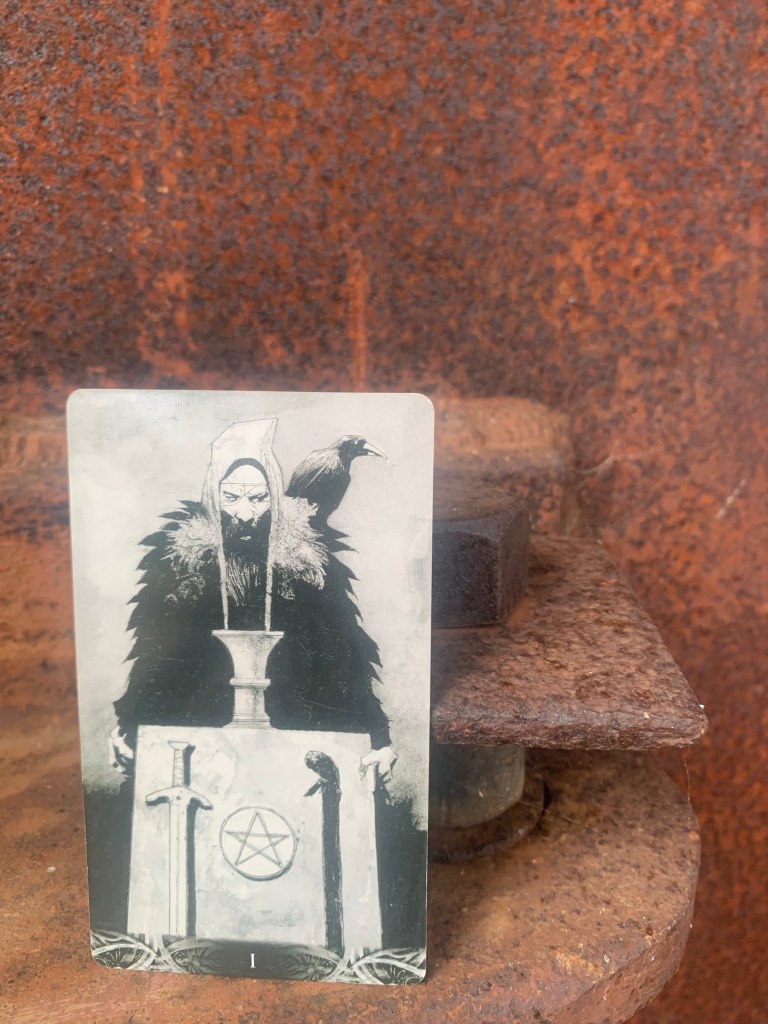
The Magician is one of the most compelling figures in the Tarot. Standing before an altar laid with the symbols of all four suits, he represents the ability to transform ideas into reality through skill, knowledge, focus and action. The Magician reminds us that the resources we need are often already at hand; the challenge is recognising them and learning how to use them wisely.

In mythology, the Magician finds an early expression in Hermes (Mercury in Roman tradition), the messenger god of Mount Olympus. Hermes carried the Caduceus, a magical staff gifted to him by Apollo. The Caduceus has long been associated with healing and transformation, and is often seen as a symbol of the spinal column, the central conduit through which life force and nerve energy flow throughout the body.

The appearance of the Magician points to the talents, capabilities and resources available to us when we choose to apply them. Magical powers do not emanate from us directly. Rather, they emerge through our creativity and through the tools we place in our hands. Given the right instruments, scientists become magicians. Their wands are microscopes, scalpels, laboratories and technologies that allow them to transform what once seemed impossible into reality.

Few modern Australians embody the spirit of the Magician more completely than Professor Fiona Wood. A plastic and reconstructive surgeon and researcher for almost three decades, she has dedicated her career to improving outcomes for burns patients and advancing the science of wound healing. In 1991 she became Western Australia’s first female plastic surgeon.

Magic is just science that we don’t understand yet – Arthur C Clark

In October 2002, Fiona Wood was thrust into the national spotlight when many survivors of the Bali bombings were transferred to Royal Perth Hospital. She led Western Australia’s burns disaster response, drawing upon years of planning and preparation. Earlier in her career, she had pioneered the revolutionary “spray-on skin” technique, dramatically reducing permanent scarring in burns victims. Patented in 1993, the innovation would later be promoted worldwide through a company she co-founded.

Like the Magician of the Tarot, Fiona Wood demonstrates how knowledge, imagination and the right tools can be combined to create extraordinary change. Her work reminds us that true magic is often found not in enchantment, but in the disciplined application of skill, compassion and vision.

More Magicians

The Magician shows us that you are able to master any desired skill through practice, sacrifice and a determined focus on your outcome. He encourages you to invest the time to cultivate your potential abilities.
Patrick Valenza – Deviant Moon Tarot.

Setting an Intention

The power of setting intentions cannot be overestimated. Intention is the foundation of spellwork and ritual (for the Magician is a witch and a wizard, too). Intention is the foundation of any serious project. Setting an intention means making a declaration that you intend to do a thing. In doing so, you invite in the energy of the world around you. Where the Fool said “I trust you. I will step forwards”, the Magician says “Here is what I want to do. Will you help me?” Little Red Apple

Whereas the Fool is not clear about where he is headed the Magician has set an intention and has the tools needed. It makes all the difference to know your ‘why’, to set an intention and consciously choosing a direction in which to head. This enables you to focus your energy.

Need help setting an intention? Try this daily morning meditation by Sarah Raymond of the Mindful Movement.